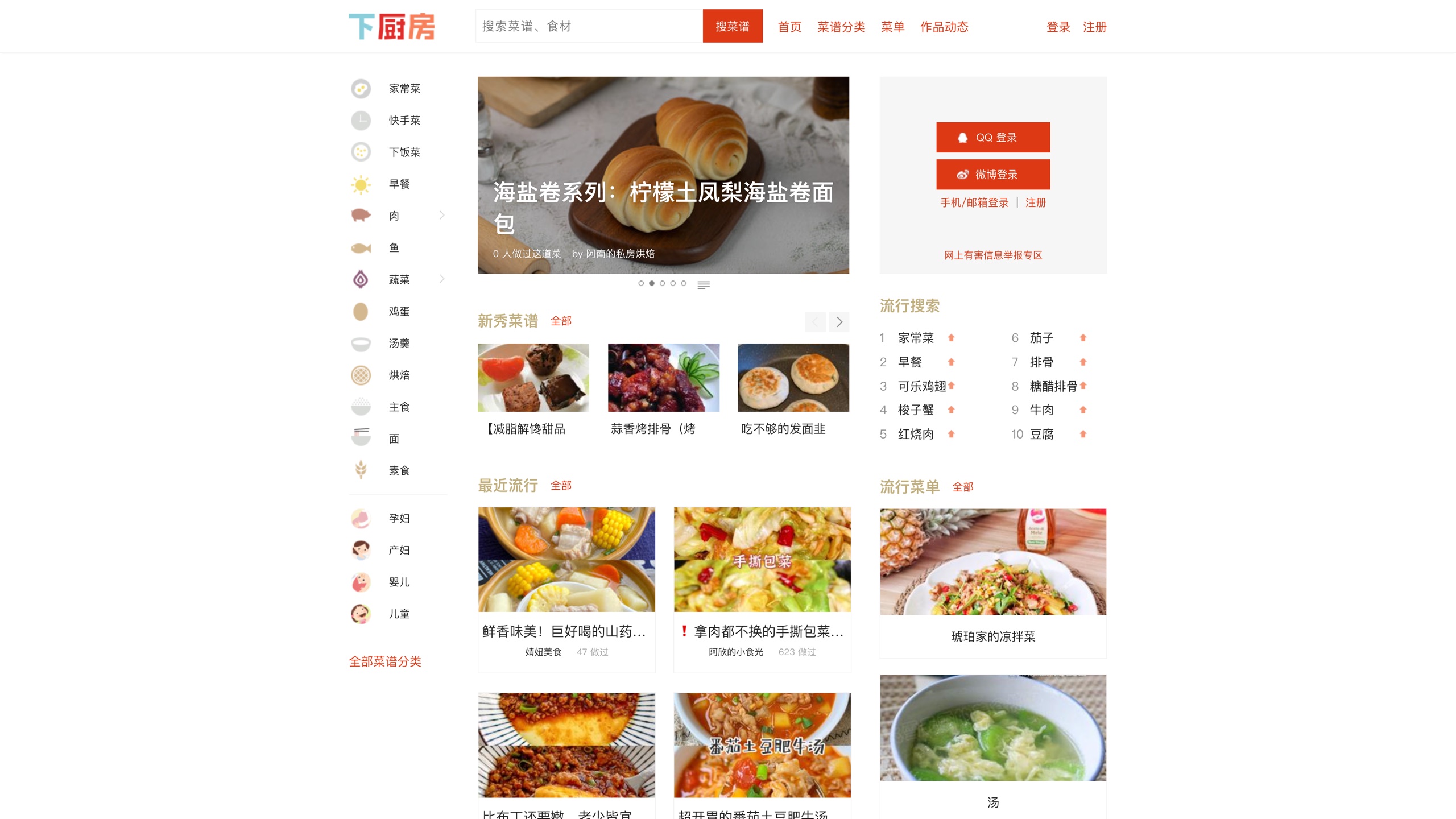
Xiachufang (下厨房, xiachufang.com) is a Chinese recipe-sharing community launched in 2011 and operated by Beijing Xiachufang Technology Co., Ltd. Home cooks publish photo recipes with ingredient lists and step-by-step instructions, and others post pictures of their own results ("作品") under each recipe, building a conversation around every dish. Its verifiable distinction among similar products is scale: the homepage's live counter showed roughly 3.58 million recipes and over 80 million cook-along posts when we checked on 2026-09-02, making it one of the largest Chinese-language UGC recipe collections. Full recipes are free to read on the web without an account. Note that the site is Simplified-Chinese-only — it is documented here because it is a reference point for Chinese home cooking, but readers will need to navigate a Chinese UI.
At a Glance
- URL: https://www.xiachufang.com/
- Type: UGC recipe community (web version plus iOS / Android apps)
- Cost: Browsing and searching recipes is free; membership costs RMB 19/month or RMB 228/year on auto-renew (App Store listing, checked 2026-09-02); in-app "Chu coins" and paid video courses also exist
- Registration: Not required for reading; posting recipes, collecting, and cook-alongs need an account, and signing up requires a phone number (per the official privacy policy, to meet China's real-name requirements); QQ and Weibo third-party login are also offered
- Interface language: Simplified Chinese (App Store metadata lists the app's languages as Simplified Chinese and English)
(Verified by direct visit on 2026-09-02.)
Background
Founder Wang Xusheng, previously a designer at Douban, left in early 2011 to start the site, which officially launched in March 2011 (People's Daily report, 2018, Tencent Tech report, 2015). The site's own About page frames its purpose as two things: helping people find recipes, and helping them record and share what they cook (About page).
Public corporate records show the current operating entity is Beijing Xiachufang Technology Co., Ltd., registered in June 2014 with Wang Xusheng as legal representative (Aiqicha records). In July 2015 the company announced a US$30 million Series B led by China Growth Capital, with JD.com joining and earlier investors Trustbridge and Ceyuan following on (Tencent Tech report, China Growth Capital interview).
The monetization path has shifted over the years. An e-commerce marketplace ("市集") launched in November 2014 (FoodTalks company profile), followed by offline experience stores in upscale Beijing malls from 2019; according to a 36Kr report (2023), both the marketplace and the stores were shut down after 2021. As of 2026-09-02, the marketplace entry is gone from the site navigation and its former URL returns 404. Revenue now comes mainly from membership subscriptions, video courses, and in-app currency (details below). The product is still maintained: the latest iOS version was released on 2026-08-08 (App Store), and HarmonyOS native development began in early 2024 (51CTO report).
Finding and Cooking Recipes: What the Site Actually Does
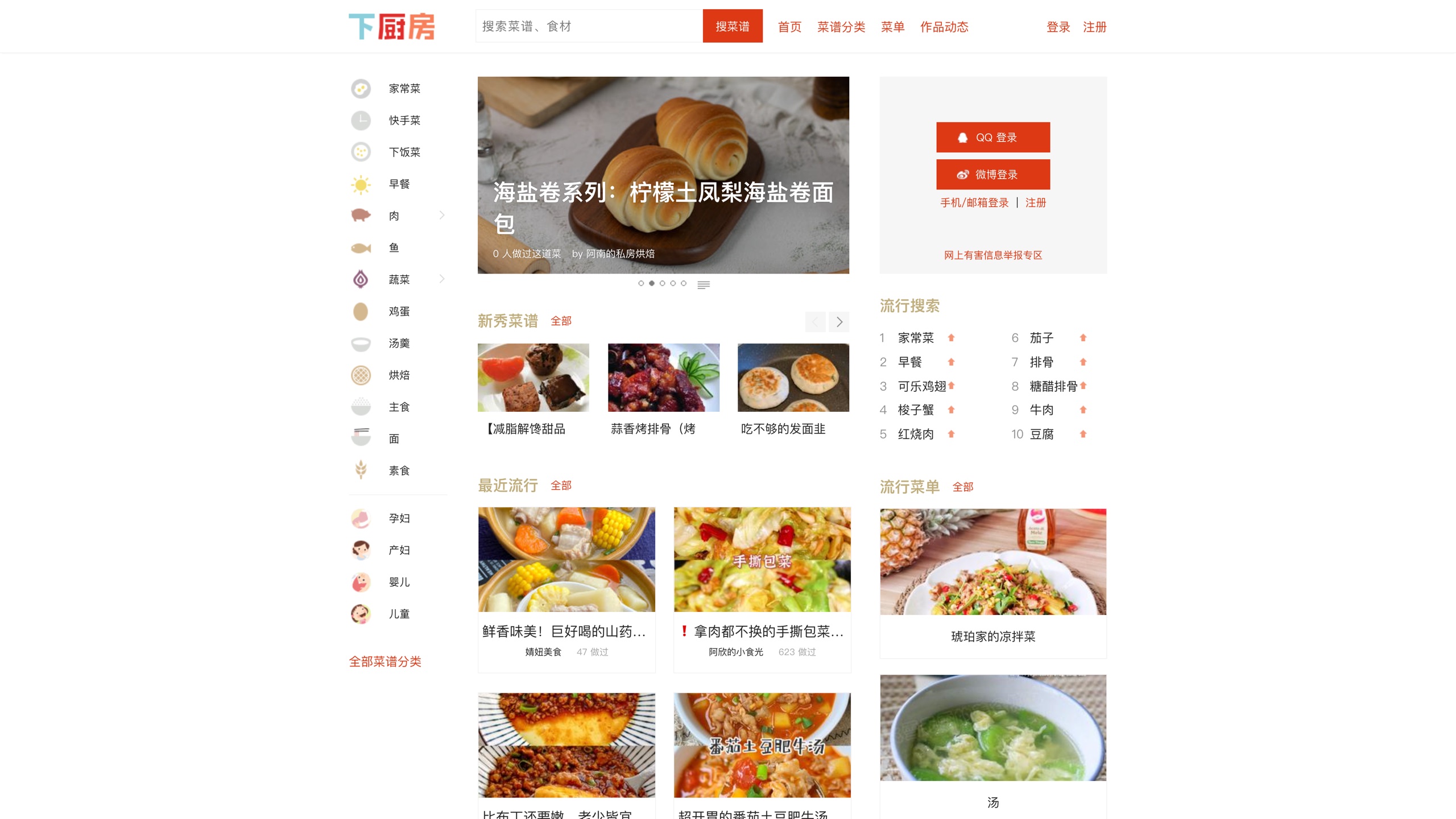
The homepage organizes recipes by use case — home-style dishes, quick meals, baking, vegetarian, and more — with editorial entries such as new recipes, trending dishes, popular menus, and trending searches. "Menus" (菜单) are user-curated recipe collections, while the "works feed" (作品动态) streams cook-along photos from across the site.
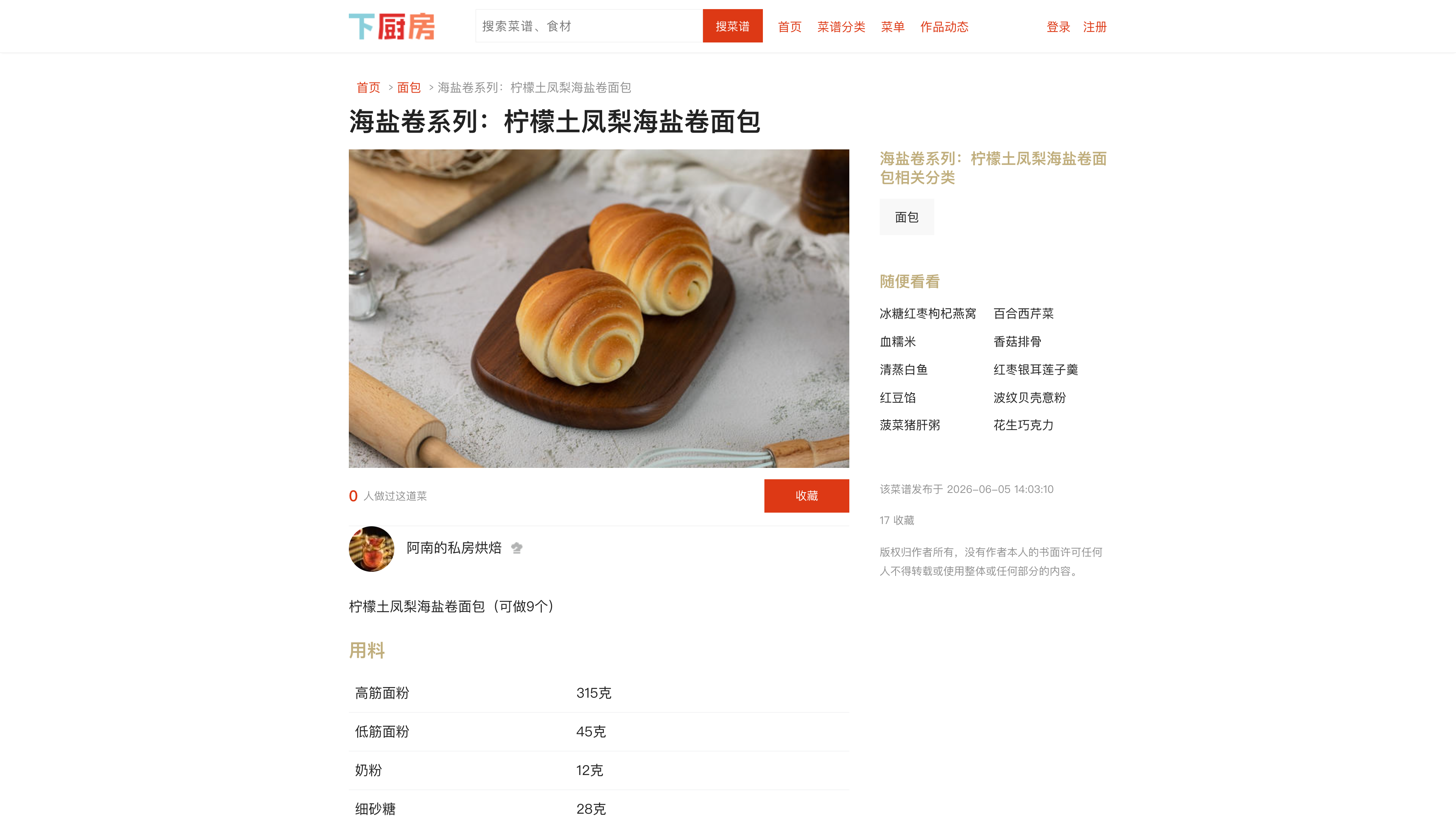
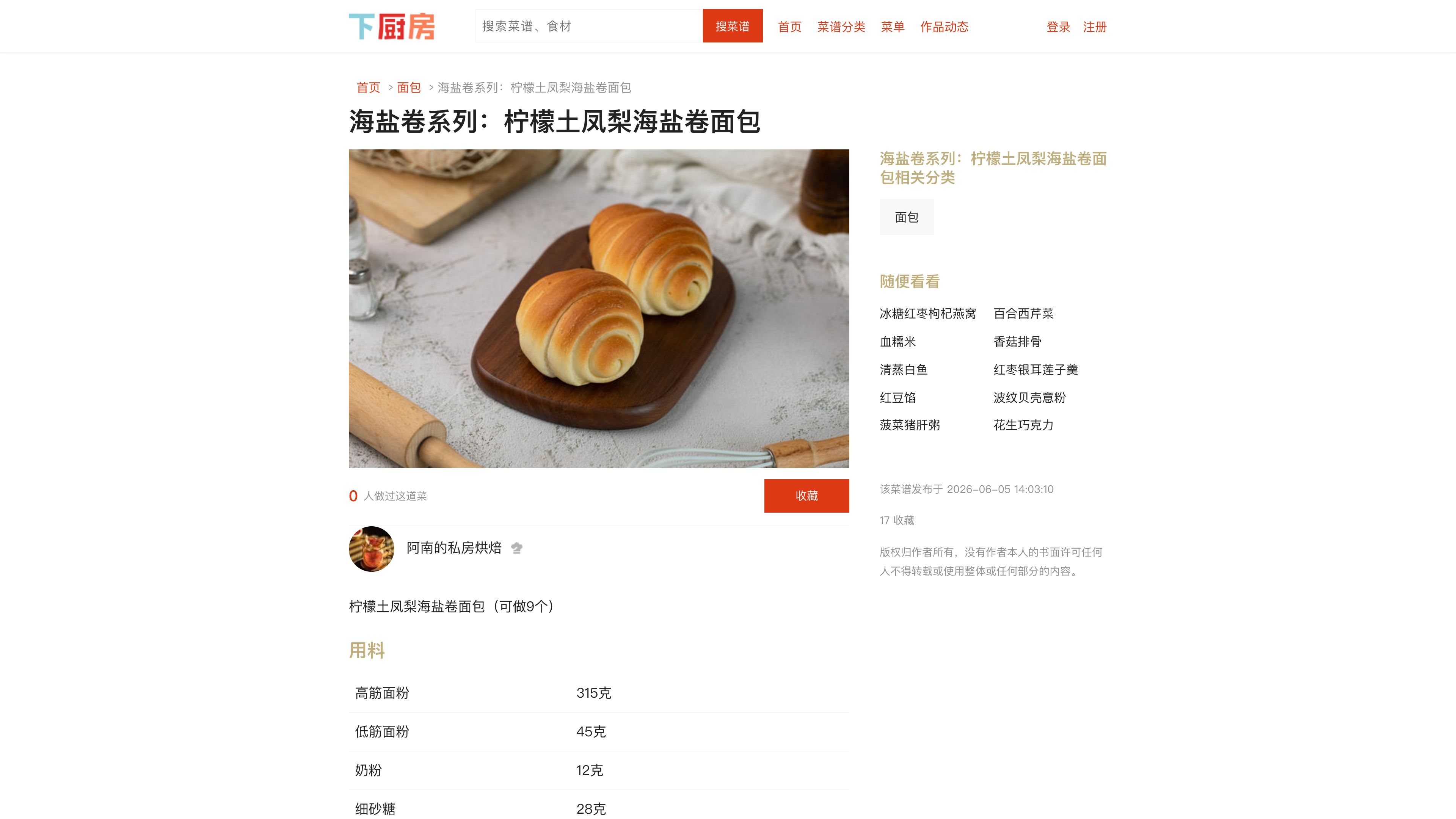
Recipe pages follow a fixed structure (tested 2026-09-02 on a homepage-featured recipe): a finished-dish photo on top, then an ingredient table with quantities and illustrated step-by-step instructions. Each page shows the author, publication time, collect count, and how many people have cooked it, with related categories in the sidebar:
The cook-along feature is the heart of the community: users post photos of their own attempts under a recipe, and authors can manage comments and unlink works (see the community guidelines). Reading full recipes for free without an account is the most practical part for the occasional cook.
Membership, Courses, and Monetization
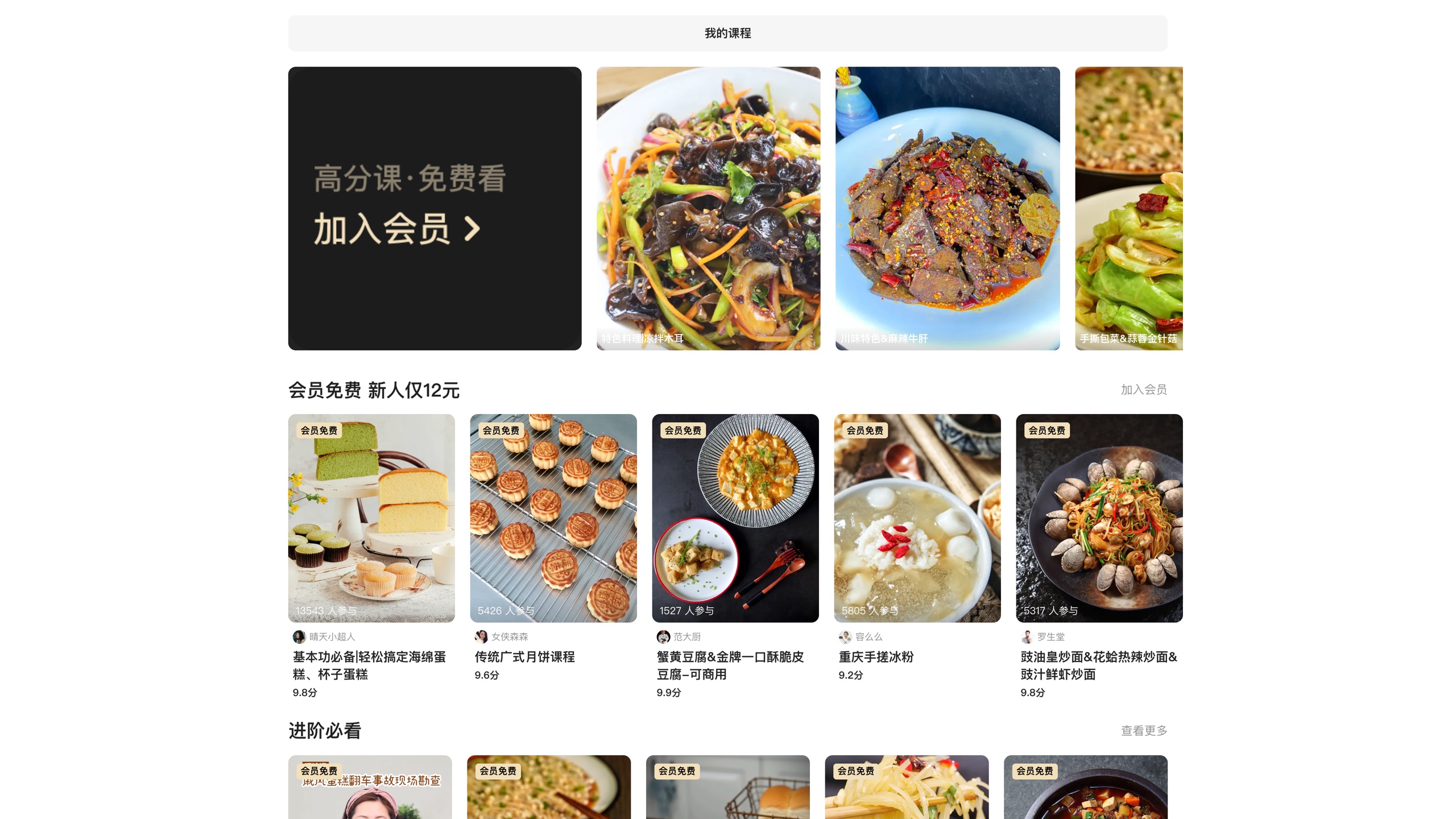
Xiachufang's paid businesses live mostly inside the app. As of 2026-09-02, the verifiable pieces are:
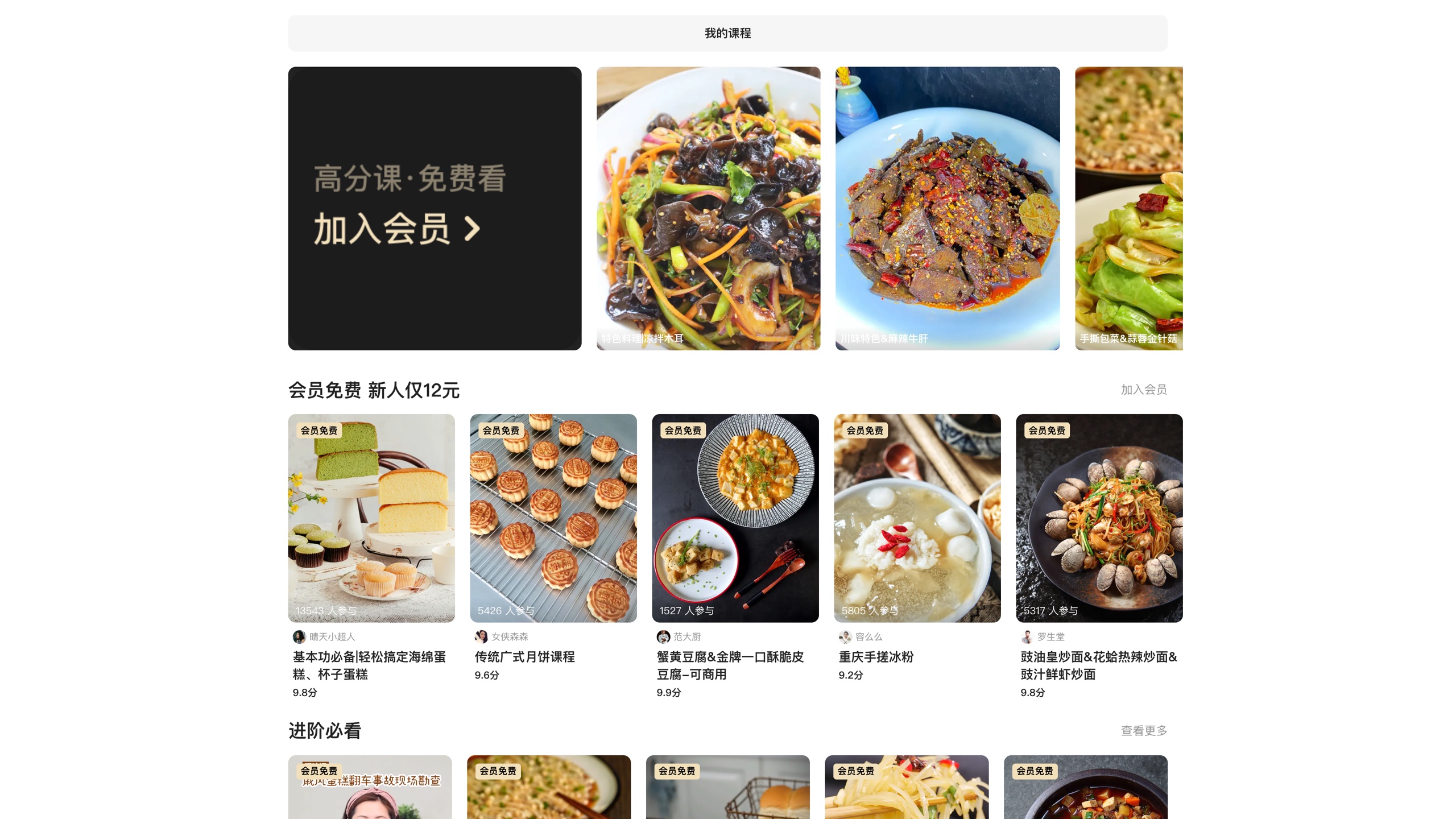
- Membership: the App Store description lists auto-renewing subscriptions at RMB 19/month or RMB 228/year; one member benefit is access to courses (most courses on the course page carry a "会员免费" / free-for-members badge, with a RMB 12 first-time offer);
- Chu Studio (厨 studio): a video-course platform where courses are sold by series or included with membership, showing participation counts and learner ratings — popular courses reach tens of thousands of participants (one home-cooking course shows over 110,000, course page);
- Chu coins (厨币): an in-app virtual currency starting at RMB 12 for 12 coins (App Store IAP list), used for courses and similar virtual goods.
The former e-commerce marketplace is closed (see Background); the "buy ingredients" line in the app description is a leftover from that era, and no store exists on the site today. The App Store age-rating section also notes that the app contains advertising.
Copyright and Content Policy
As a UGC platform, Xiachufang's copyright rules are spread across two official documents, and they do not fully agree with each other:
- Recipes, works, images, and text posted by users remain owned by the users themselves; users grant Xiachufang a "free, irrevocable, non-exclusive license," with attribution when the platform uses the content (community guidelines, IP section).
- However, clause 10 of the user agreement describes the grant as a "worldwide, free, irrevocable, perpetual, sublicensable and transferable exclusive license." The two current documents contradict each other on scope (non-exclusive vs. exclusive, transferable or not), so creators who care about licensing terms should read both originals.
- Third parties reposting content for non-commercial purposes must credit the author and "来源于下厨房" (from Xiachufang), link to the original, and must not modify it; if a user forbids reposting, their notice prevails. Every recipe page footer also states that copyright belongs to the author and no part may be reproduced without written permission.
- Recipes flagged "exclusive" may not be cross-posted to other platforms without Xiachufang's permission, on pain of losing the badge, being hidden, or removed.
- The platform positions itself as storage only: recipes are user-posted, Xiachufang says it does not pre-screen them and does not guarantee accuracy, quality, or safety, and advises consulting other sources for unfamiliar ingredients or methods (user agreement, clause 7).
- The agreement separately forbids capturing or screen-recording Chu Studio courses, columns, and e-books.
Good Use Cases
- Looking up home-style Chinese dishes, noodles and buns, or baking recipes: the collection is huge and the step photos are detailed — search by dish name or ingredient;
- Cooking along and comparing your result with others': the works photos and ratings give a realistic reference;
- Learning baking or pastry systematically: Chu Studio's paid video courses are more structured than photo recipes;
- A sample case for anyone studying Chinese UGC communities or food content operations.
Limitations
- Uneven UGC quality: the platform explicitly does not screen recipes, so accuracy and food safety are the reader's judgment call; beginners should cross-check;
- App-first features: membership, courses, and coins all live in the app, mobile web recipe pages permanently nudge users to "see more in the app," and the web version is comparatively bare;
- Self-reported scale: the ~3.58M recipes / 80M works figures are the site's own live counters, with no published methodology (e.g., whether deleted content is counted) and no independent audit;
- Contradictory agreements: the community guidelines and the user agreement conflict on content-licensing scope (see above);
- Chinese-only audience: the web version is Simplified Chinese only, registration expects a phone number in the mainland real-name style, and the site enforces slider-captcha risk control that blocks unusual traffic;
- E-commerce is gone: legacy "buy ingredients" entries no longer work; treat the current site as authoritative.
Comparable Services
Chinese peers include Douguo (豆果美食) and Meishijie (美食杰), which run the same UGC-recipe-plus-cook-along model; Xiachufang is the representative of the category in scale and community activity. Internationally, the closest analogue is Japan-born Cookpad — the same user-published recipe model, but multilingual and more subscription-driven. Xiachufang's difference is its focus on Chinese home cooking and its reliance on video courses as the main paid product.
References
- Xiachufang official site and About page (checked 2026-09-02)
- Wang Xusheng: getting young people to love Xiachufang (People's Daily, 2018-02)
- Xiachufang raises US$30M Series B (Tencent Tech, 2015-07, reposted)
- Interview with founder Wang Xusheng (China Growth Capital, 2015-08)
- Beijing Xiachufang Technology Co., Ltd. records (Aiqicha)
- Xiachufang company profile (FoodTalks)
- Xiachufang closes stores as peer DailyDayCook lists at a loss (36Kr, 2023-07)
- Xiachufang begins HarmonyOS native app development (51CTO, 2024-01)
- Xiachufang on the Apple App Store (checked 2026-09-02)
- Community guidelines, user agreement, and privacy policy (checked 2026-09-02)
- Chu Studio course page (checked 2026-09-02)