Wplace (wplace.live) is a collaborative pixel-art website that turns the entire world map into one shared canvas of roughly 4 trillion pixels. Anyone can paint, pixel by pixel, over their own city, hometown or any corner of the planet. The rules deliberately echo Reddit's legendary r/place experiment: each person can place only a limited number of pixels that regenerate over time, so anything big requires recruiting friends and coordinating (Wikipedia, The Verge 2025-08-11, checked 2026-10-04).
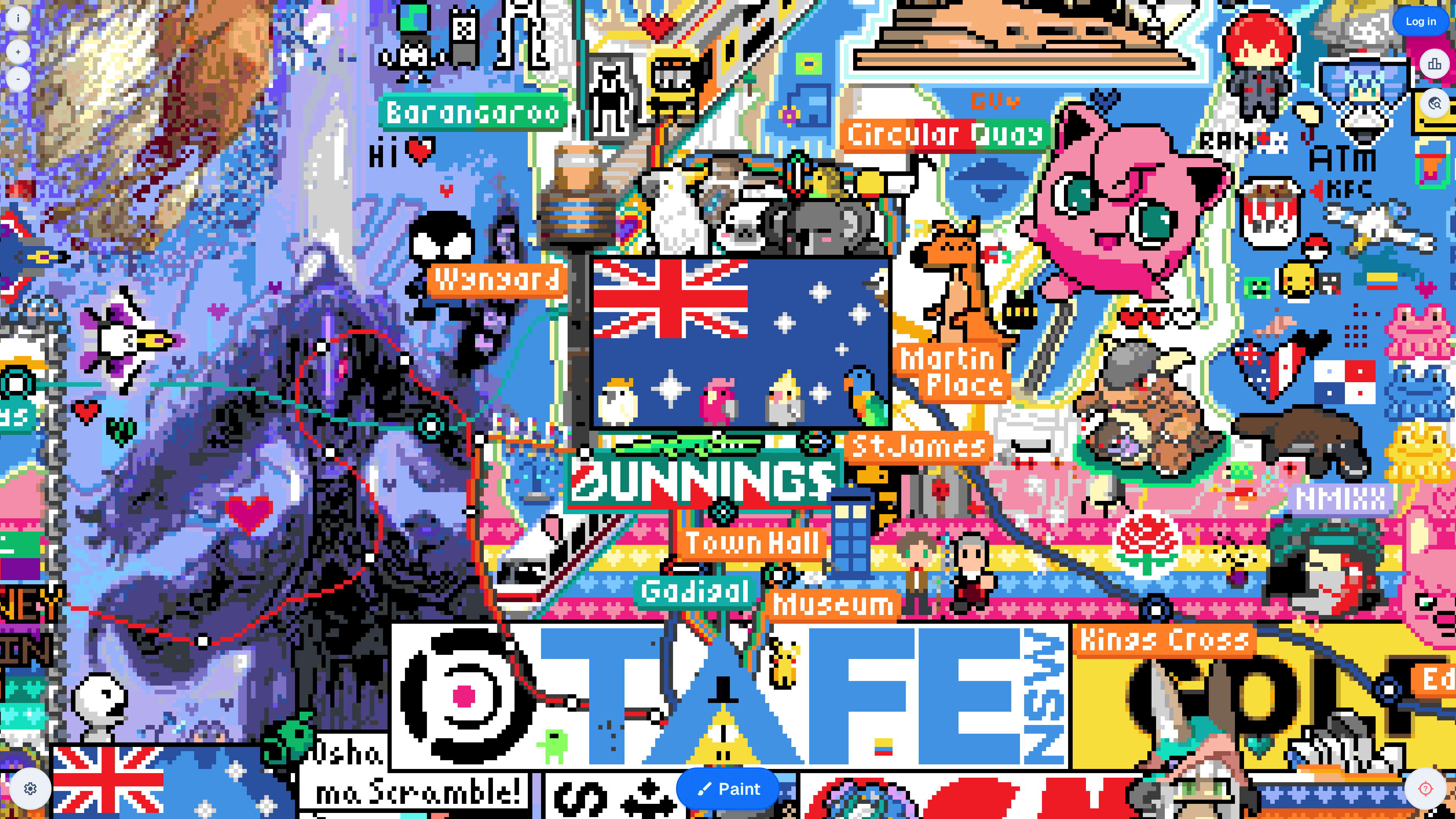
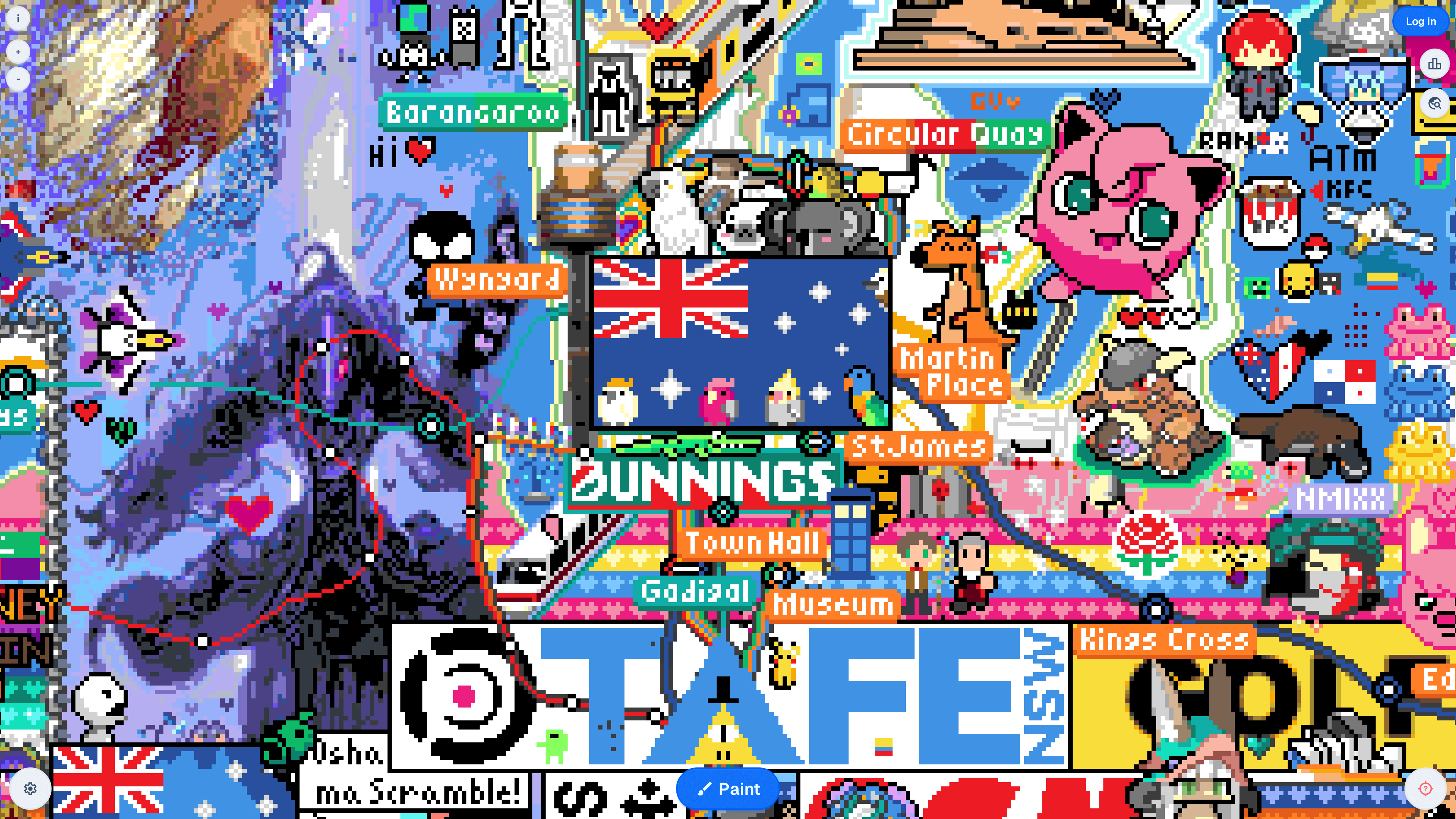
The main interface (screenshot from 2026-10-04): zoom the map to reveal the drawings and text users have left everywhere.
Quick facts
| Item | Details |
|---|---|
| URL | https://wplace.live/ |
| Type | Collaborative pixel art / community game |
| Pricing | Free; colors and perks unlock with "droplets" earned by painting, with paid droplet purchases available |
| Account | Browsing needs no account; painting requires signing in with a Google account |
| Interface | English and Portuguese |
Background
Wplace was built by Brazilian developer Murilo Matsubara and launched on July 21, 2025, openly inspired by Reddit's r/place. It spread virally on TikTok, Reddit and Twitter, passing a million users within four days — and straining under the load, with leaderboards breaking and registration temporarily limited. On August 27, 2025, the developer posted on Reddit addressing bans, downtime and "pay-to-win" criticism (Wikipedia, Polygon 2025-08-07, checked 2026-10-04).
How it works
- Pixel budget: new users start with 30 pixels to place, regenerating at one pixel every 30 seconds; each level gained (by painting) raises the cap by 2.
- Droplets: every pixel placed earns 1 droplet and each level-up grants 500; droplets buy budget increases, faster regeneration, profile pictures or a country flag — painting inside your flag's country refunds 10% of the pixels spent.
- Colors: 63 in total; 31 (plus transparent) are free, the other 32 cost 2,000 droplets each to unlock.
- Leaderboards and alliances: rankings tally pixels by country and region, and player alliances coordinate large-scale works.
- A world-map canvas: art is anchored to real geography — city landmarks, campuses and stadiums are prime territory.
Content policy
The canvas is user-generated and governed by a Code of Conduct: hateful and harassing content is removed, while "voiding" (covering an area in a solid color) is allowed as long as it doesn't destroy others' artwork. Battles of overwriting and restoration over hot locations are treated as part of the game, not vandalism.
Good for
- Fandoms: gaming, anime and sports communities claiming territory and staging collaborations on one map.
- Local pride: leaving a pixel mark on your hometown, alma mater or a city you love.
- Spectators: zooming around the map to see what the world has drawn is entertainment in itself.
Limitations
- Painting requires a Google account, and the interface exists only in English and Portuguese.
- Paid droplet purchases fuel an ongoing "pay-to-win" debate; prime locations are effectively held by large organized groups, and small solo works get painted over.
- Peak-hour lag still happens; map geography can surface politically sensitive disputes.
- Moderation at this scale is hard — expect occasional inappropriate content in out-of-the-way areas.
Alternatives
- Reddit r/place: the original inspiration — Reddit's time-limited pixel canvas that returns for occasional events.
- GeoGuessr: another world-map game, about guessing locations from Street View instead of drawing.