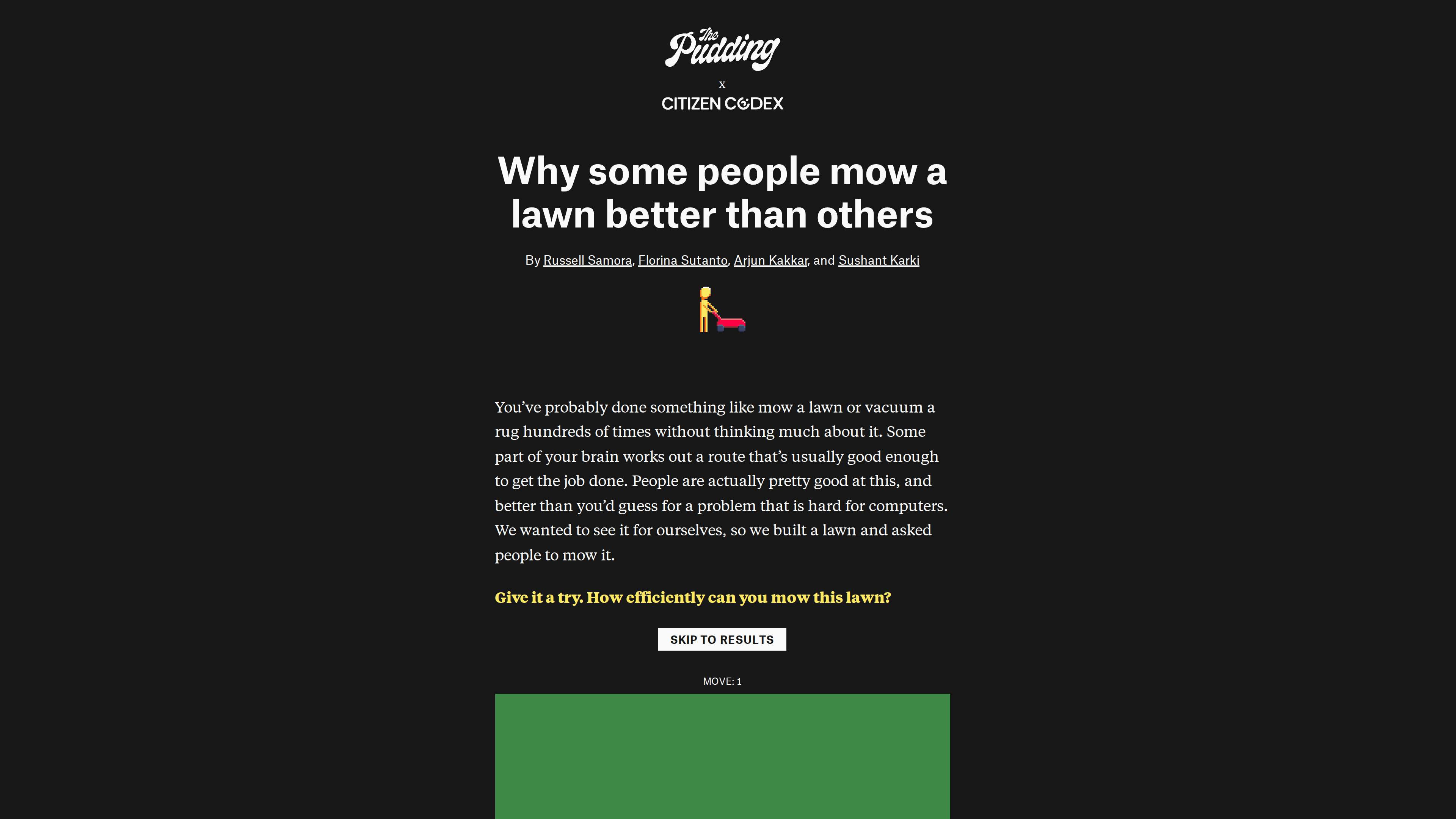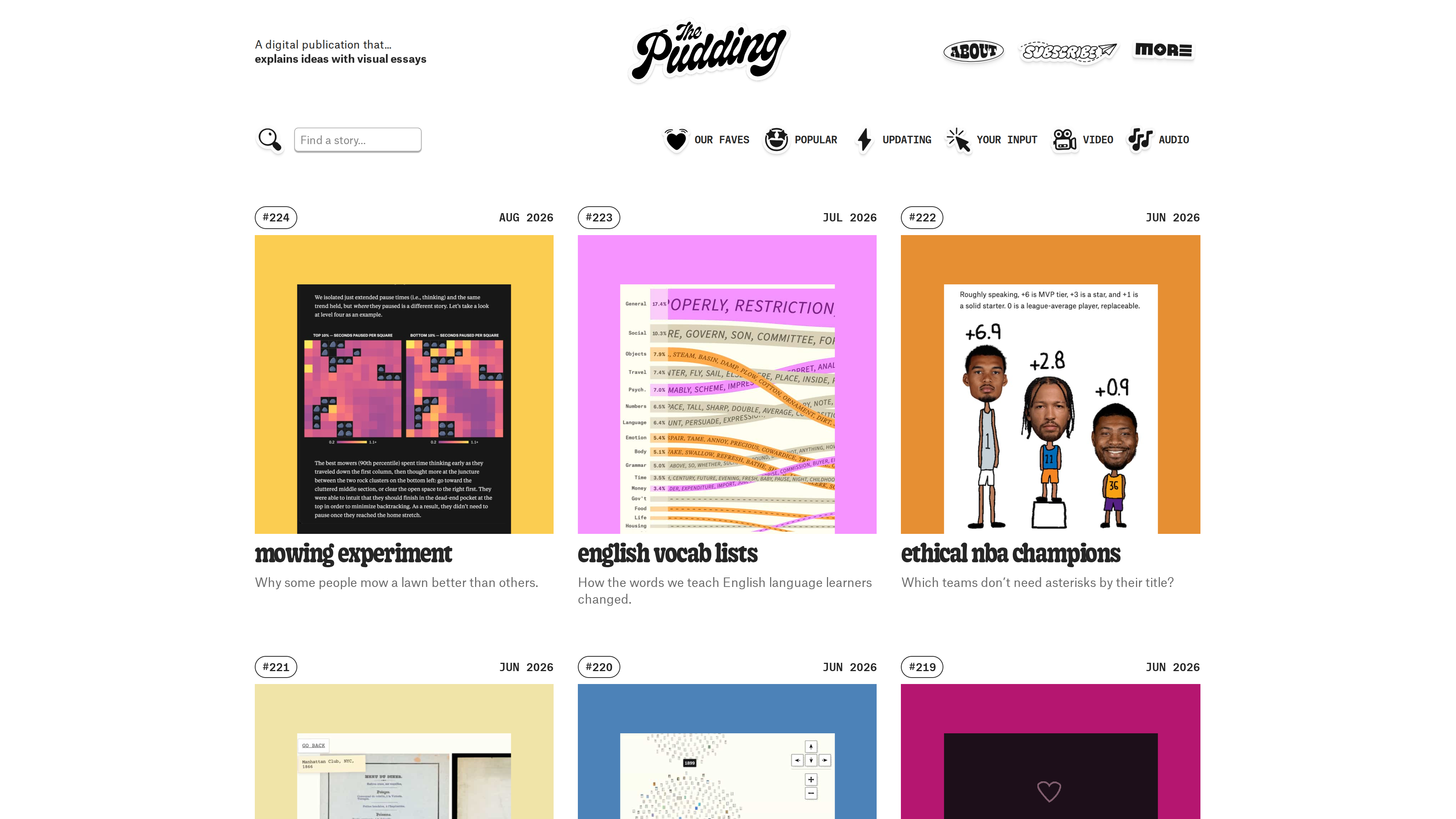
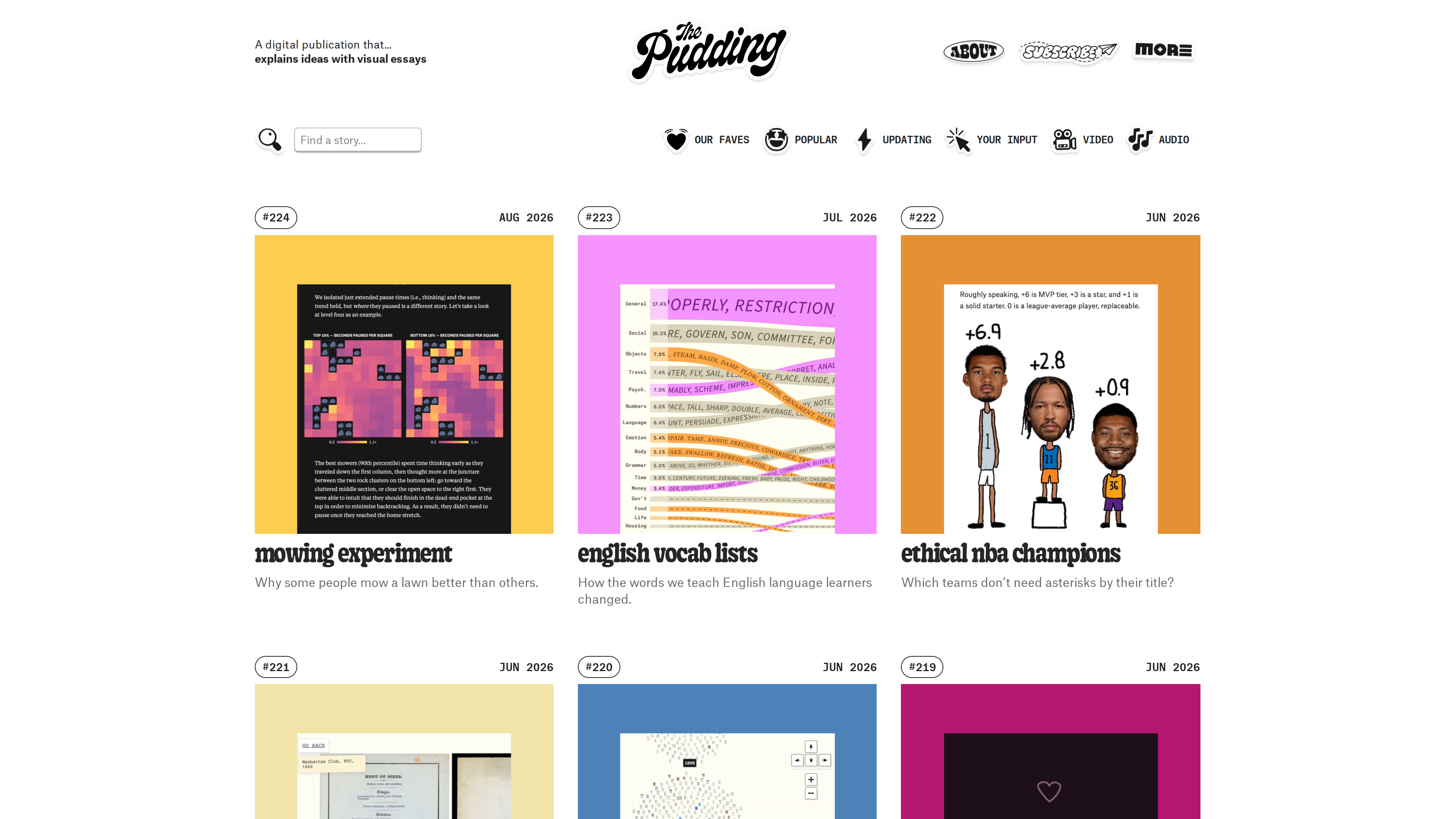
The Pudding is a digital publication that explains culturally debated ideas through "visual essays." It picks topics where text-only reporting tends to end up as an unreadable wall — the gender structure of the music industry, which NBA titles deserve asterisks, how English vocabulary teaching has changed — and works through them with original datasets, primary research and interactive charts. The latest essay on the homepage is numbered #224 (August 2026), meaning more than 220 visual essays have been published since launch.
At a Glance
| Item | Details (as of 2026-09-30) |
|---|---|
| URL | pudding.cool |
| Type | Data journalism / visual essay publication |
| Cost | Free to read |
| Account | None required |
| Language | English only |
Background
The Pudding launched in 2017. Its About page describes a collective rather than a hierarchical newsroom: each team member owns a story end to end — research, data analysis, design, writing and code. There are no deadlines because the publication is not tied to the news cycle, and many experimental ideas are deliberately killed in production. Funding is reader-driven: Patreon memberships, grants and sponsorship, a model the founding team laid out publicly in a 2018 retrospective. The Nieman Journalism Lab profiled it in 2017 as high-touch visualizations backed by a sustainable business.
What the Essays Look Like
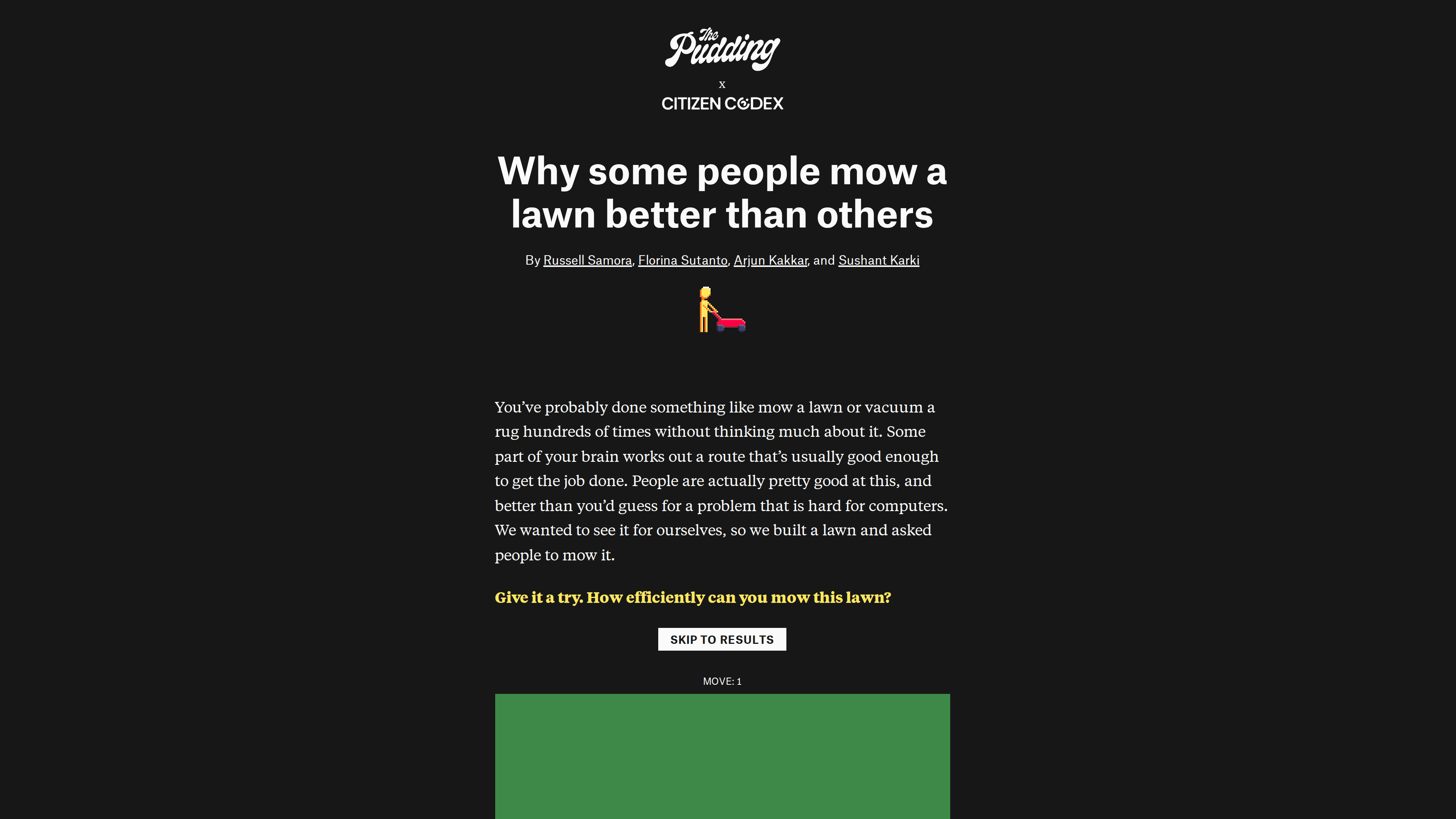
- Every visual essay is a standalone web page where charts unfold as you scroll (scrollytelling), often with interactive segments: readers may first play with a small simulation — like mowing a virtual lawn themselves — before seeing the data.
- Topics focus on culture and society, deliberately avoiding breaking news; many essays ship with public datasets and methodology appendices.
- The homepage offers filters such as Popular, Our Faves and Updating, plus video and audio spin-offs.
Good For
- Readers interested in data journalism and visual storytelling;
- Analysts and designers looking for scrollytelling and interaction patterns;
- Researchers who want original cultural datasets for secondary analysis.
Limitations
- English only, with long essays steeped in Western cultural context.
- Irregular cadence: no deadlines means some months bring only one or two new pieces.
- Custom interactions generally work on mobile but are best on a wide desktop screen.
- Explicitly opinionated: the team states it does not treat issues like racism and sexism as neutral ground — expect argued journalism, not encyclopedia-style writing.