Perplexity combines search and question-answering into a single product: you type a question, it searches the web in real time, runs the results through large language models, and returns a direct answer with numbered source citations rather than a page of links. The company calls it an "answer engine," uses the tagline "Where Knowledge Begins," and emphasizes that every answer is backed by cited sources. It was founded in 2022 by four engineers including former OpenAI researcher Aravind Srinivas, and it has become one of the largest — and most contested — AI search products. It is listed here because it is one of the most commonly recommended tools when you need a fast overview of an unfamiliar topic with references you can check.
At a Glance
- URL: https://www.perplexity.ai/
- Type: AI answer engine / conversational search
- Cost: Core features free; Pro 200/year; Max $200/month; usage-based API pricing (as of 2026-08-31, details below)
- Account required: Basic search works without registration (per Bloomberg reporting); an account is needed to save history and sync across devices
- Platforms: Web, iOS, Android, Chrome extension, plus the standalone Comet AI browser
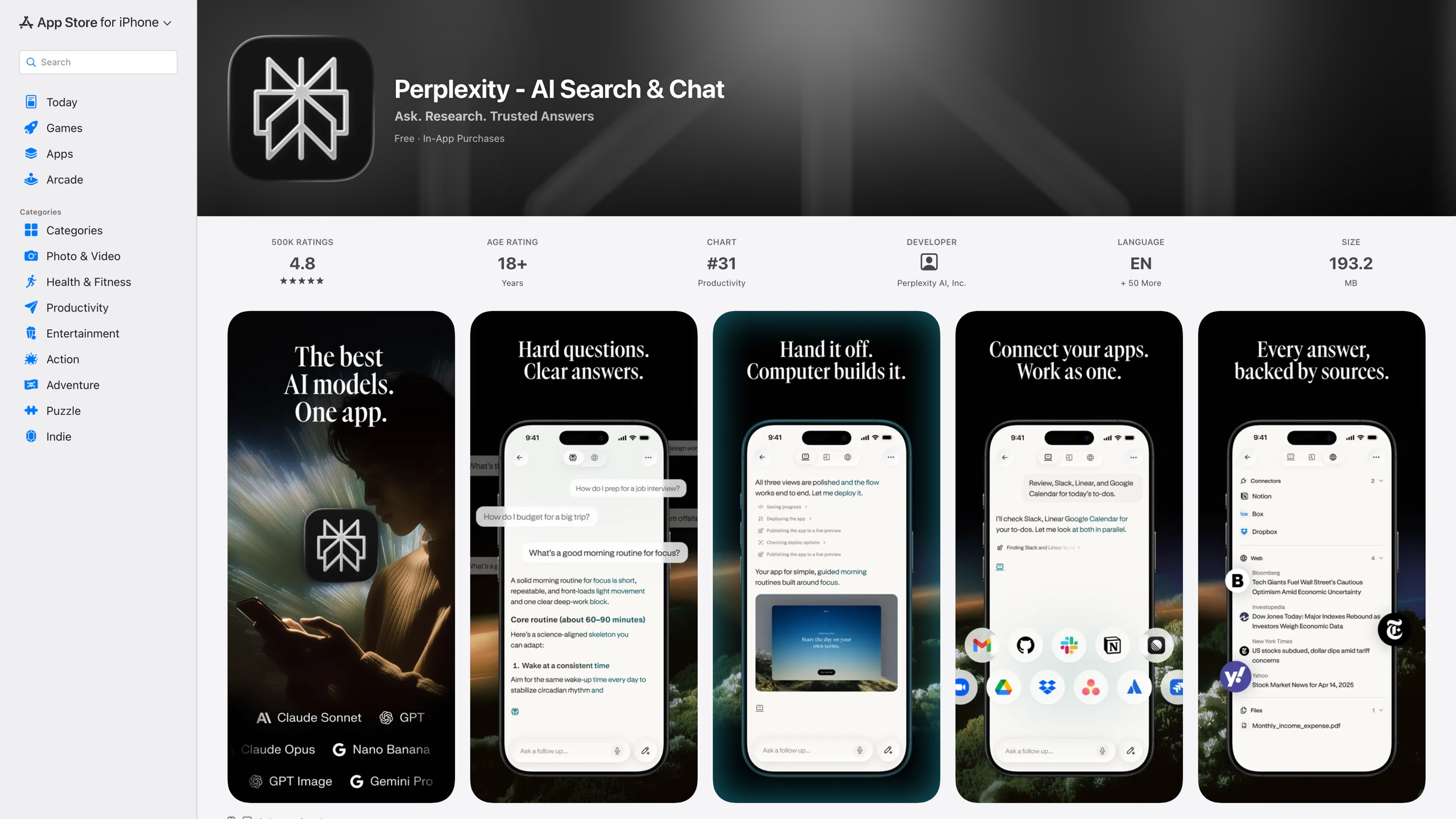
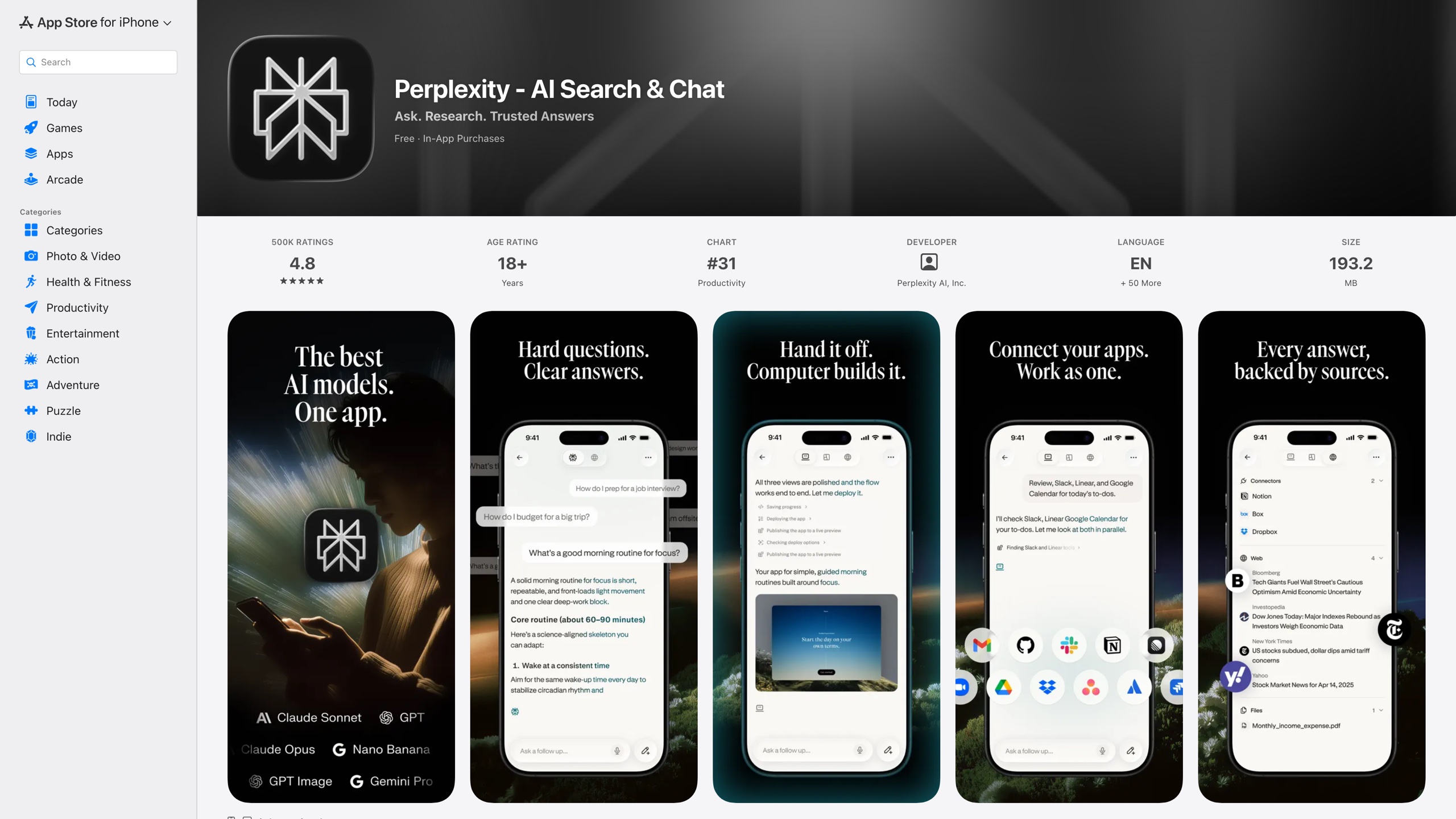
- Interface languages: The iOS app lists 51 interface languages, including Simplified and Traditional Chinese (per the App Store listing, as of 2026-08-31)
Background
Perplexity AI, Inc. was founded in August 2022 by Aravind Srinivas, Denis Yarats, Johnny Ho, and Andy Konwinski, and is headquartered in San Francisco. The founding team brought research experience from OpenAI, Google DeepMind, and similar institutions. Its core product launched publicly on December 7, 2022, followed by an iOS app in April 2023 and an Android app. This timeline is documented in the Wikipedia entry and the TechCrunch and Forbes coverage it cites.
Two data points give a sense of scale: CEO Aravind Srinivas said at Bloomberg's Tech Summit in June 2025 that the company processed 780 million queries in May 2025 (company-reported, not independently audited), and in September 2025 the company closed a funding round at a $20 billion valuation (Reuters). In July 2025 the company launched Comet, a Chromium-based AI browser, which became a free download in October 2025.
Core Product: Direct Answers with Citations
The basic flow is ask, retrieve, generate, cite. Submit a question and the system searches the web in real time, synthesizes information from multiple sources into a coherent answer using a large language model, and appends numbered citations that link back to the original pages. You can then ask follow-up questions, which stay in the context of the same thread.
On top of that flow, capabilities are organized into tiers (feature names as the company uses them):
- Pro Search and Deep Research: guided, multi-step retrieval for complex questions; Deep Research runs multiple rounds of searching and produces a longer report.
- Files and Spaces: upload PDFs, spreadsheets, and other documents to search alongside web content; Spaces and the Library organize past research.
- Model selection: paid users can switch between models from OpenAI, Anthropic, Google, and others, as well as Perplexity's own Sonar family.
- Voice and Assistant: voice queries on mobile; on Android, an Assistant that can act across apps.
- Discover: a public content feed organized by topic.
Feature boundaries shift frequently between releases, and the company has not kept free-tier quotas for these capabilities stable over time, so specific limits are not listed here.
Subscription Tiers and the Developer API
As of 2026-08-31, the pricing for individual users is: core features free; Pro at 200/year), which adds stronger model choices, more Deep Research capacity, file uploads, and more; Max at $200/month for heavy users, with unlimited Labs access and priority access to the newest models (the Max tier launched in July 2025). These prices match the App Store in-app purchase list. An Enterprise tier exists for teams.
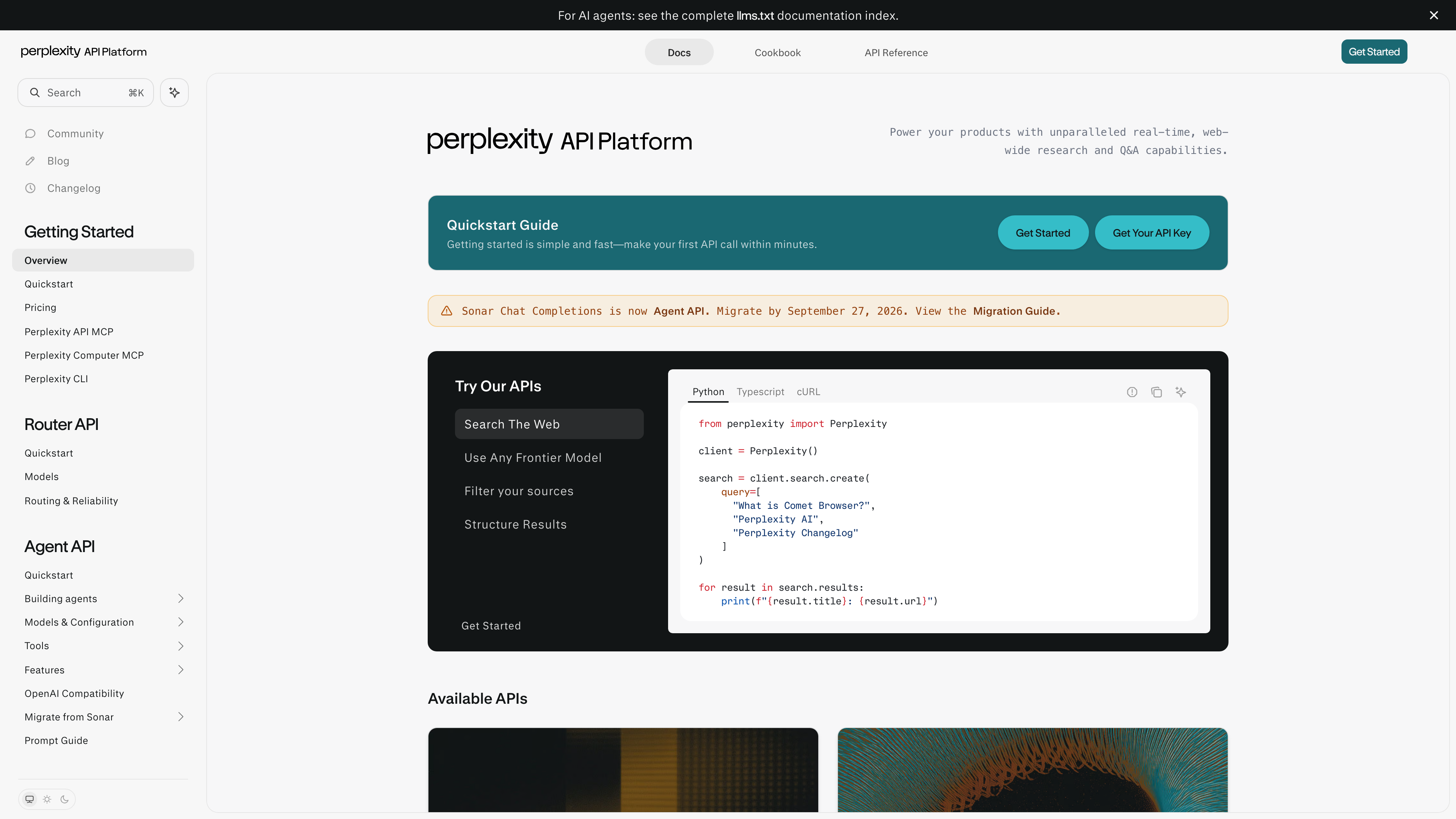
For developers, Perplexity runs a separate API platform (docs.perplexity.ai): an Agent API that returns ready answers, a Search API that returns raw ranked results (1 per million input tokens; see the official pricing page). API usage is billed independently from consumer subscriptions.
Privacy and Data Collection
Perplexity's Privacy Notice (last updated July 2, 2026) states that it collects account details, submitted queries, uploaded documents, and payment information, plus data gathered automatically through cookies, devices, and server logs. The App Store privacy label indicates that purchases, location, identifiers, usage data, and diagnostics may be linked to your identity. The notice also states that Enterprise and API products are governed by separate data terms. If you would hesitate to hand a question or an internal document to a third-party service, factor this in before using it as your default search tool.
Copyright Disputes and Crawler Behavior
Before adopting Perplexity, it is worth knowing that it is currently one of the AI companies most in conflict with content publishers. According to the Wikipedia entry: in June 2024, Forbes publicly accused it of republishing paywalled reporting without adequate attribution; the same month, a Wired investigation reported that it scraped sites that had opted out, using undisclosed IP addresses and spoofed user-agent strings. The New York Times later sent a cease-and-desist, Dow Jones and the New York Post filed suit, and the BBC, Yomiuri Shimbun, Asahi Shimbun, Nikkei, and Reddit all took legal action during 2025.
In August 2025, Cloudflare published findings that after its declared crawlers were blocked, Perplexity switched to undeclared crawlers impersonating ordinary browsers; Cloudflare removed Perplexity from its verified-bot list, and Perplexity denied the claims. As part of its response to the controversy, the company launched a publishers' program in July 2024 to share advertising revenue with outlets including Time, Fortune, and Der Spiegel. None of this changes how the product works for an individual user, but it does bear on the long-term sustainability of its content sourcing.
When It Fits
- Getting oriented in an unfamiliar topic: it produces a structured overview with references, saving you from opening a dozen result pages.
- Factual questions where sources matter: every claim carries a citation you can trace back, which makes it better suited to research-style questions than a plain chatbot.
- Time-sensitive questions: because it retrieves live web content, it handles news, prices, and schedules better than offline models capped by a training cutoff.
- Multilingual queries: the interface covers dozens of languages, including Chinese, which supports cross-language research.
Limitations
- Answers can still be wrong. A citation is not a guarantee: the engine can misread a source, over-generalize, or cite an irrelevant page. Verify anything important against the linked originals.
- The free tier's boundaries are unclear and change often. Pro Search, Deep Research, file uploads, and model selection all tilt toward paid plans; treat the free quotas as whatever the official documentation says at the time.
- Paywalled content limits answer quality: it cannot bypass paywalls, so answers are constrained by what is publicly retrievable.
- Privacy trade-off: queries are collected and may be used to improve the service, so sensitive or confidential questions do not belong here.
- Unresolved copyright disputes: multiple lawsuits and the crawler controversy are still in progress, and its content-acquisition practices may be forced to change.
- Non-English depth is unverified: the interface is localized into dozens of languages, but answer quality and source coverage in languages other than English should not be assumed to match the English experience.
Alternatives to Compare
- ChatGPT / Gemini: general-purpose chatbots that also offer web search, but emphasize conversation and generation over retrieval with citations.
- Google AI Mode: the search incumbent's native AI answers, with a more complete index and source ecosystem.
- Kagi: a paid, ad-free search engine where AI summaries are an add-on, closer in spirit to traditional search.
Sources
- Perplexity - App Store (feature descriptions, subscription prices, interface languages, privacy label; checked 2026-08-31)
- Perplexity AI - Wikipedia (company history, funding, and a summary of disputes; checked 2026-08-31)
- Perplexity API Platform documentation and API pricing (checked 2026-08-31)
- Perplexity Privacy Notice (July 2, 2026 version; checked 2026-08-31)
- Cloudflare: Perplexity is using stealth, undeclared crawlers to evade website no-crawl directives (2025-08-04)
- Wired: Perplexity Is a Bullshit Machine (June 2024)
- The Verge: Perplexity's publishers' program (2024-07-30)