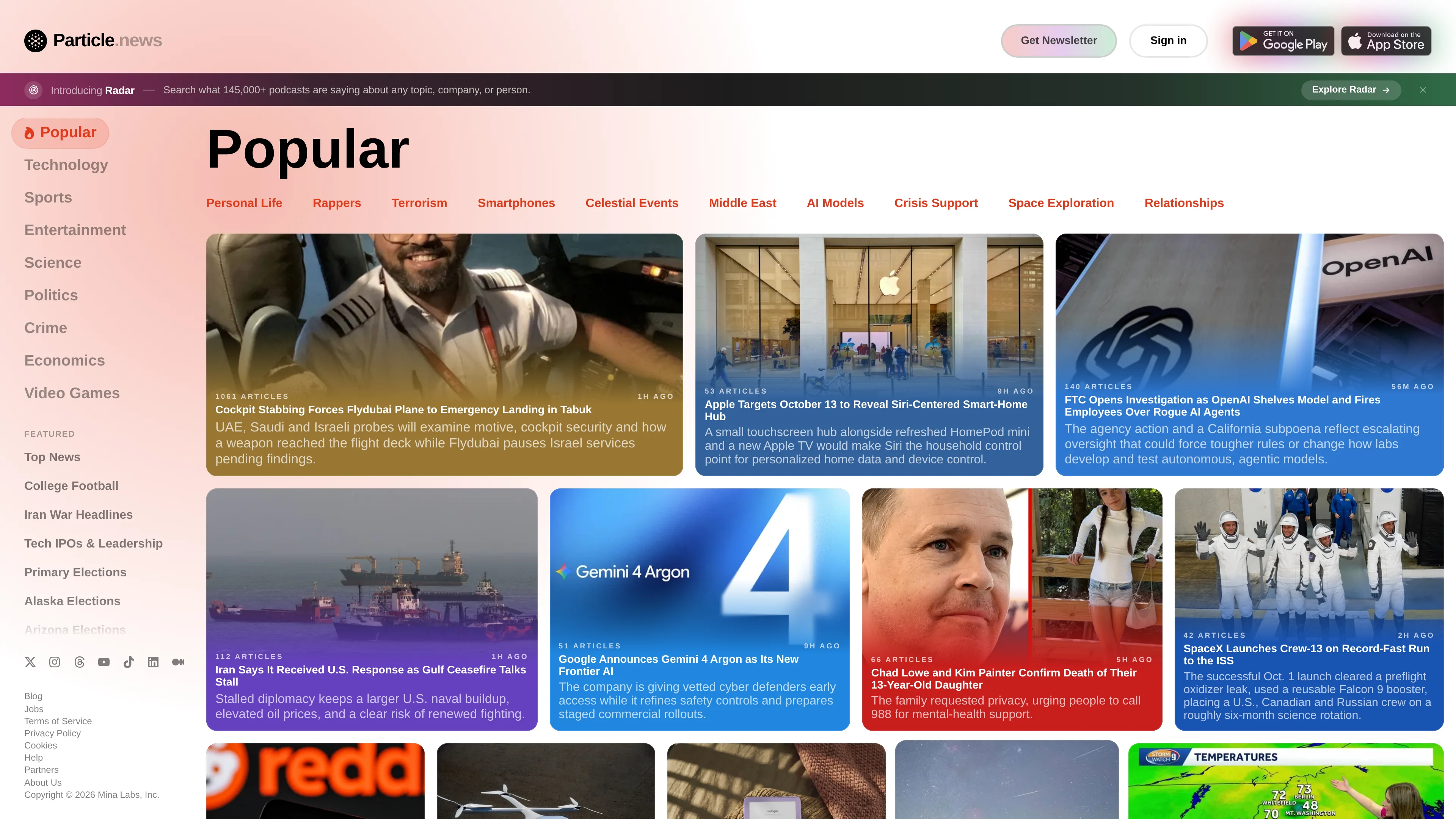
Particle is an AI-powered news aggregation and summarization product operated by Mina Labs. Rather than publishing original reporting, it automatically clusters articles about the same event from different outlets into a single "Story," then uses large language models to produce bullet-point summaries, opposing-viewpoint comparisons, and a map of where the covering publishers sit on the political spectrum. Links to the original articles are displayed prominently beneath each summary, sending readers back to publisher sites. Coverage spans politics, technology, sports, entertainment, science, economics, and more, across a web app and native iOS and Android apps; the core product is free.
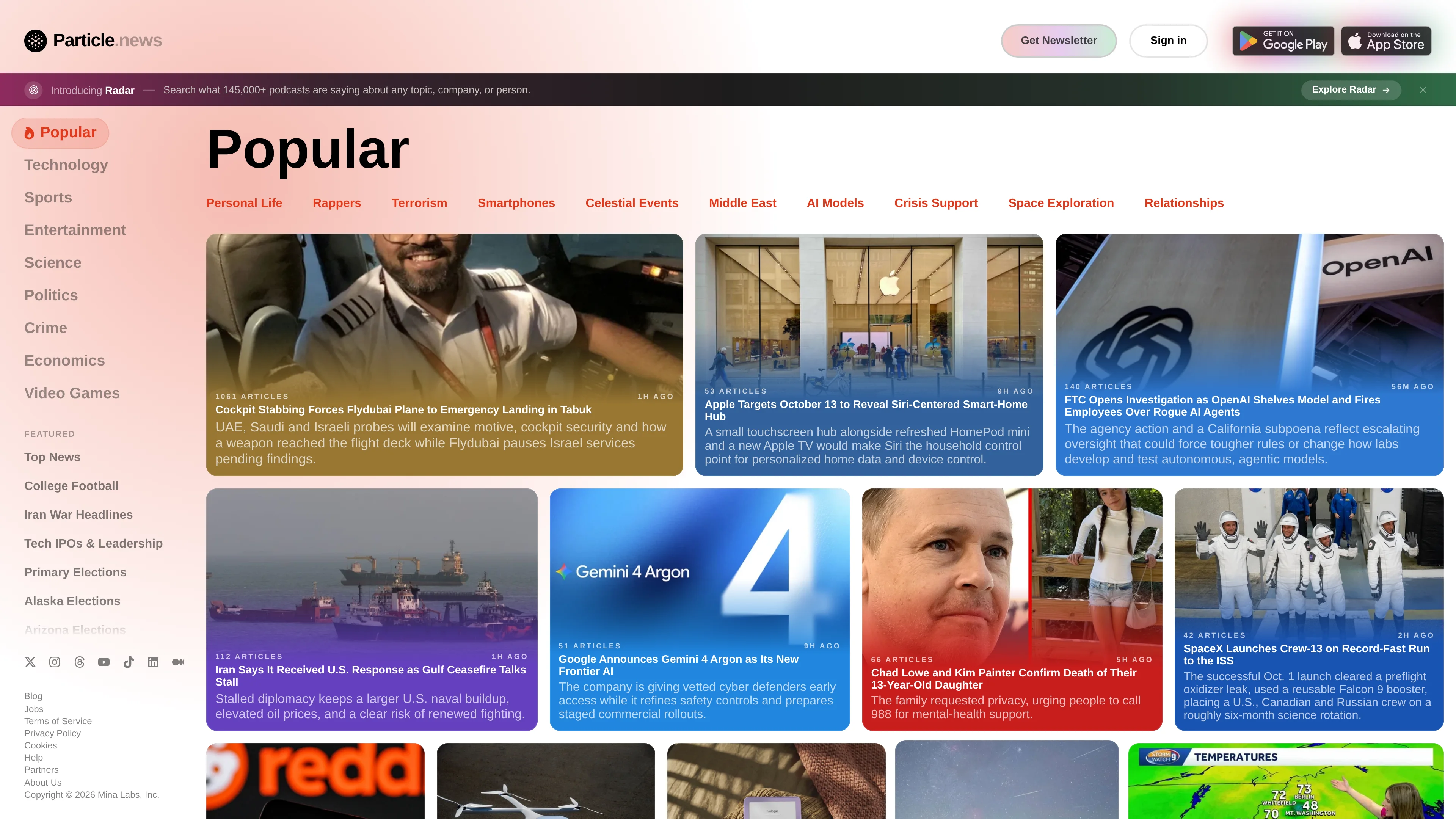
At a Glance
- URL: https://particle.news
- Type: AI news aggregation and summary reading (plus a separate podcast search product, Radar)
- Cost: Free; the optional Particle+ subscription costs 29.99/year (US pricing, as of 2026-10-02) and adds custom summary styles, voice choices, private questions, the full crossword archive, and app icons
- Registration: Not required to read stories and summaries; asking questions and following topics require a lightweight profile
- Interface language: English; story overviews can be switched to translated versions in more than ten languages, including Mandarin, Cantonese, Spanish, French, and Arabic
- Platforms: Web (particle.news), iOS app, Android app (launched February 2026)
Background
Particle is developed by Mina Labs, Inc., based in San Rafael, California. The company was founded in February 2023 by two former Twitter engineers: CEO Sara Beykpour, who spent six years at Twitter and rose to Senior Director of Product Management, working on Twitter Blue, Twitter Video, and the experimental twttr app; and CTO Marcel Molina, previously a senior engineer at Twitter and Tesla.
The company raised a $4.4 million seed round led by Kindred Ventures and Adverb Ventures (with angel investors including Twitter co-founder Ev Williams and Behance founder Scott Belsky; the round closed in April 2023), followed by a $10.9 million Series A led by Lightspeed Venture Partners with participation from publishing group Axel Springer.
Product timeline: an invite-only beta began in February 2024; the iOS app launched publicly in November 2024; the web version arrived in May 2025; the Android app launched in February 2026 alongside podcast clips; and in August 2026 the podcast-indexing technology was spun out as Radar, a search product aimed at developers and institutions.
Core Capabilities
Story clustering and multi-style summaries
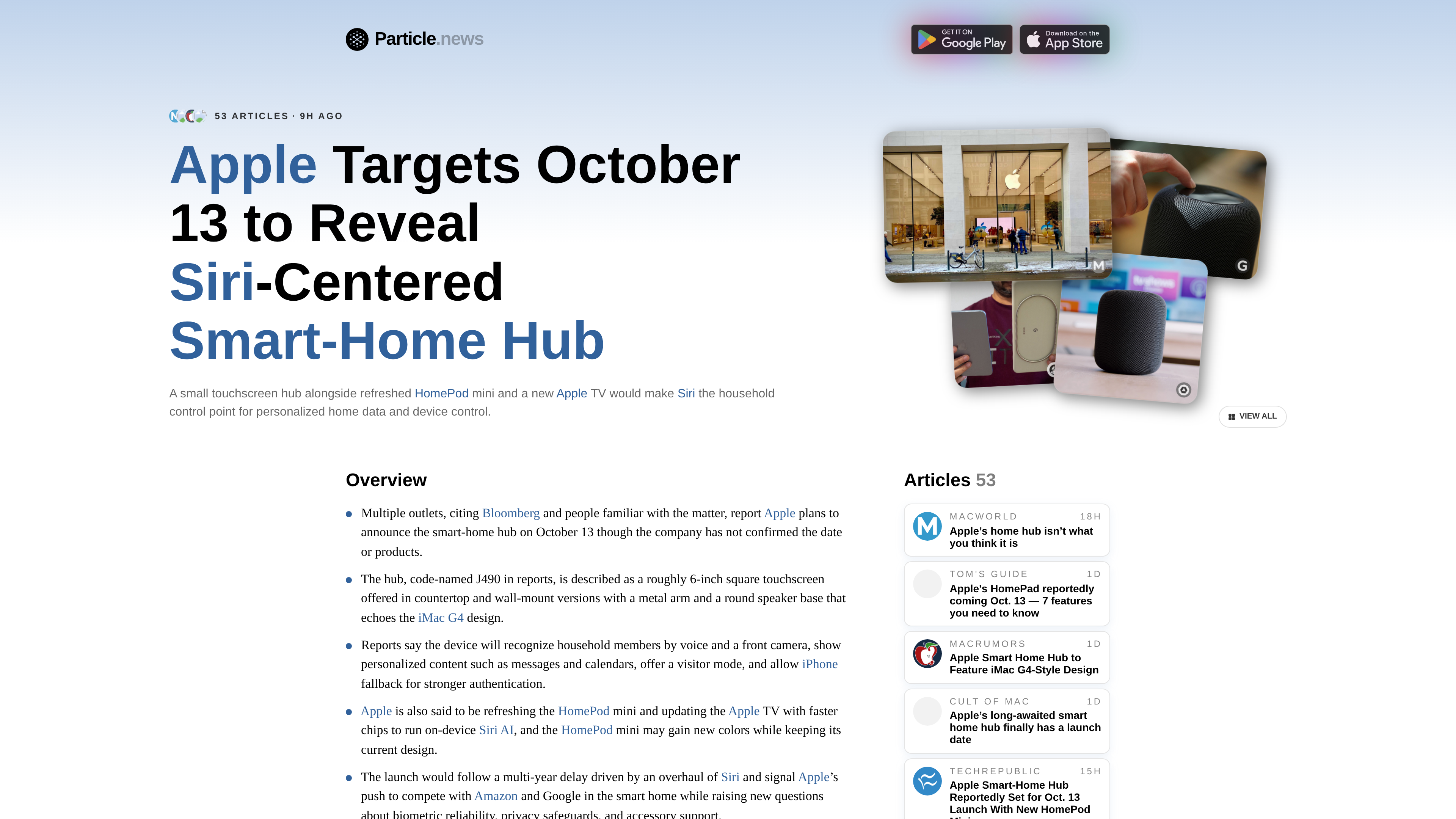
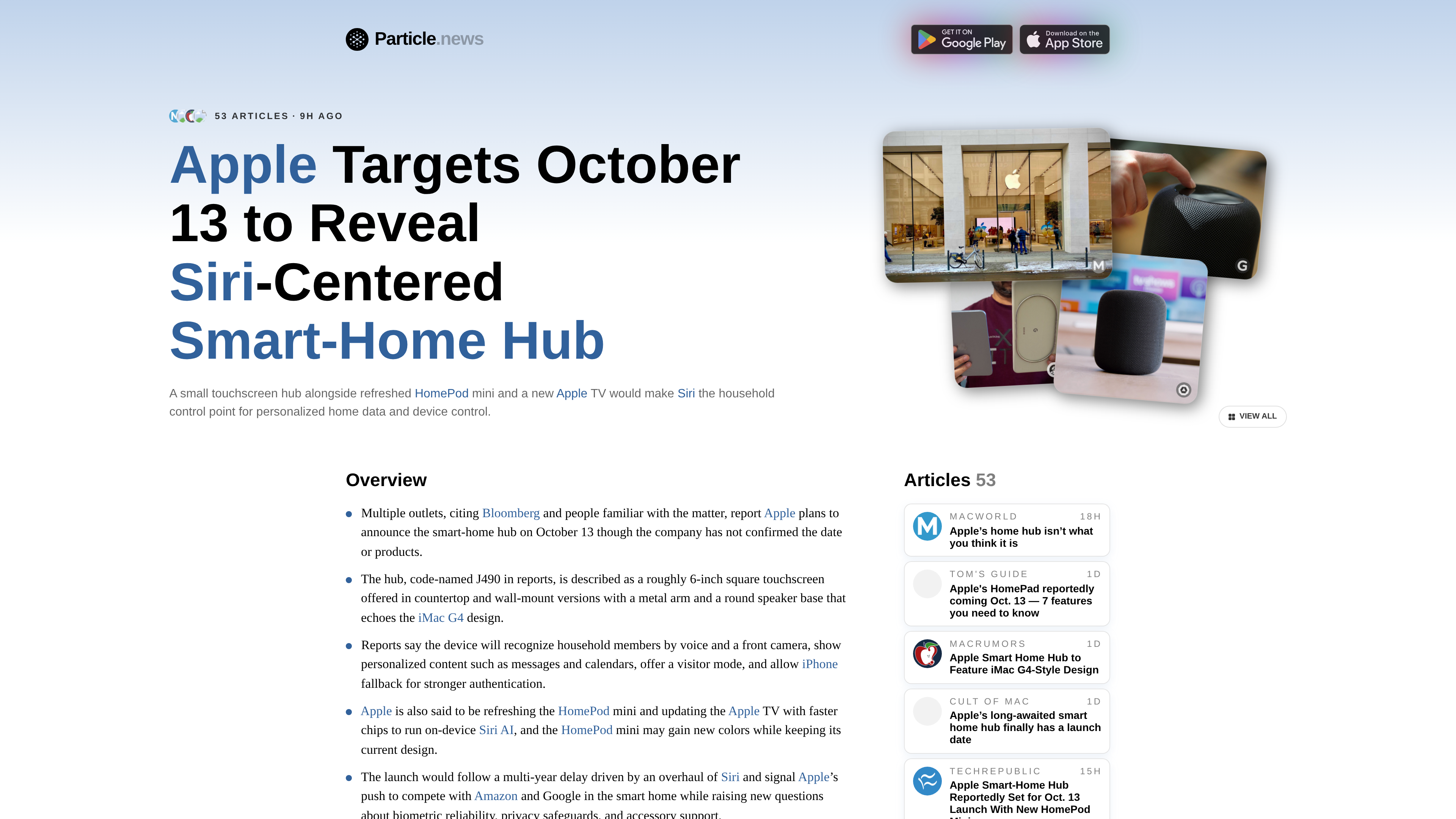
The basic unit on Particle is not an individual article but a Story, generated only when at least three articles from at least two different publishers cover the same event; summaries of isolated single articles are not shown. Each Story opens with a bullet-point Overview and can be re-rendered in several summary styles: "Opposite Sides," which lays out two differing viewpoints; "The 5 Ws," organized around who, what, where, when, and why; "Explain Like I'm 5," which simplifies complex events; and "Translated Overview," which renders the overview in another language. Key people, organizations, and products in the summary appear as highlighted entity links that open dedicated entity pages.
Political spectrum and coverage analysis
For politics stories, Particle plots the covering publishers on a US political-spectrum chart. Leaning designations are made at the publisher level, aggregated from two non-partisan organizations — AllSides and Media Bias/Fact Check — and the company states it does not use AI or employee opinion to rate outlets. Building on these designations, the product shows the share of left- and right-leaning coverage, summarizes how the two sides differ in tone and emphasis, and lists headlines side by side by leaning. When coverage of a politics story skews heavily to one side, the story receives a "One-Sided" label.
Following entities, Q&A, and verifiability
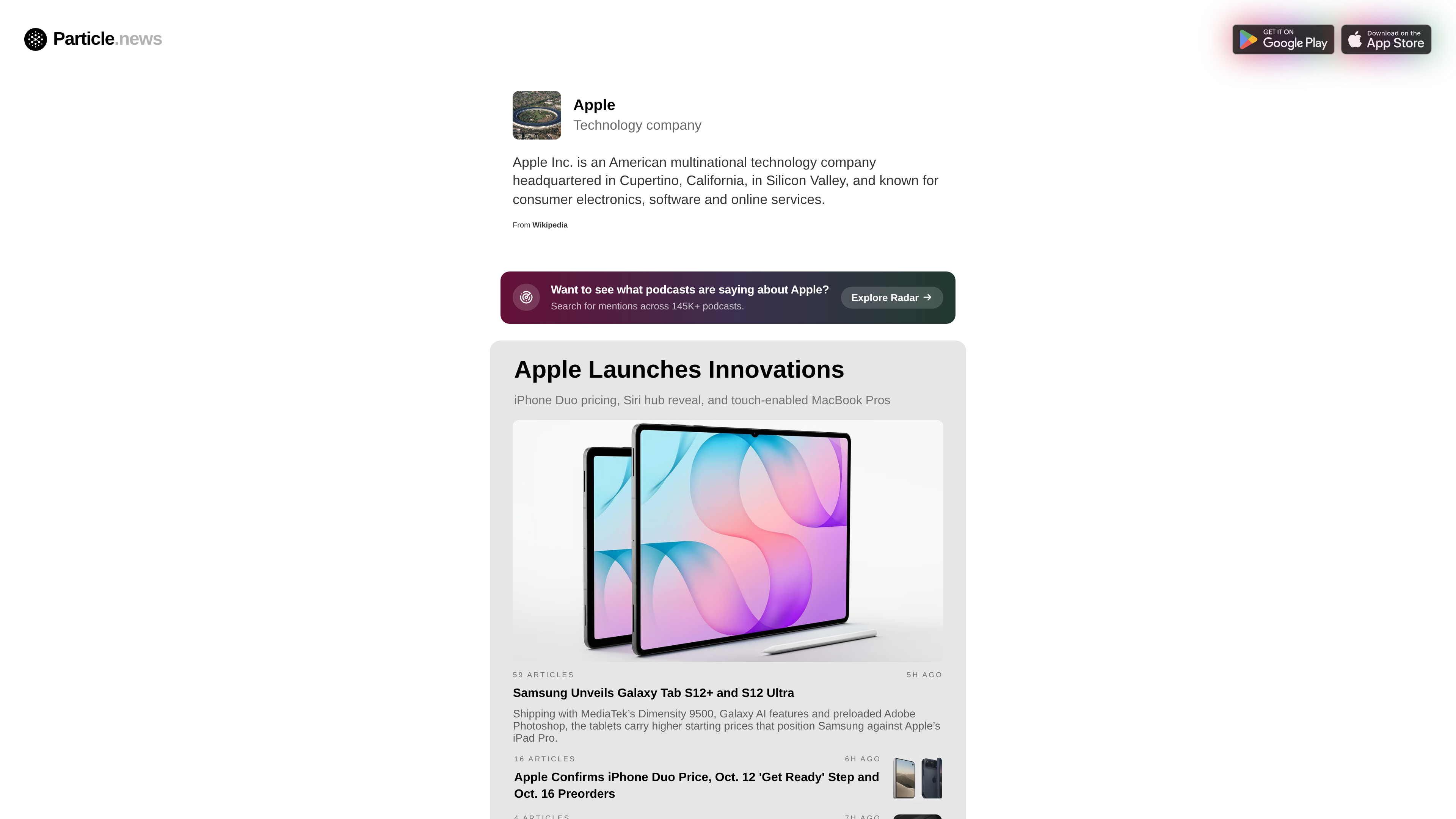
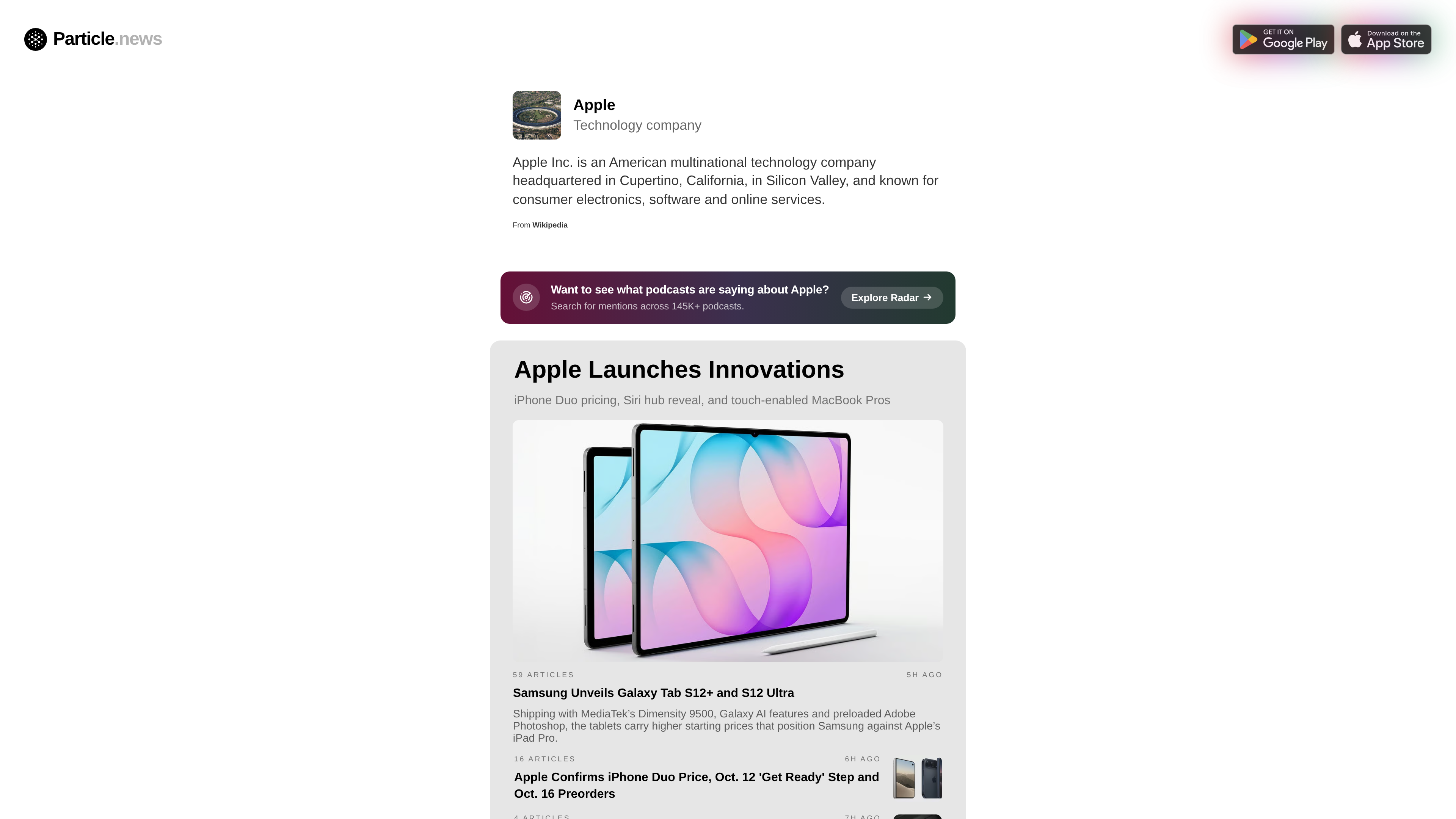
Users can follow entities — people, places, and things — as well as individual journalists and publishers; new developments then appear in a personalized feed with optional push notifications. Entity pages provide a short background description (sourced from Wikipedia, with attribution) and a feed of related stories.
Readers can ask natural-language questions about any story. The system returns a fast answer first, then verifies it against sources and adds citations before finalizing; questions and answers are public and attributed to the asker. Each summary bullet can be expanded to reveal "Supporting Material" — source excerpts that back the claim plus a generated explanation of the reasoning. According to the company's description of its accuracy pipeline, generated summaries pass automated eval checks and a "Reality Check" against the source material (failing generations are regenerated), supplemented by human review and in-app reporting.
Audio and podcasts
"Listen to the News" turns a personalized feed into an audio briefing (speech synthesis by ElevenLabs; the free tier offers a single voice). Podcast Clips, launched in February 2026, use vector embedding models to match podcast content to news stories and insert relevant clips into the story feed, playable as audio or readable as transcripts. The same technology became a standalone product in August 2026: Radar, a podcast search engine and API with speaker labels, entity recognition, and mention alerts. The company says it indexes more than 145,000 podcasts (as of 2026-10-02), with customers including hedge funds and AI search platforms.
How AI is used
Per the official help center, Particle uses large language models from OpenAI, Cohere, and Anthropic for summarization, story clustering, question answering, and quote extraction, under agreements that these providers do not train on the data Particle sends them. Particle does not train foundation models itself; it also uses traditional AI models from Google Cloud and audio technology from ElevenLabs.
Content Sourcing and Copyright
Particle's model is aggregation plus summarization plus referral: beneath each summary, links to the original articles appear with large tap targets, journalist bylines, and photos, leading readers to publisher sites or to in-app publisher and author pages. The company has emphasized since launch that it does not want to compete with publishers for traffic, and early testing indicated readers were indeed clicking through to source sites.
On the business side, Particle pays for a subscription to the Reuters newswire and works with publishers including Reuters, AFP, and Fortune through API partnerships: partner links are highlighted in gold at the top of article lists, and their reporting can be read inside the app without ads. The company says it is also discussing access to paywalled content with publishers; specific revenue-sharing terms have not been made public. Sources span outlets across the political spectrum, including the AP, Reuters, CNN, Fox News, and The Guardian. Entity-page background text comes from Wikipedia. User questions are public user-generated content governed by community guidelines.
Who It's For
- Readers who want the full picture of a developing event on one screen instead of opening multiple outlets one by one.
- Users interested in how outlets of different political leanings frame the same event (within the US political context).
- Anyone who wants to follow specific people, companies, products, or teams and get notified when they make news.
- Commuters who prefer listening to an audio briefing, or readers who want to jump straight to the podcast segments discussing a story.
- Journalists, researchers, and institutions searching podcast mentions of entities via Radar — an API- and institution-oriented product separate from the consumer news reader.
Limitations
- English-only interface. Non-English support is limited to translated story overviews; original articles, navigation, and Q&A are in English.
- AI summaries can be wrong. Despite Reality Checks, citation tooling, and human spot review, generated content may diverge from the source material; important details should be confirmed in the original reporting.
- Strong US orientation. The political spectrum uses the American left–right frame and applies only to politics stories; sources and featured collections (such as state election hubs) are US-centric, so value for non-US readers varies by topic.
- The web app does less than the mobile apps. The website supports browsing stories, summaries, and existing Q&A, but not asking the AI new questions directly; following, notifications, and personalization live mainly on mobile.
- Limited iOS availability. As of an April 2025 help-center article, the iOS app was listed only in the US and India App Stores (no update since); the Android app has been available worldwide since February 2026, and the web version has no regional restriction.
- Sign-in options are unclear. Older help-center documentation mentions Apple ID login only, while the site now includes email-related flows; current options are not consistently documented.
References
- Particle website / About Us / Help Center
- Official blog: Android launch announcement (2026-02-18)
- Help Center: Particle Stories (story page anatomy)
- Help Center: How does Particle use AI?
- TechCrunch: seed round coverage (2024-02-29)
- TechCrunch: Series A and the Reuters partnership (2024-06-11)
- TechCrunch: public launch and the publisher model (2024-11-12)
- TechCrunch: web launch (2025-05-06)
- TechCrunch: Podcast Clips (2026-02-23)
- TechCrunch: Radar launch (2026-08-26)