NASA's Astronomy Picture of the Day (APOD) is a daily feature that publishes one astronomy image per day, each accompanied by a short explanation written by a professional astronomer and annotated with hyperlinks to primary sources. The site is operated as a service of the Astrophysics Science Division at NASA's Goddard Space Flight Center, NASA Science Activation, and Michigan Technological University. Unlike a general image library, APOD's value lies in its "one picture, one story" editorial approach rather than sheer volume; its archive, accumulated day by day since June 16, 1995, is described by the project as "the largest collection of annotated astronomical images on the internet" (About APOD).
At a Glance
- URL: https://apod.nasa.gov/ (NASA has announced the main site is moving to science.nasa.gov/apod; as of 2026-09-01 both addresses are live)
- Type: Daily astronomy feature / science-outreach archive
- Cost: Free; no advertising on the main site
- Registration: None required to browse, search, or use the API (the API requires a free key)
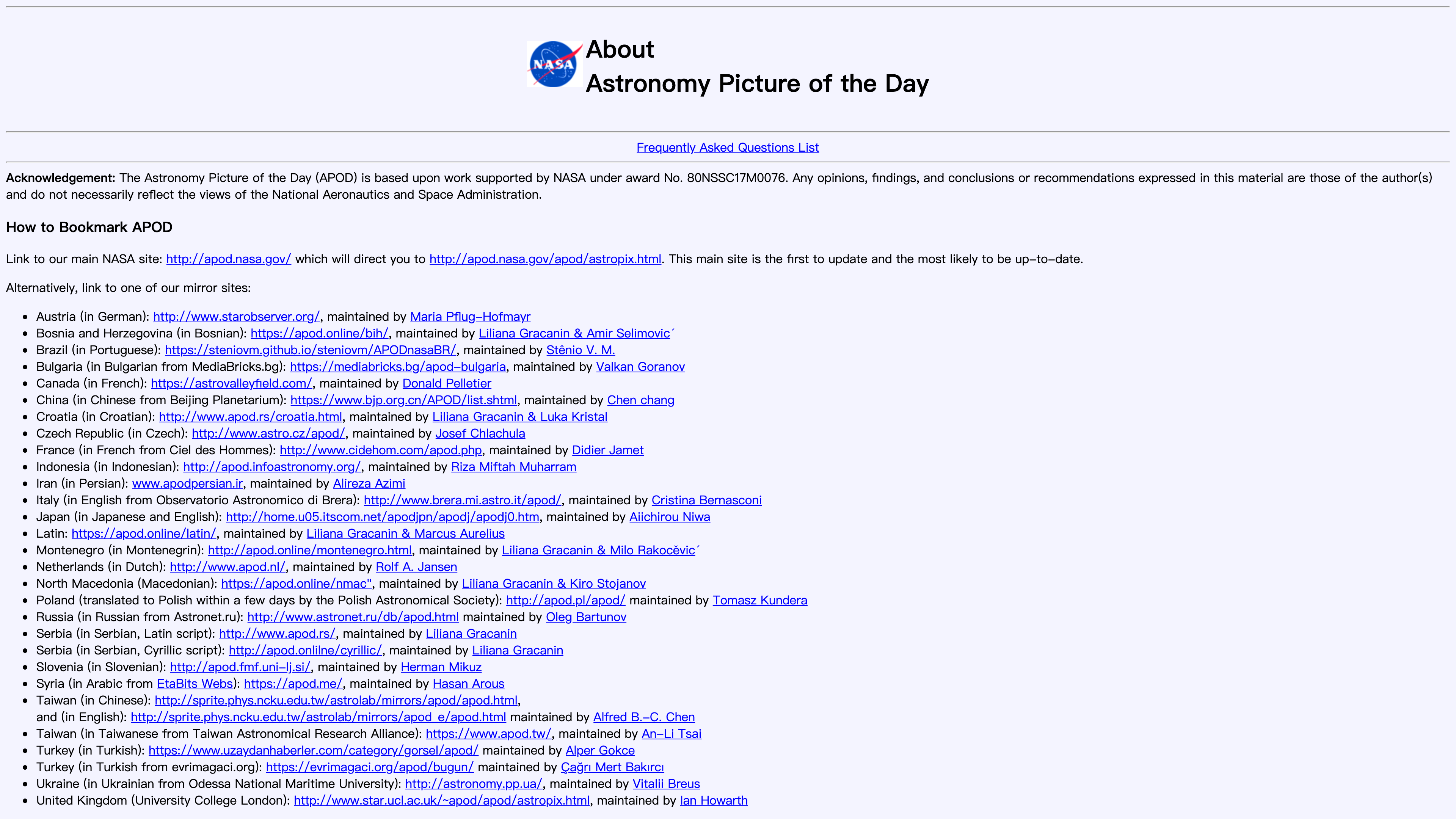
- Interface language: English; volunteer-maintained mirror sites exist in many other languages, including a Chinese mirror run by the Beijing Planetarium
Background
APOD was founded in 1995 by two professional astronomers, Robert Nemiroff (a professor at Michigan Technological University) and Jerry Bonnell (a scientist at NASA's Goddard Space Flight Center), who remain its authors and editors (About APOD). The archive preserves every entry back to the first one on June 16, 1995 — by daily cadence, more than 11,000 entries as of 2026-09-01. Since 2020, APOD has occasionally run explanations written by volunteers, who are generally professional astronomers (APOD FAQ); the newer NASA Science pages also list Cecilia Chirenti and Keighley Rockcliffe on the editorial team (science.nasa.gov daily page).
APOD was also among the earliest sites to make journalistic use of "full web hypertext": nearly every key concept in an explanation links out to a relevant primary page, so a reader can follow a single image down into the mission, paper, or dataset behind it (APOD FAQ).
One Image a Day, Explained by Professionals
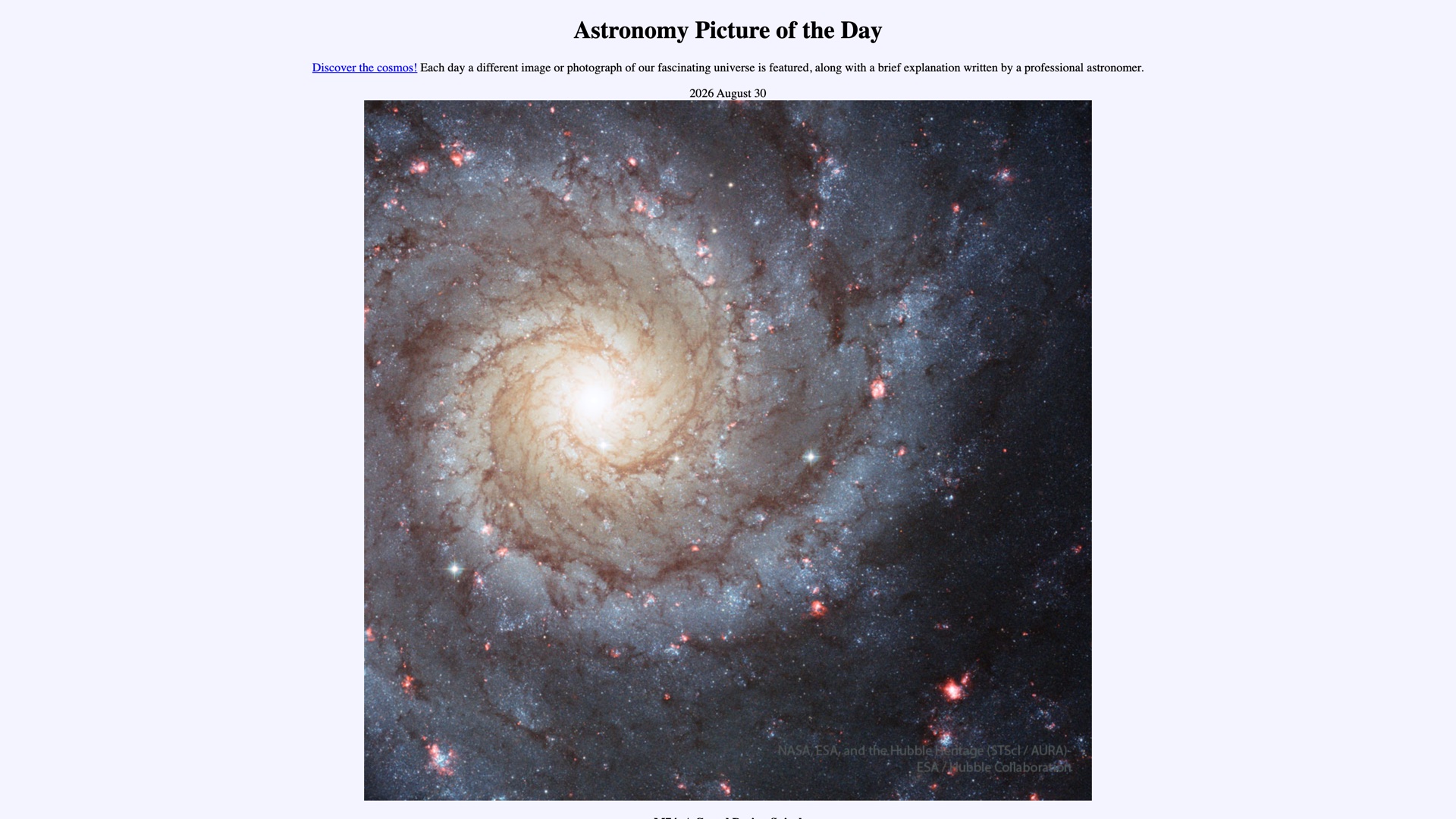
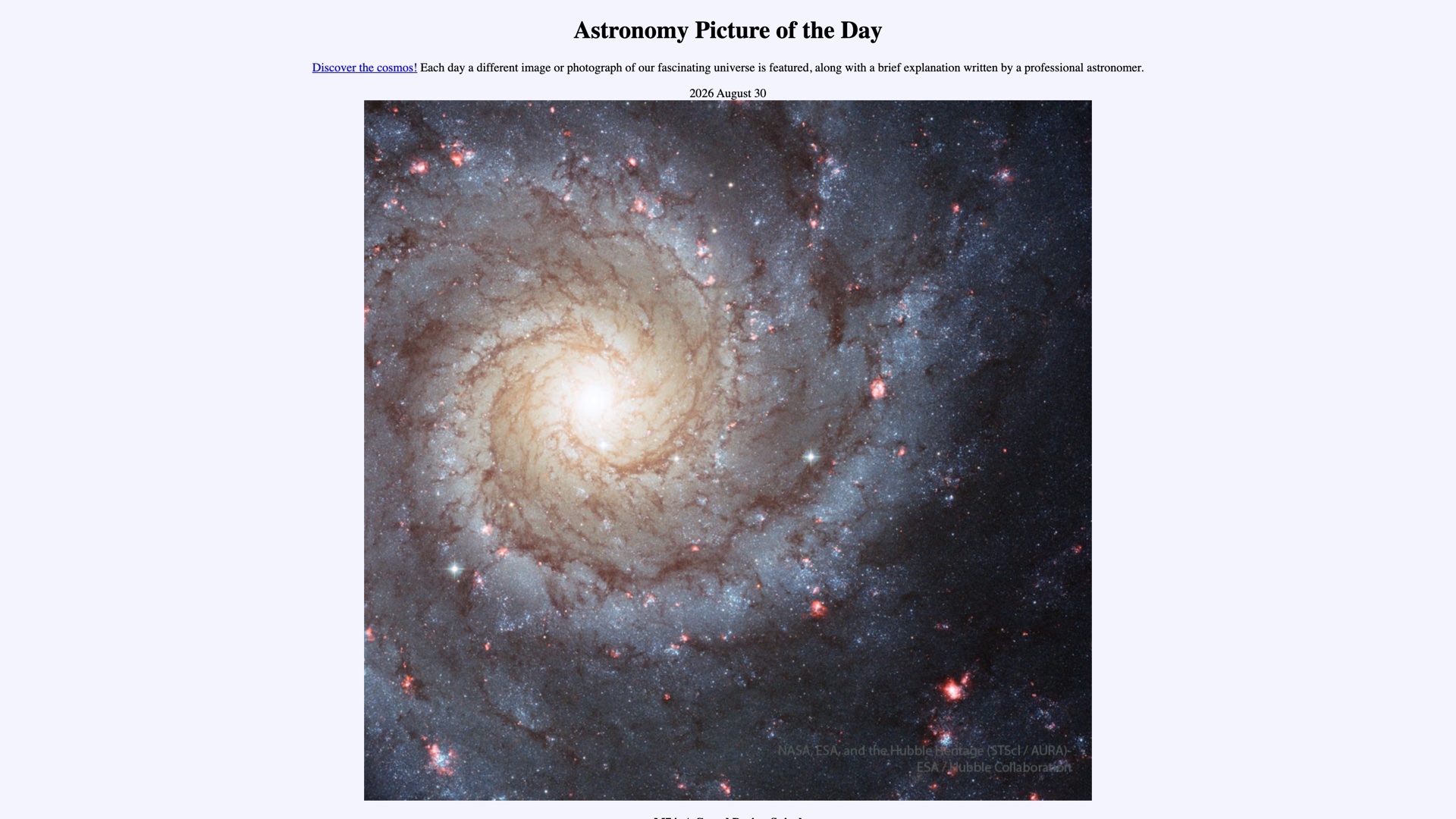
Every daily page follows the same layout: date, image, credit line, explanation, and a "tomorrow's picture" teaser. Clicking the image opens the highest-resolution version APOD hosts; the links inside the explanation lead to deeper material. Subjects range from space-telescope imagery and ground-based astrophotography to planetary-probe photos, sky events (eclipses, comets, auroras), and a smaller number of clearly labeled simulations and visualizations.
One caveat: not every day's entry is a debut. APOD's stated rerun policy is to repost only images more than a year old, almost never more than twice a week, with refreshed text and links when it does (APOD FAQ).
Archive, Search, and the Open API
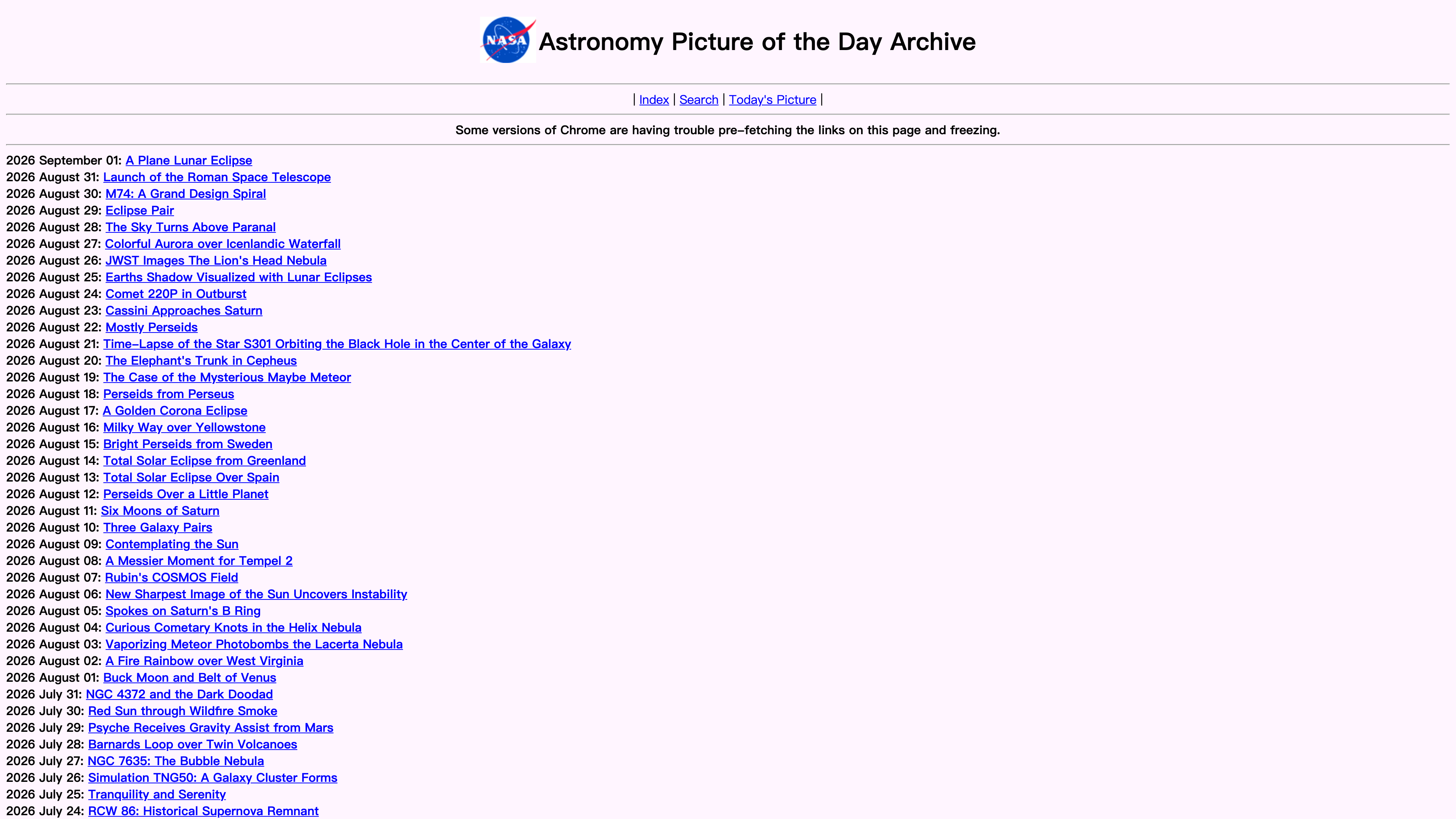
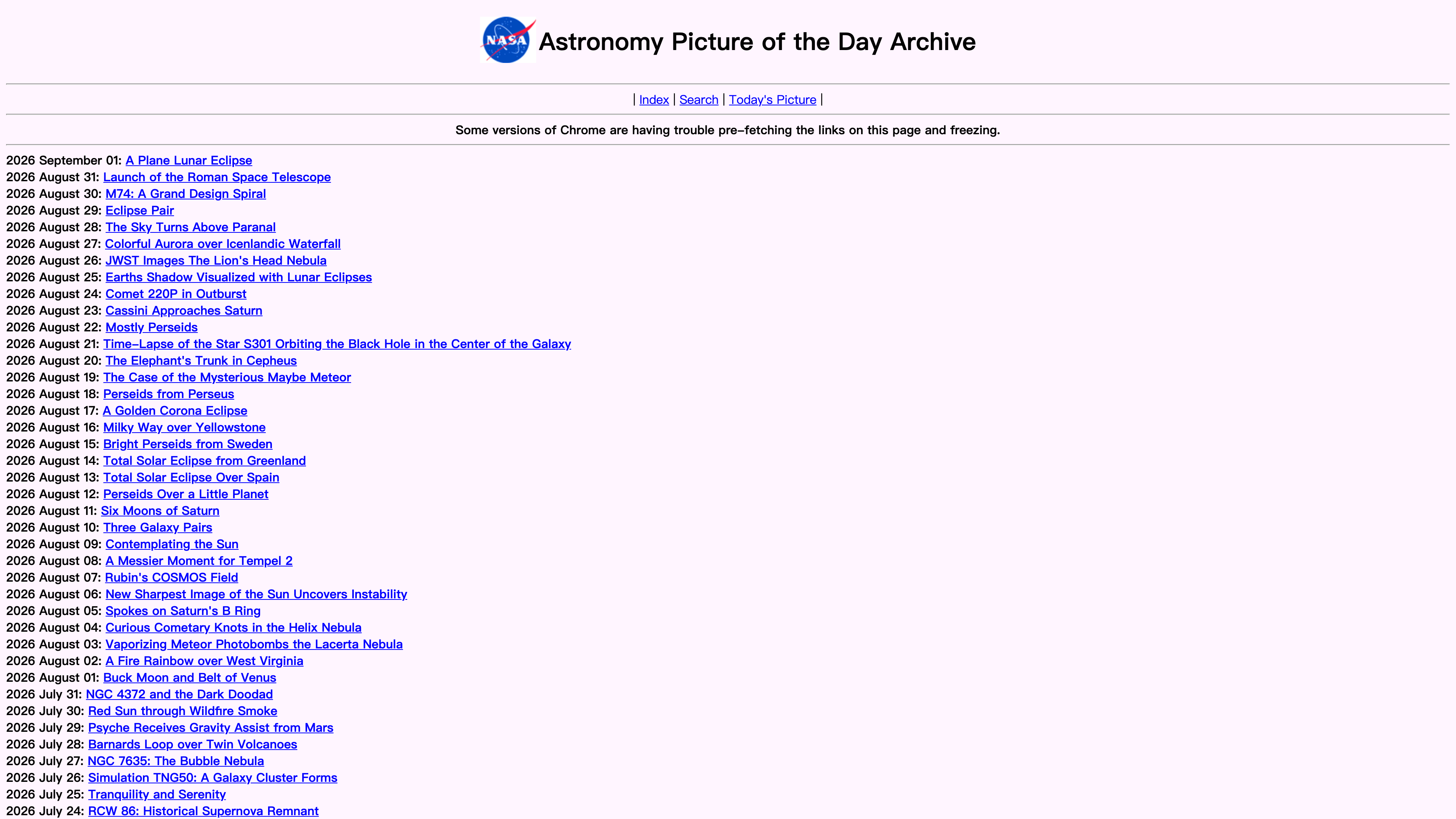
All past entries are listed in reverse chronological order on the full archive page, from the current day all the way back to June 16, 1995. The site also offers a topical index, on-site search, a calendar view, and an RSS feed. For developers, NASA provides an open APOD API at api.nasa.gov: after registering for a free key you can fetch the image URL and explanation metadata by date (a rate-limited DEMO_KEY is available without registration). The submission page notes that submitted images may be distributed through this open API as well (Submit an image to APOD).
Submissions and Content Policy
Anyone can email astrophotography submissions to the two editors; the submission page asks for the time and location of the shot, and the editors say they make an effort to review every emailed image. One of several selection criteria — not the only one — is gauging relative popularity on APOD's social pages. APOD accepts composited or digitally manipulated images, but requires that they be identified as such with the techniques described "in a straightforward, honest and complete way" (Submit an image to APOD).
By submitting, you consent to your image being used in all of APOD's forms: mirror sites, world-language mirrors, yearly calendars, and derivative products. Some distribution channels, such as the Facebook fan page, carry advertising, and APOD recommends adding a small copyright notice in a corner of submitted images. Community discussion happens on the Starship Asterisk forum and a Flickr group.
Copyright and Image Permissions
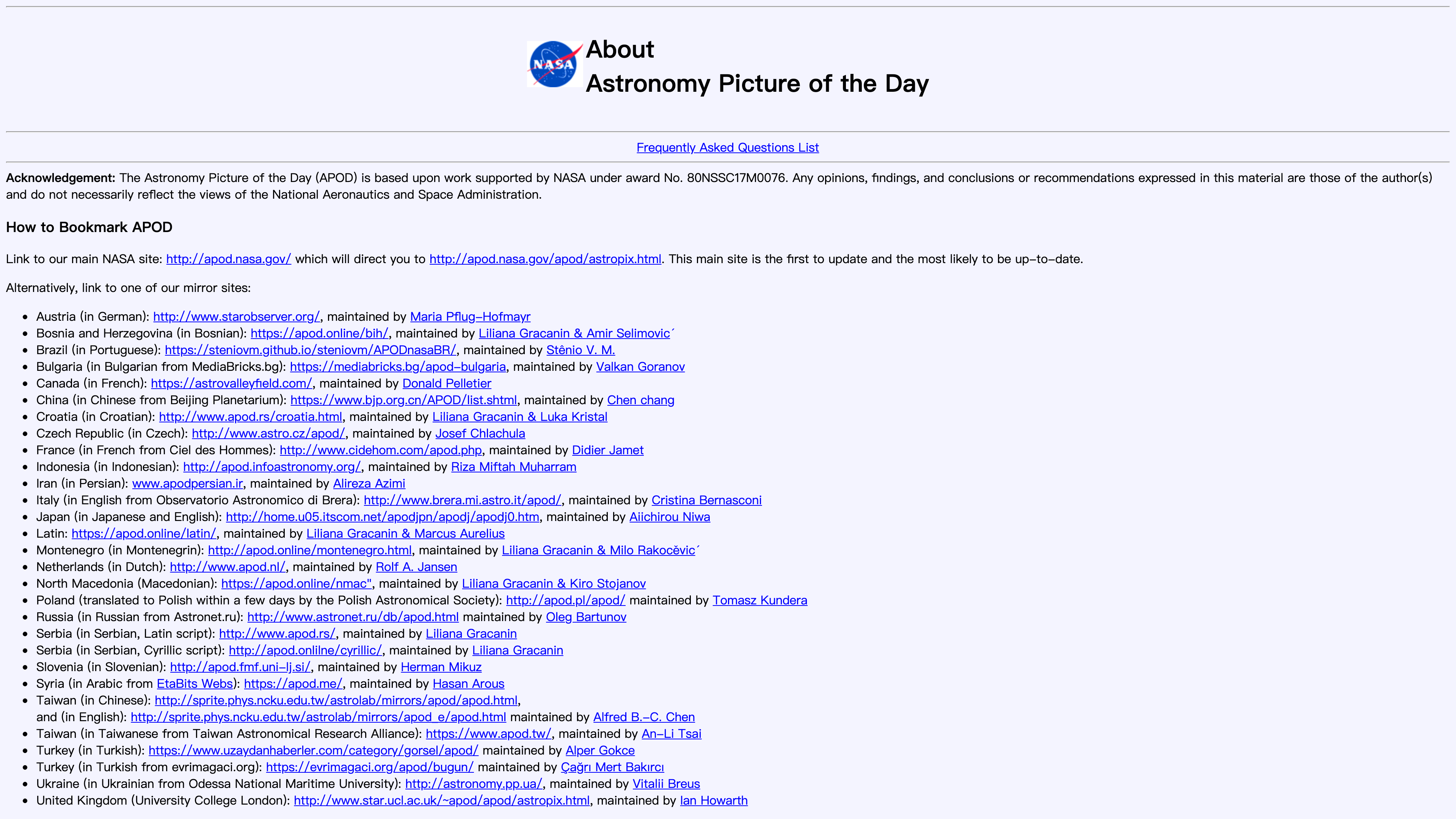
Copyright on APOD is not one-size-fits-all, and About APOD draws the line clearly:
- Every image is credited to its owner or originating institution. Some images are copyrighted, and public or commercial use requires permission directly from the owner (linked in the credit line). Neither NASA nor APOD can grant permission for these.
- NASA's own images are in the public domain, governed by the NASA Media Usage Guidelines — educational and informational use generally needs no permission, though the NASA insignia itself is protected by law and no use may imply NASA endorsement.
- Personal desktop wallpaper and classroom use fall under non-commercial fair use and are explicitly allowed in the APOD FAQ.
Who It's For
- General readers who want to spend a few minutes a day on a striking space image and actually understand what they're looking at;
- Teachers and science writers looking for authoritatively explained imagery (checking the credit line image by image before reuse);
- Developers who want to pipe the daily astronomy picture into their own apps via the API;
- Astrophotographers looking for a high-visibility venue that accepts public submissions.
Limitations
- The site keeps its early-web design, with no responsive layout and a mediocre mobile experience; search is basic, with no structured filters by object type, instrument, or wavelength.
- One image per day means depth depends entirely on that day's pick — it is no substitute for a systematic astronomy database.
- Rights vary image by image: "hosted on a NASA site" does not mean "free to use," so every reuse requires checking the credit line.
- Official content is English-only; mirrors in other languages are volunteer-run and vary in timeliness and completeness.
- The main site is migrating from apod.nasa.gov to science.nasa.gov/apod (announced on the homepage as of 2026-09-01), so the long-term stability of old URLs is uncertain.