Letterboxd (letterboxd.com) is a social network for film lovers founded in 2011 in Auckland, New Zealand, by web designers Matthew Buchanan and Karl von Randow. It answers a simple need: after watching a film, where do you systematically record that you saw it, what you rated it, and what you thought — and see what everyone else said? Members keep a dated diary of films watched, rate on a five-star scale with half-star steps, write reviews of any length, tag, build lists and a watchlist, and follow each other to form a taste-driven activity feed. Unlike IMDb (a reference database) or Rotten Tomatoes (a critic aggregator), Letterboxd centers on grass-roots discussion by ordinary members — it describes itself as "a global social network for grass-roots film discussion and discovery" and is often called "Goodreads for movies" (official FAQ). All film metadata comes from the open database TMDb, the service is free, and the company states that membership subscriptions are its chief source of income.
At a Glance
- URL: https://letterboxd.com
- Type: Film tracking / review community (web plus iOS, Android and Apple TV apps)
- Cost: Free (third-party ads on web and in apps); Pro US49/year, excluding any applicable sales tax
- Registration: Not needed for browsing; logging, rating and reviewing require a free account; the terms require users to be at least 16
- Interface language: English only
- Film data: TMDb (credited in the site footer and official documentation)
(Verified by direct visit on 2026-09-02.)
Background
The two founders worked together at web development shops from the 1990s and co-founded the design studio Cactuslab in 2001. In 2011, between client projects, they started building a "social film diary," and in October that year Buchanan demoed the private beta at the Brooklyn Beta conference (his official retrospective). An invitation-only beta followed in April 2012, and the site opened to the general public in February 2013 with the Pro paid tier launching at the same time (English Wikipedia, citing the Los Angeles Times, The Next Web and other contemporary reports).
On September 29, 2023, Canadian holding company Tiny acquired a 60% majority stake in Letterboxd at a reported valuation of US$50–60 million; the founders kept 20% each and remain CEO and CTO (official announcement, Tiny investor release, Variety).
Membership took off during the pandemic. Historical figures compiled by Wikipedia: about 1.8 million in 2020, 10 million by September 2023, roughly 17 million by the end of 2024; per Variety, the platform passed 30 million members worldwide as of June 2026 (Variety, July 2026). In December 2025 the company launched Letterboxd Video Store, a pay-per-film indie rental service, in 23 countries (Variety, December 2025). Since April 2026, Semafor and Variety have reported that Tiny is seeking a buyer for its stake, with Netflix, Sony and Paramount Skydance among parties in early talks; as of 2026-09-02 no deal has been publicly confirmed and the platform's operator is unchanged.
Logging, Ratings and Discovery
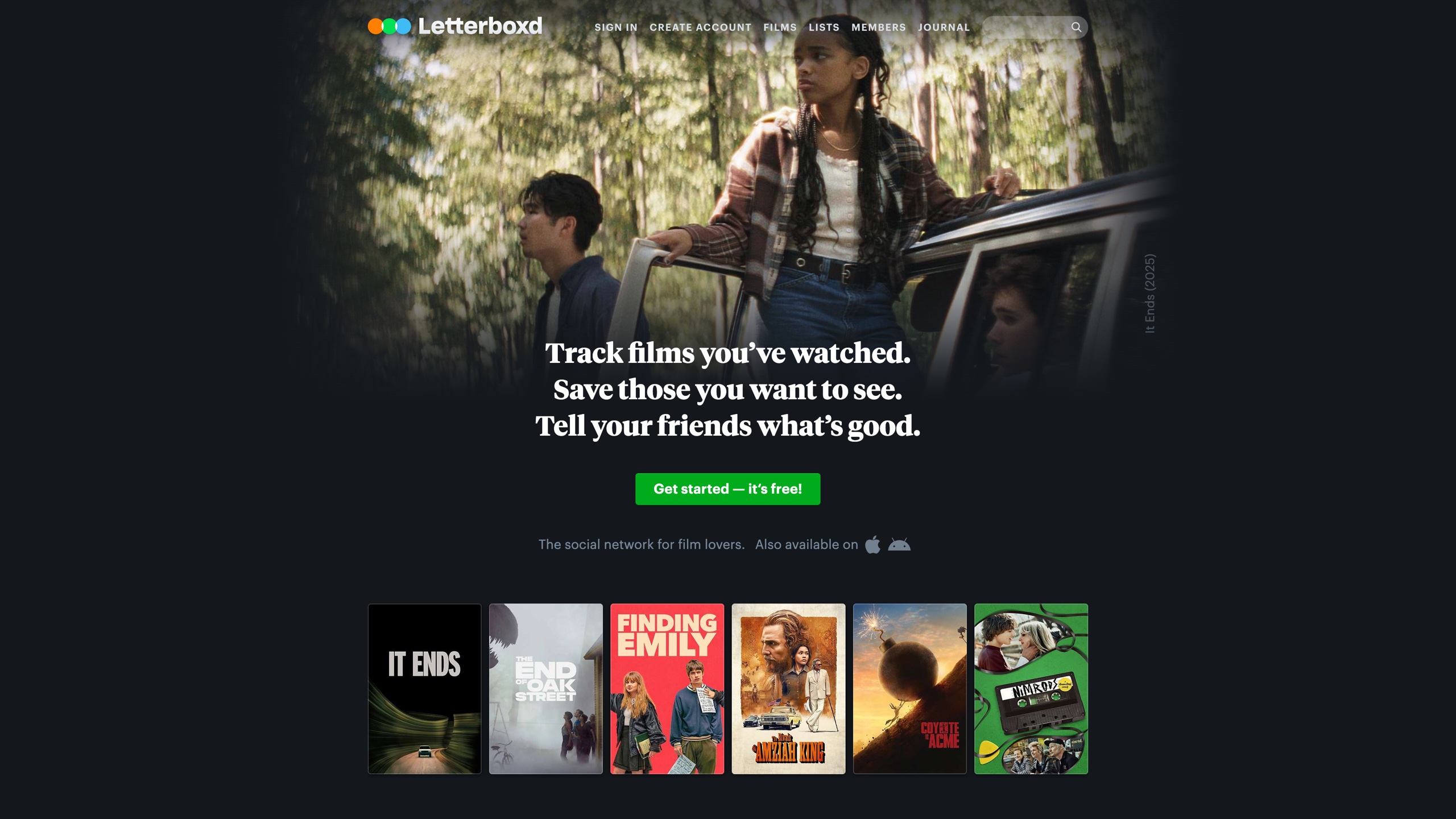
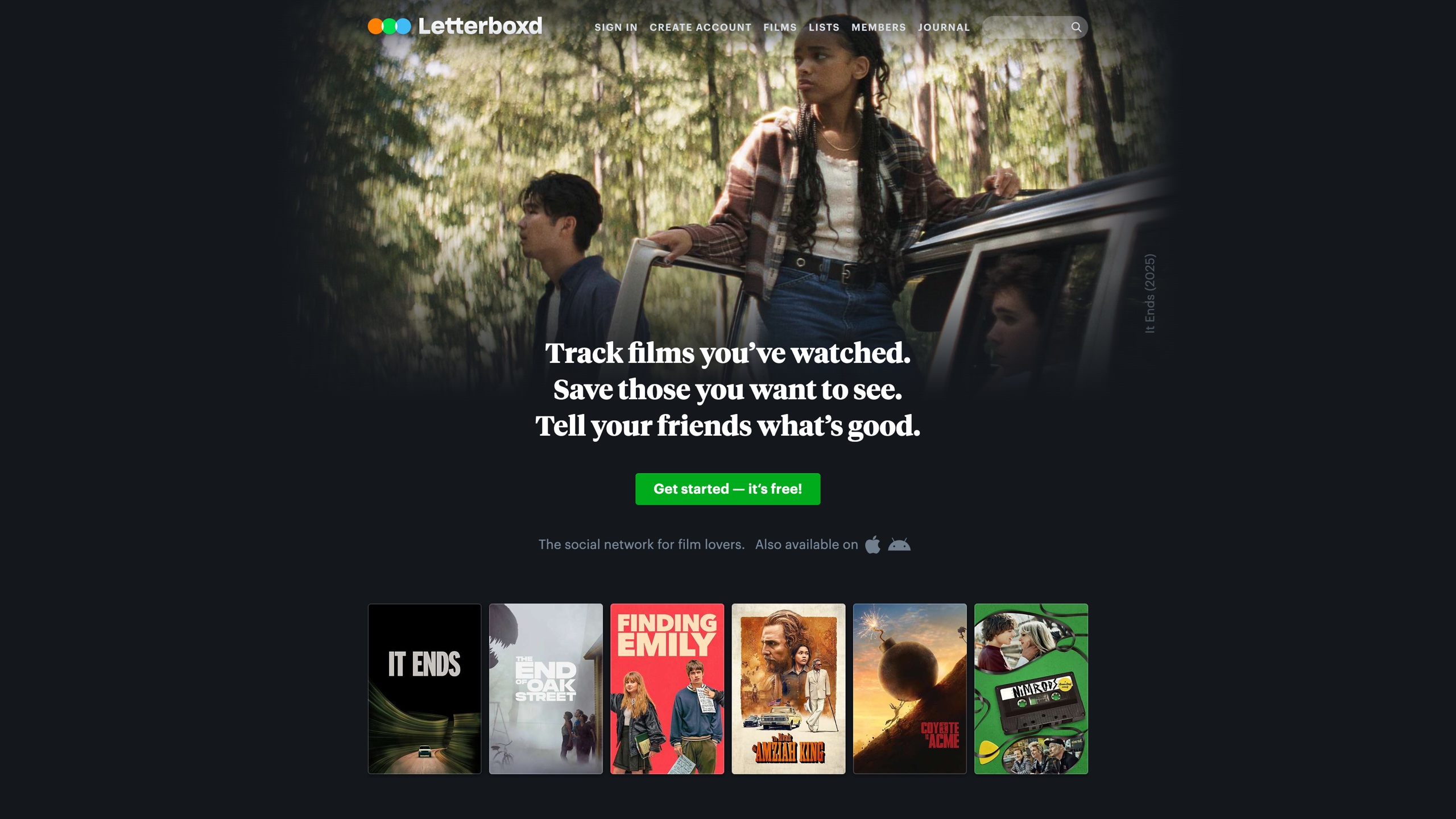
The signed-out homepage reduces the product to three lines: track films you've watched, save those you want to see, tell your friends what's good. Everything revolves around the film page:
- Marking and the diary: the "eye" icon on a poster marks a film as watched; "Log" records a viewing on a specific date, with rewatch flags, tags and an optional review. Ten diary entries in a year qualify for a Year in Review (a dedicated page for Pro members, a January email summary for free members).
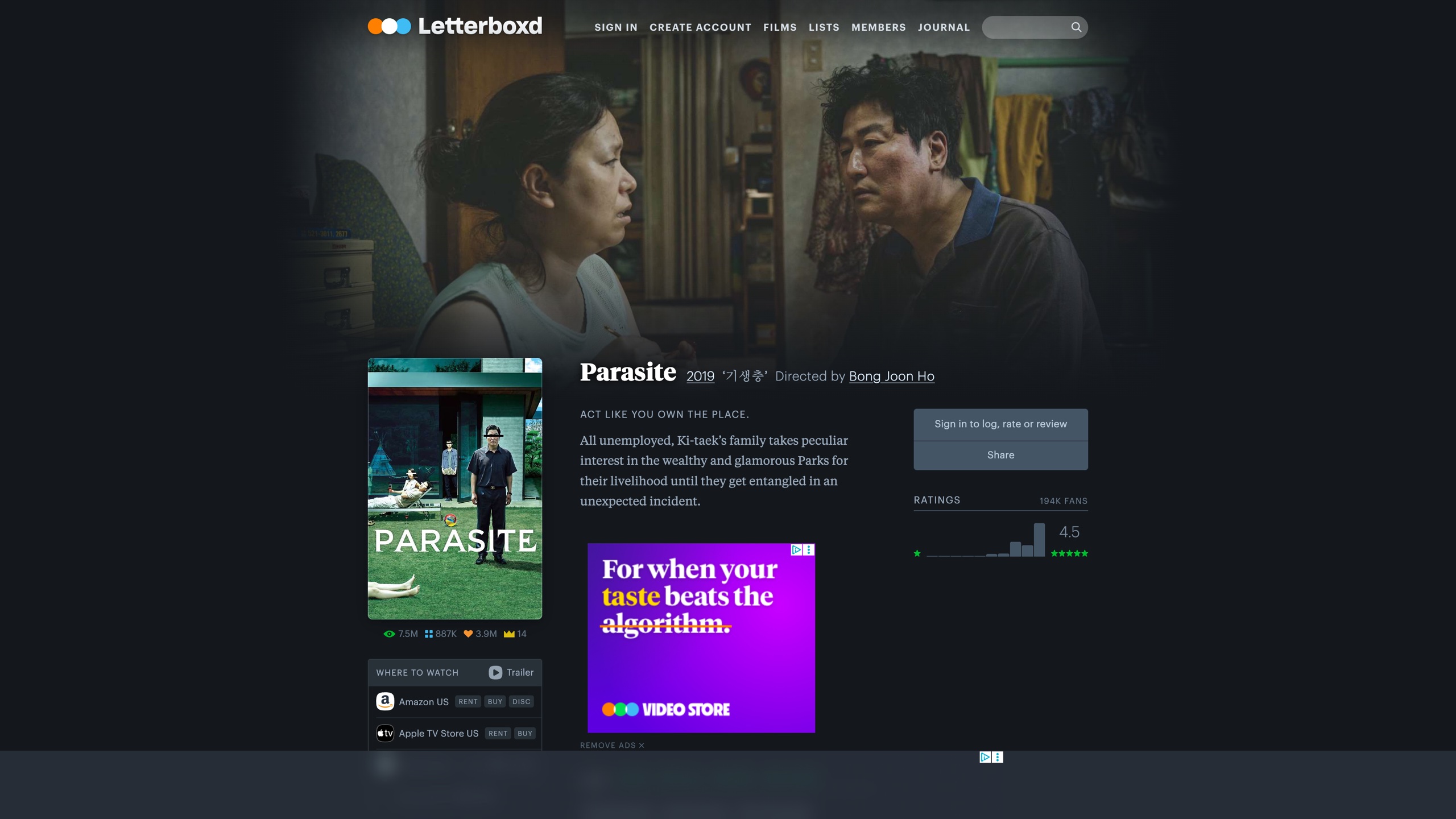
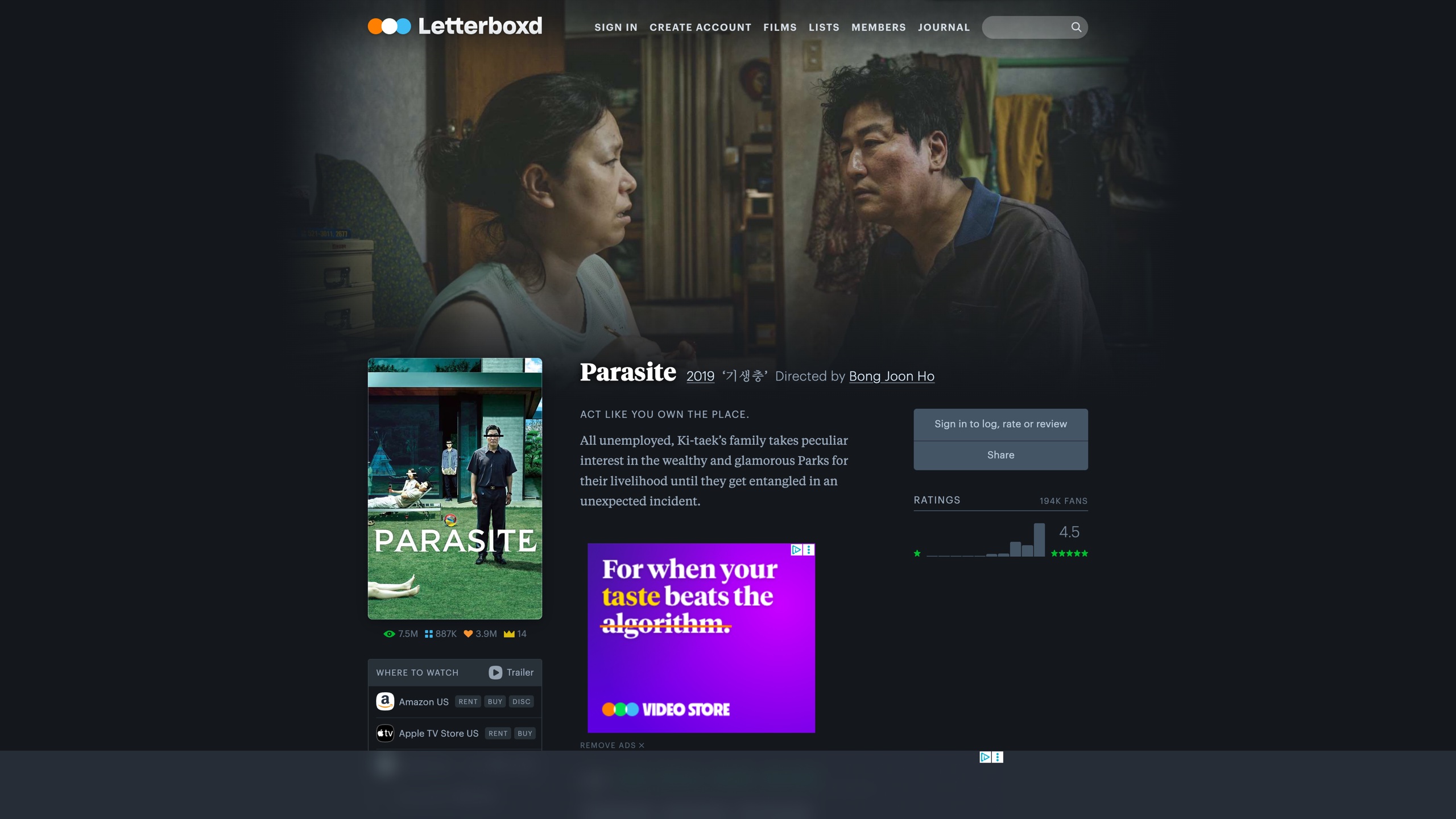
- Ratings: five stars with half-star steps. Each film page shows the community's rating-distribution histogram and a weighted average — Letterboxd says it uses weighting rather than a raw mean, counts only each member's most recent rating, and dampens manipulation patterns, without disclosing the specifics (official FAQ).
- Reviews and the social layer: reviews can be one-liners or essays, with likes, comments and spoiler flags; following other members builds an activity feed; profiles showcase "four favorites," a design that has become a cultural signature — the company's own red-carpet interview format is called Four Favorites.
- Lists and watchlist: public or private lists on any topic, ranked lists, and a watchlist; films can be filtered by the streaming services you subscribe to, with availability data from JustWatch.
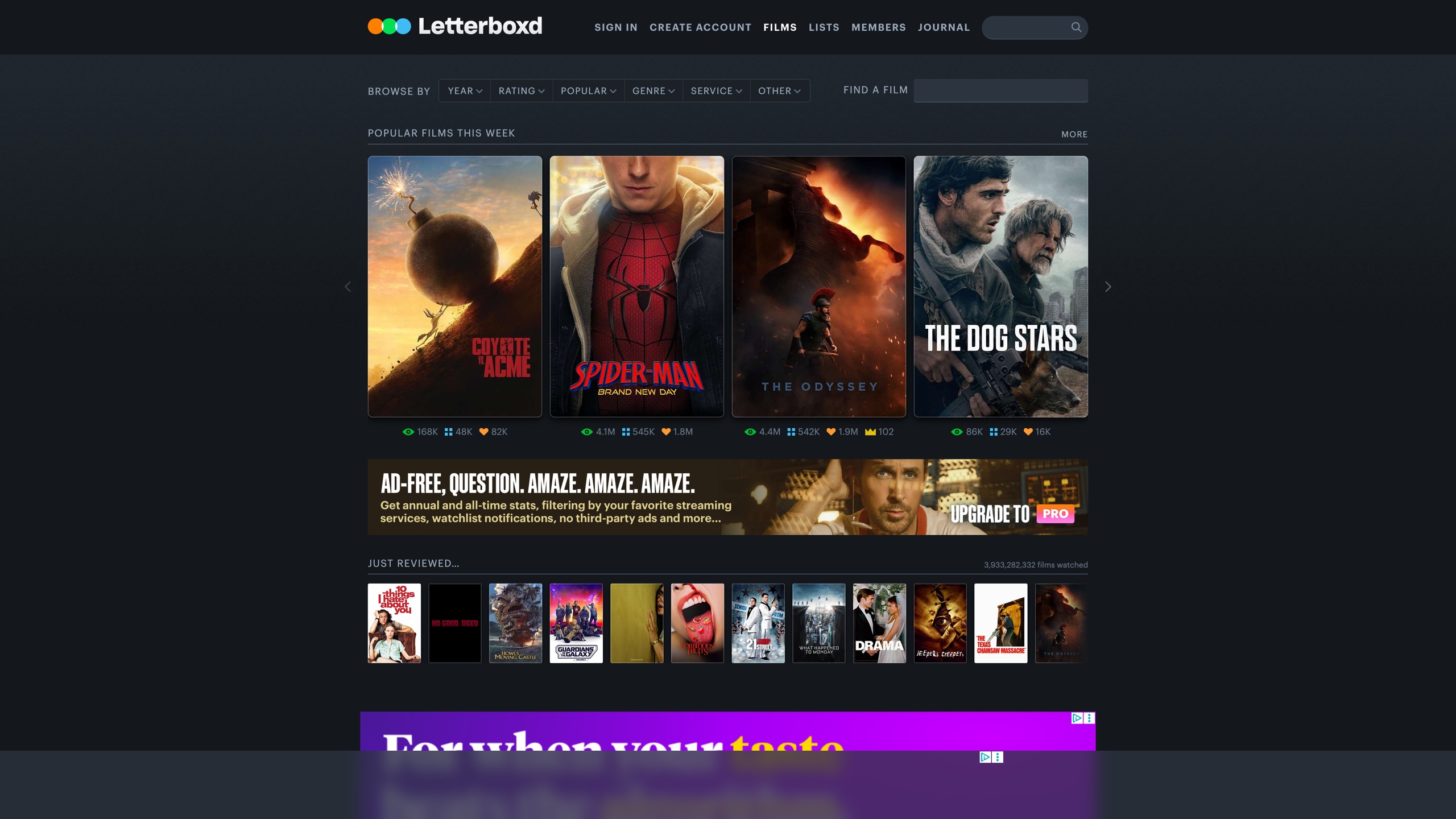
- Discovery: the browse page offers popular-this-week posters, year/rating/genre filters and official charts such as the Official Top 250 narrative features; when we visited on 2026-09-02, the site's all-time counter showed roughly 3.93 billion films logged by members.
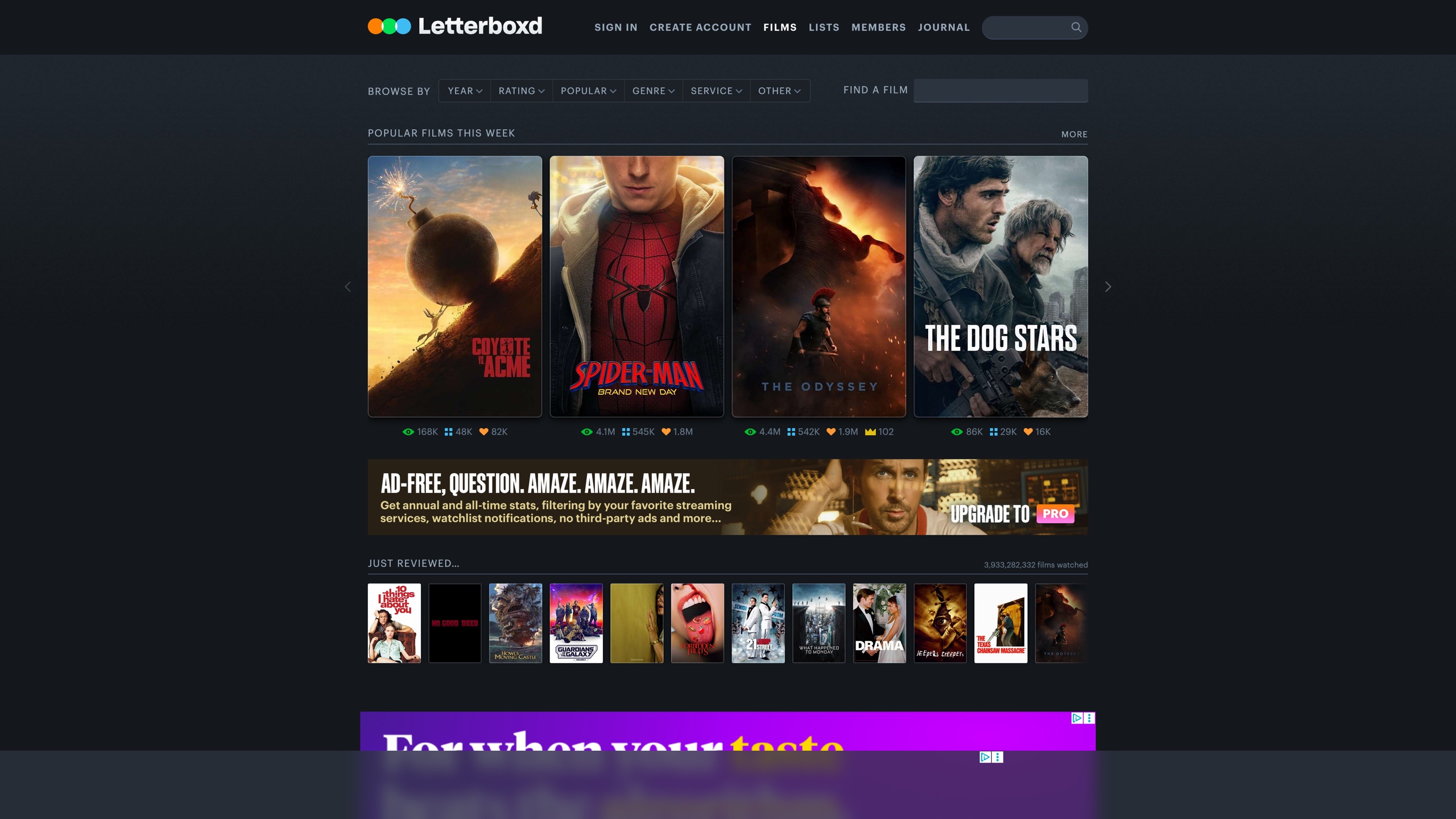
Film metadata, posters and backdrops come from TMDb (with additional posters from Posteritati); corrections are made on TMDb and typically sync back within 30 hours. Viewing history can be imported from IMDb or CSV, and personal data can be exported.
Per the company's own Year in Review published in January 2026, members logged about 900 million films, wrote roughly 140 million reviews, and cast nearly 700 million ratings during 2025 (Letterboxd 2025 Year in Review).
Membership Tiers and Pricing
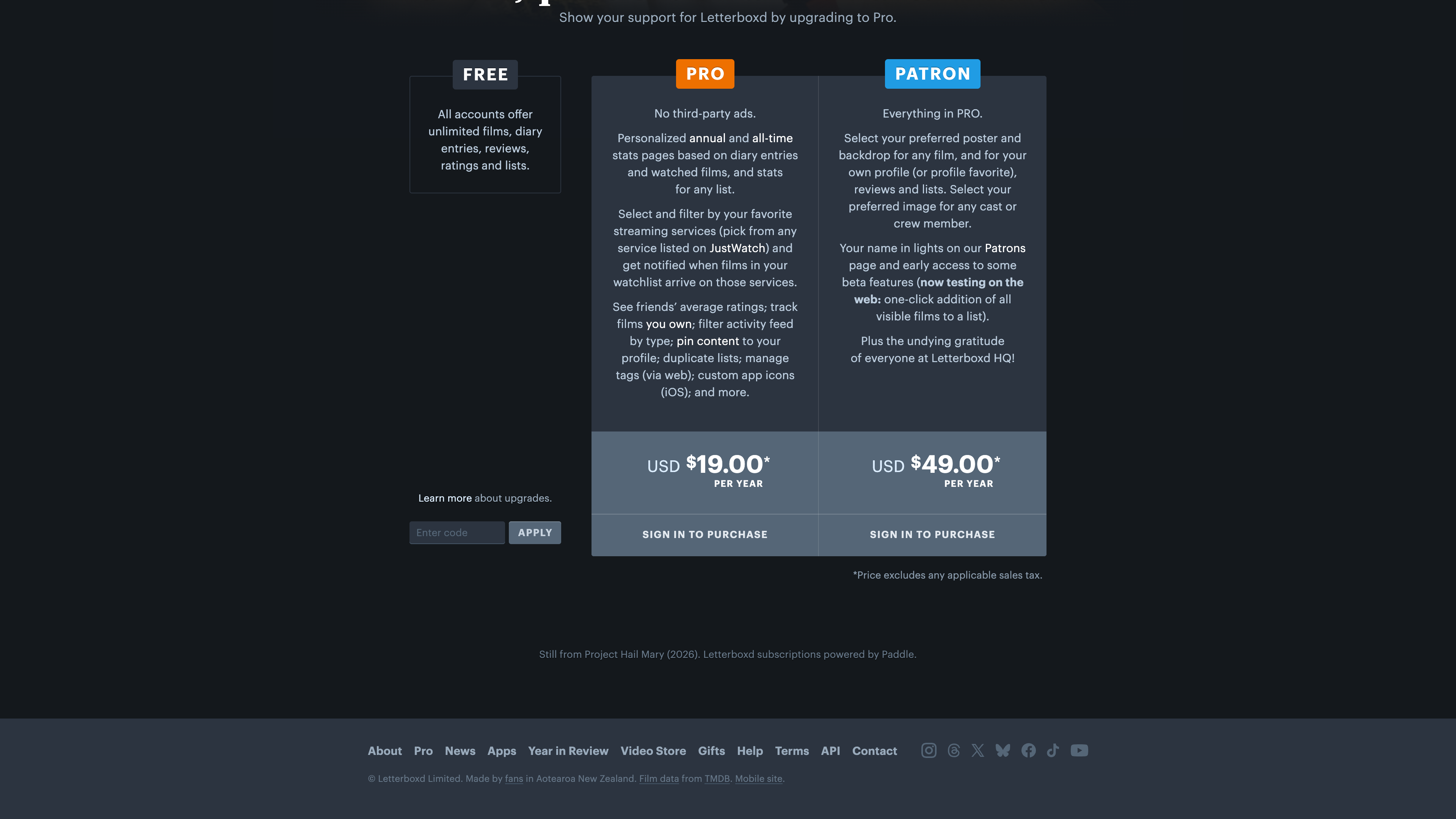
Official pricing as of 2026-09-02 (Pro page, excluding any applicable sales tax):
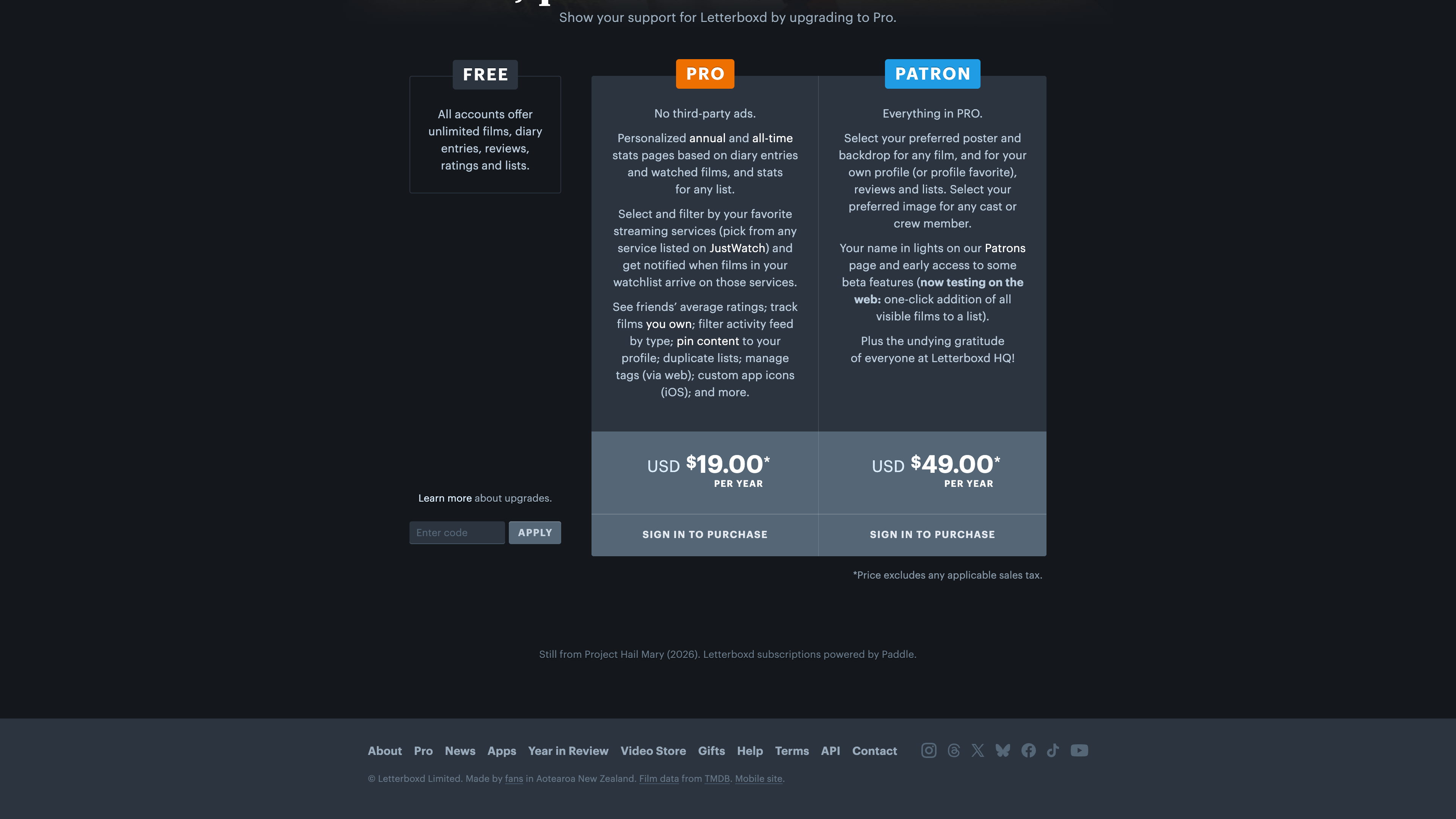
- Free: unlimited films, diary entries, reviews, ratings and lists; the trade-off is third-party advertising (with associated tracking) on the web and in the apps.
- Pro (US$19/year): removes third-party ads; personalized annual and all-time stats pages; filtering by your streaming services with notifications when watchlist titles arrive; activity-feed filtering by type; pinned profile content; list cloning; username changes every 30 days (free members get one per year); and more.
- Patron (US$49/year): everything in Pro, plus custom posters and backdrops for any film and for your own profile, reviews and lists (including cast/crew images), a listing in the Patrons directory, and early access to some beta features.
Web subscriptions are billed through Paddle, with Apple and Google in-app purchase options; plans renew annually, can be gifted, and there is an annual sale. An HQ tier exists for organizations such as cinemas and festivals. The company names membership fees as its chief source of income (paid subscriptions page).
Copyright and Content Policy
As a UGC community, Letterboxd's rules live in its community policy and terms of use:
- Ownership and license: members keep the intellectual-property rights to what they post, but grant Letterboxd a non-exclusive, royalty-free, irrevocable, worldwide, perpetual and sub-licensable license to use that content — including for commercial purposes and social-media promotion — together with the name and avatar it was posted under (Terms, section 11).
- Originality: reviews must be your own writing; plagiarism is prohibited, and quoted material must be credited with quotation marks, links or similar identifiers; posting content that infringes copyright is not allowed.
- Spoilers: reviews containing significant plot spoilers must carry the spoiler flag, or moderators will add it; list descriptions and comment threads must not contain major spoilers — "non-negotiable," in the policy's own words.
- Moderation: hate, harassment and impersonation are prohibited; a human moderation team enforces the policy and may consider off-platform behavior; violations can lead to suspension or termination. Tampering with TMDb data to circumvent import rules can get an account permanently deactivated.
- Copyright complaints: a DMCA copyright agent and notice procedure are defined in the Terms (section 24).
- Disputes: US users agree to mandatory binding arbitration and waive class actions; most users outside the US (excluding the UK/EU) are under New Zealand law.
- Artwork rights: posters and backdrops come from TMDb/Posteritati and remain the property of their rights holders; Letterboxd's own brand assets are distributed on its brand page under stated usage limits.
Also worth knowing: in February 2024 a staff account was compromised, exposing the email addresses, private lists and deleted content of "significantly less than 1%" of accounts; the company published a security notice and recommends enabling two-factor authentication. No passwords or financial information were accessed.
Good Use Cases
- Keeping a long-term, systematic film-watching archive with annual stats;
- Finding films through the taste of people you follow rather than an algorithmic recommender;
- Checking a film's community rating distribution and popular one-line reviews before watching;
- Curating themed lists and tracking independent cinema via community charts and the Video Store.
Limitations
- English only: no interface localization, and review content is predominantly English.
- Ads on the free tier: third-party advertising and associated tracking on web and apps; removing them requires Pro.
- Films only, mostly: regular TV series cannot be logged — only limited/miniseries added manually from TMDb's TV section; the full TV support announced at the 2023 acquisition had not shipped as of 2026-09-02. Use Trakt or similar for series tracking.
- A community-consensus score: the weighted average reflects the taste of the platform's core users, not critics, and the weighting algorithm is not public.
- Apps are a subset: the iOS/Android/Apple TV apps offer fewer features than the website, and the official API is private, with partner access by application.
- Ownership in transition: the majority stakeholder is reportedly seeking a sale (early-stage reporting as of 2026-09-02), so future ownership could shape the product.
- Past security incident: the February 2024 staff-account breach described above.
Alternatives
- IMDb: Amazon's film and TV reference database — strong on credits and news, weak on personal archiving and community.
- Rotten Tomatoes: aggregates professional critics into the Tomatometer and is tied to the Fandango ticketing business; Letterboxd scores come entirely from regular members.
- Trakt: tracking for both films and series, with automatic scrobbling from Plex, Kodi and others, but lighter social discussion.
- Douban: the Chinese book/film/music community combining ratings, reviews and groups — Letterboxd is often described in Chinese media as "the overseas Douban," though it has no Chinese interface.
References
- Letterboxd official site, FAQ, Pro pricing (checked 2026-09-02)
- A Tiny Announcement — founder's retrospective and acquisition note (Sep 2023)
- Tiny Announces Majority Acquisition of Letterboxd (Sep 2023)
- Letterboxd Acquired by Canada's Tiny (Variety, Sep 2023)
- Letterboxd Video Store launch (Variety, Dec 2025)
- Early sale talks involving Netflix and others (Variety, Jul 2026)
- Letterboxd 2025 Year in Review
- Community policy and Terms of use
- Security notice (Mar 2024)
- Wikipedia: Letterboxd