Fonts In Use is a public archive of typography that documents how typefaces are actually used in real design work — books, posters, album covers, brand identities, websites, packaging, and more — indexed by typeface, industry, format, and period. Unlike general inspiration galleries, every entry names the fonts involved, so you can work backwards from "how has this typeface been used?" That makes it a standard research tool for designers during project research, type selection, and pairing decisions. The archive accepts public submissions, every entry passes human editorial review, and the site is run by a small independent company funded through clearly labeled sponsorships and font retailer commissions.
At a Glance
- URL: https://fontsinuse.com/
- Type: Typography archive / design reference
- Cost: Free; no registration required to browse, no paywall anywhere
- Registration: Not needed for browsing and search; a free account is required to submit Uses, like entries, or build Sets
- Interface language: English
- Launched: December 2010 as a blog; the open-submission Collection debuted in July 2012 (About)
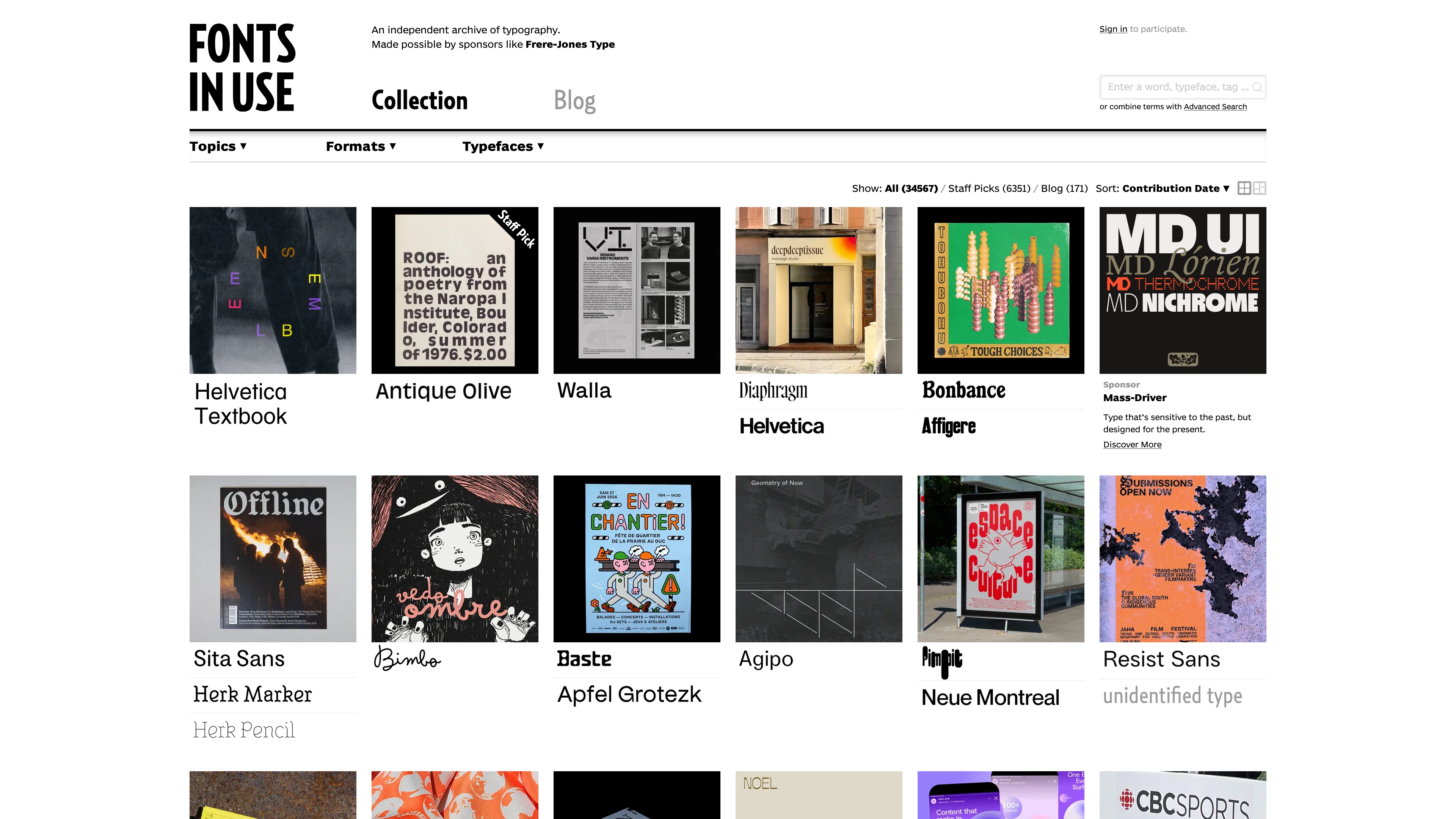
- Size: 34,567 Uses, 6,351 Staff Picks, 171 Blog posts (homepage counters as of 2026-09-18)
Background
Fonts In Use launched in December 2010 as a blog, then relaunched in July 2012 with the Collection, a much larger database open to visitor contributions (About).
The project is operated by Fonts In Use LLC. It is worth being precise: it is an independent company, not a nonprofit. The FAQ states plainly that "Fonts In Use LLC is an independent corporation," not beholden to any font foundry, with content and development free of outside influence (FAQ). The team consists of type industry veterans — managing editor Florian Hardwig, co-founders Nick Sherman and Stephen Coles, developer Rob Meek, and editors based in Berlin, New York, The Hague, Montreal, and elsewhere (Colophon).
Its funding model is disclosed in full on the editorial policy page: clearly labeled sponsorships, plus affiliate commissions from font retailers such as MyFonts, Fontspring, and Fontstand. The same page pledges that editors are not compensated by sponsors for opinions, and lists the past employment and consulting relationships staff members have with foundries — a level of transparency rare among sites of this kind.
The Collection: Design History Indexed by Type
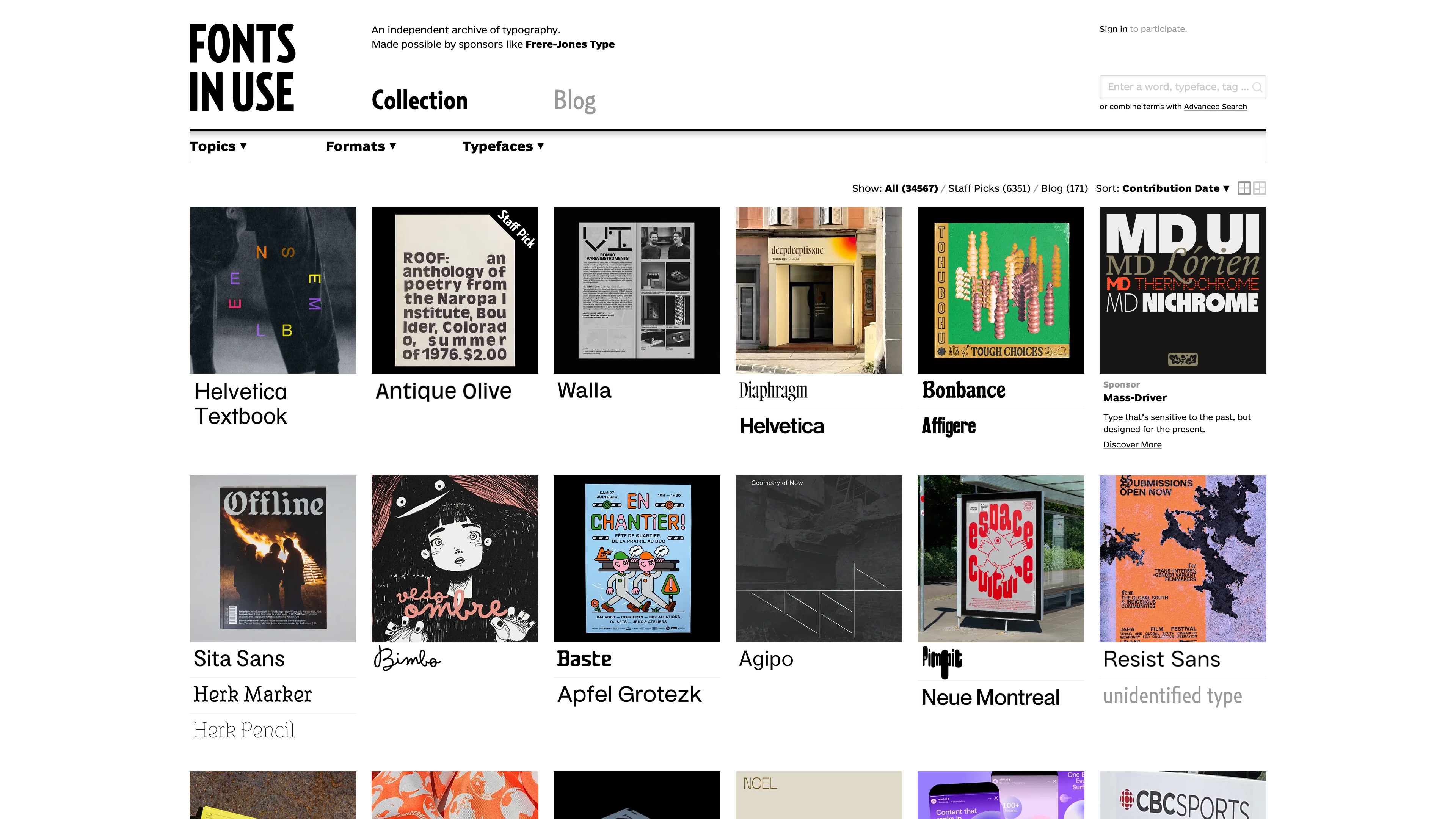
The core unit of the Collection is a "Use" — a single entry representing a typeface in use for a particular design project, documented by one or more images (FAQ). There are three main ways in:
- Topics: over thirty industry categories such as music, literature, education, politics, and food;
- Formats: design media including branding, books, posters, album art, web, and packaging;
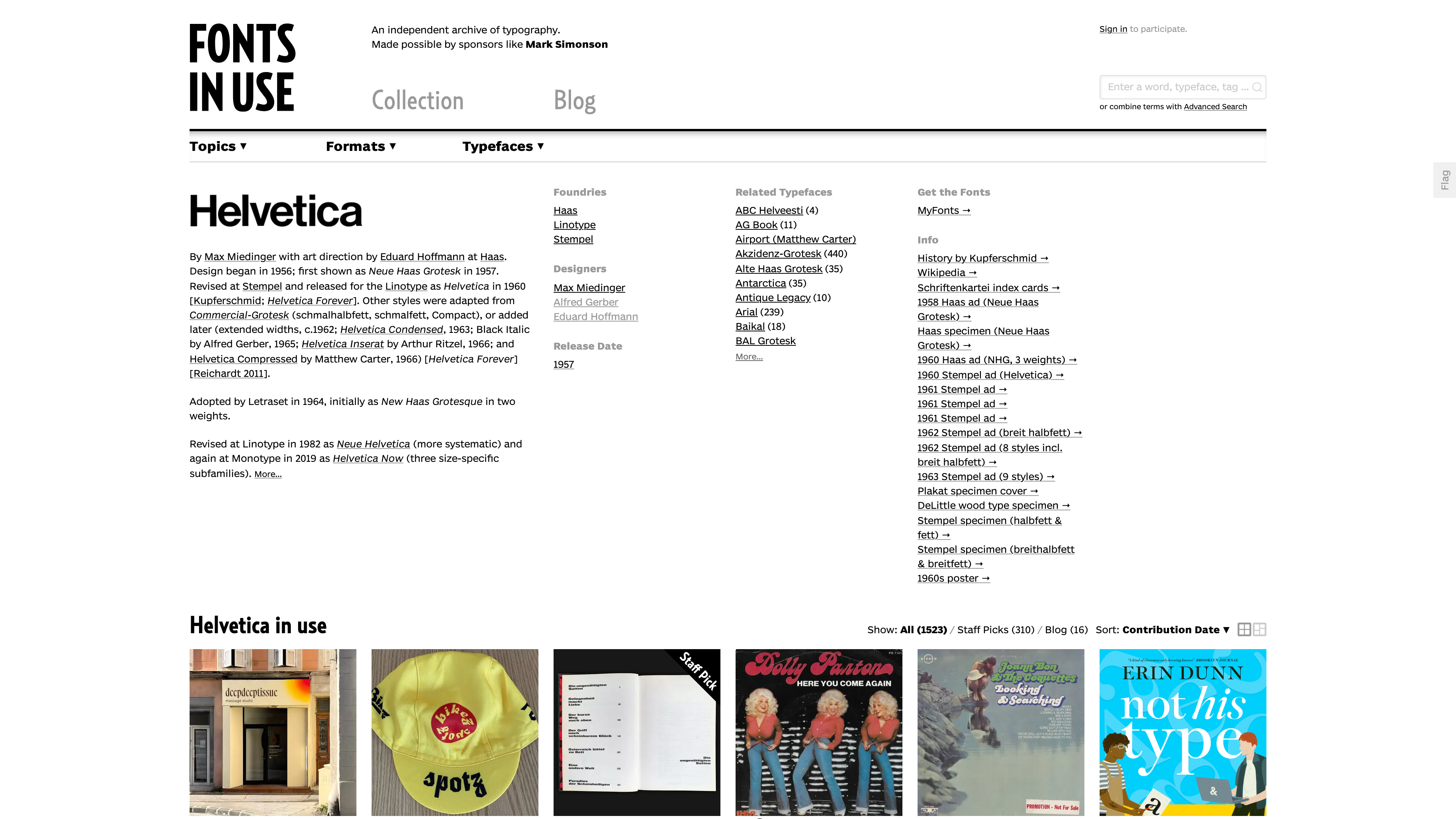
- Typefaces: from Helvetica (1,523 entries) to new releases from contemporary independent foundries.
Full-text and advanced search combine these axes, and any gallery can be limited to "Staff Picks" — submissions selected by the editors for exceptional design or documentation (6,351 as of 2026-09-18).
Typeface Pages and Use Pages
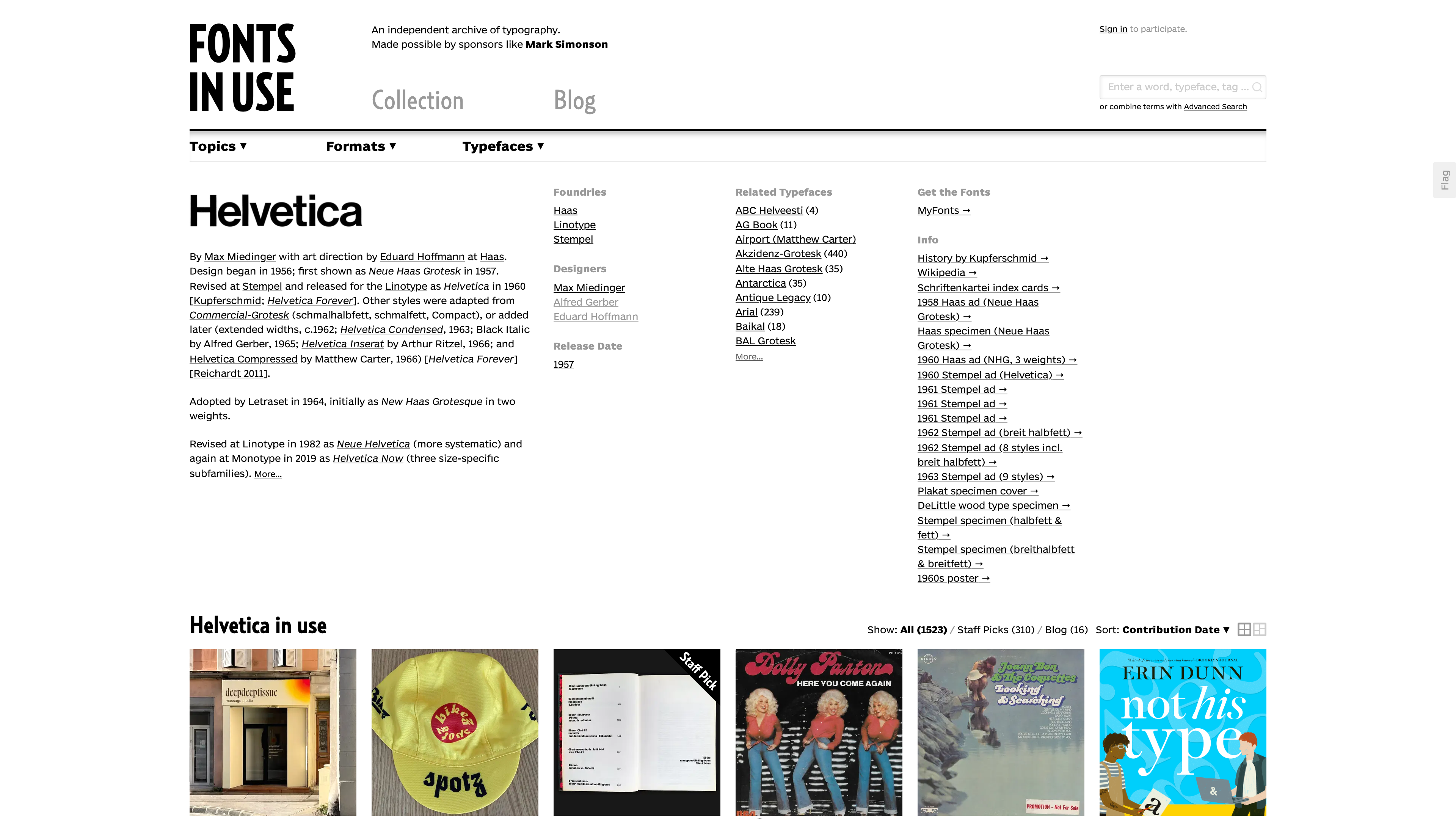
Every typeface gets its own page that goes beyond the gallery: a short history (designers, foundries, release date, revisions), related typefaces, "Get the Fonts" purchase links, and an index of external resources such as Wikipedia articles and historical specimen scans. It doubles as a compact type encyclopedia.
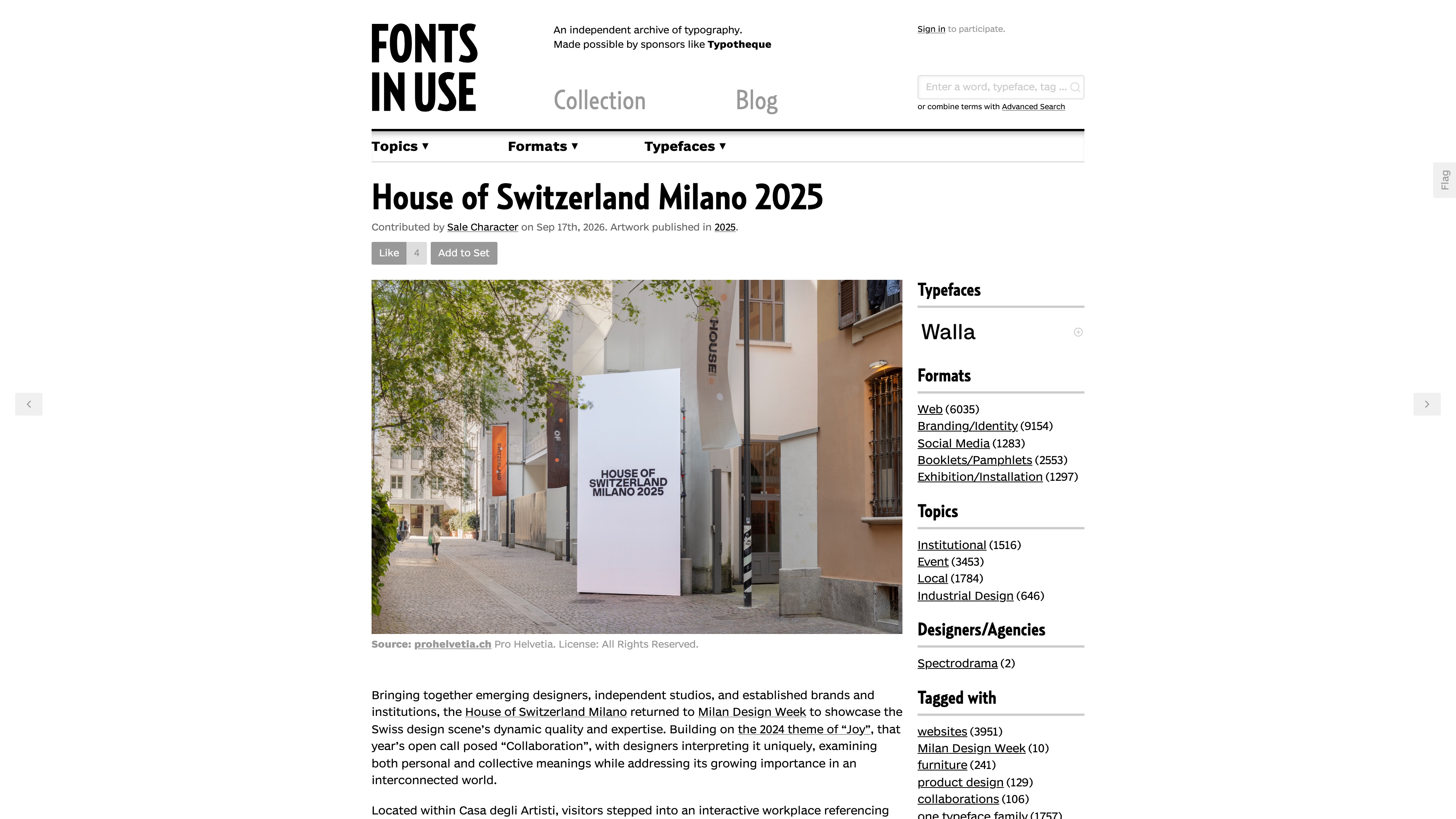
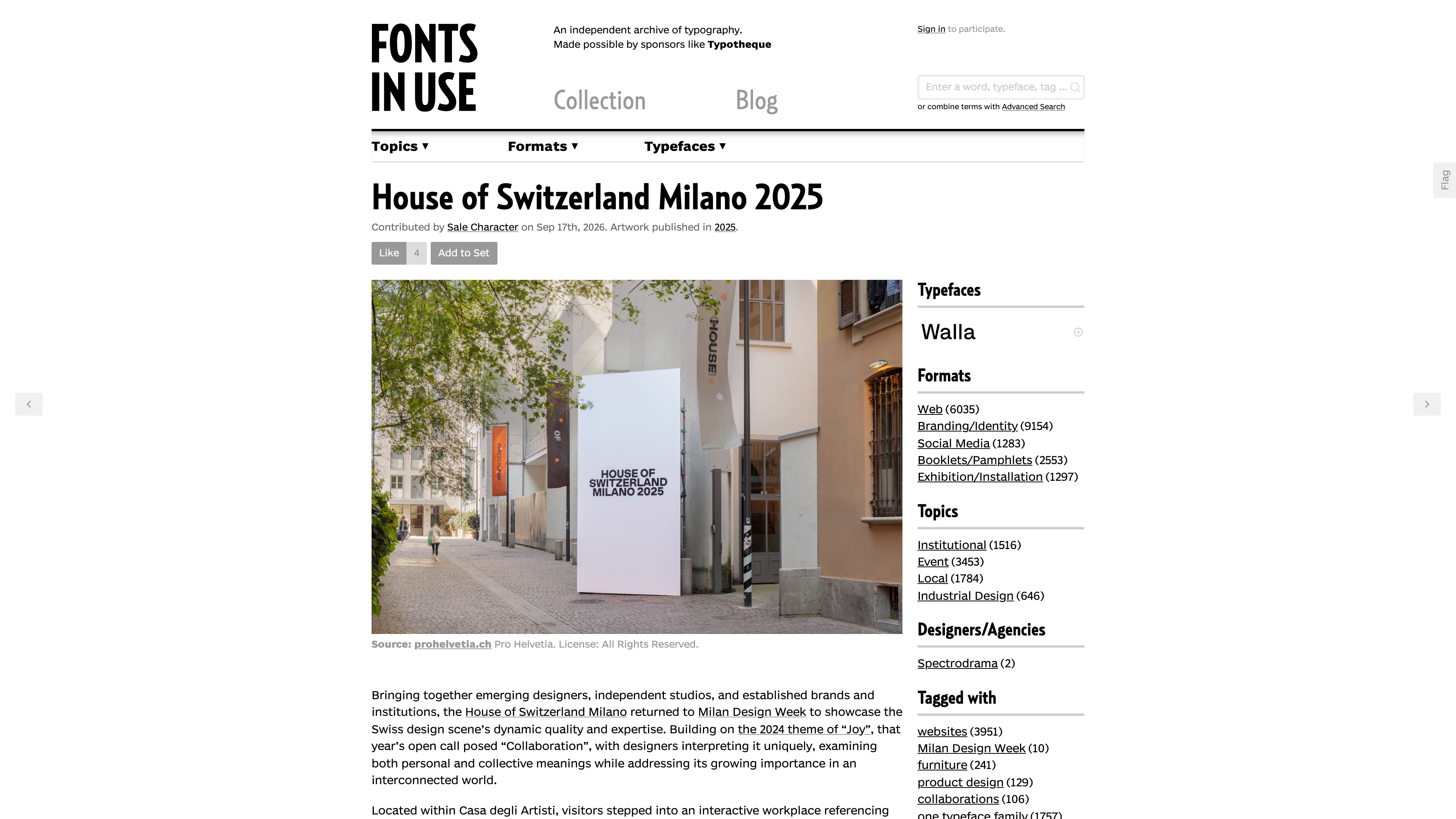
Individual Use pages show full image credits — source and license captions, All Rights Reserved by default — plus structured tags for typefaces, formats, topics, and design agencies, each clickable for further browsing. Registered users can like entries or add them to personal Sets.
Contributing and Moderation
Any registered user can contribute, in three ways (FAQ):
- The "Add a Use" form, uploading images with typeface, category, and source metadata;
- A browser bookmarklet that sends images from nearly any website straight into the submission form;
- Adding a
type:face=machine tag to Creative Commons–licensed Flickr images, which the site imports into its moderation queue every few hours.
An image and a title are all a submission strictly requires; if you don't know the typeface, you can leave the field blank and the editors will identify it. All submissions enter a human moderation queue and are usually published within 14 days, according to the FAQ. The acceptance guideline is that type must be clearly visible: work that is primarily lettering is generally not accepted, foundry-produced specimens and font promotion are rejected as a rule, and fictional or unpublished design is accepted only in exceptional, clearly labeled cases.
Copyright and Content Policy
Images are reproduced under the Fair Use doctrine. Unless a contributor specifies another license, all images are assumed All Rights Reserved and captioned accordingly; contributors submitting work that isn't theirs are asked to credit the designer, photographer, and source. Copyright holders who believe content infringes their rights can contact the site (FAQ, Terms).
Good For
- Seeing how a candidate typeface actually performs in real work before licensing it;
- Researching typographic conventions by industry or format — say, album-cover typography;
- Tracing a typeface's historical versions and canonical applications;
- Teaching material for typography education and appreciation.
Limitations
- The interface and search are English-only, and the collection is heavily weighted toward Latin type; CJK typography is barely represented.
- Typeface identifications come from contributors and editors and can occasionally be disputed; each entry has a Flag link for feedback.
- The focus on realized, published work means concept pieces and student exercises are largely out of scope.
- Images are copyrighted material for on-site reference only, not downloadable assets for reuse.