Duolingo (duolingo.com) is a free learning platform built around gamified bite-sized lessons: each session takes a few minutes of matching, dictation and speaking exercises, while streaks, experience points and leaderboards keep you coming back. The problem it set out to solve is that language education is expensive and hard to stick with — its stated mission is free language education for everyone, built to be so engaging that people "would prefer picking up new skills over playing a game" (Duolingo mission page). Its verifiable distinctions among language apps: all learning content is genuinely free (ads and subscriptions pay the bills), and the catalog now extends beyond languages into math, music and chess.
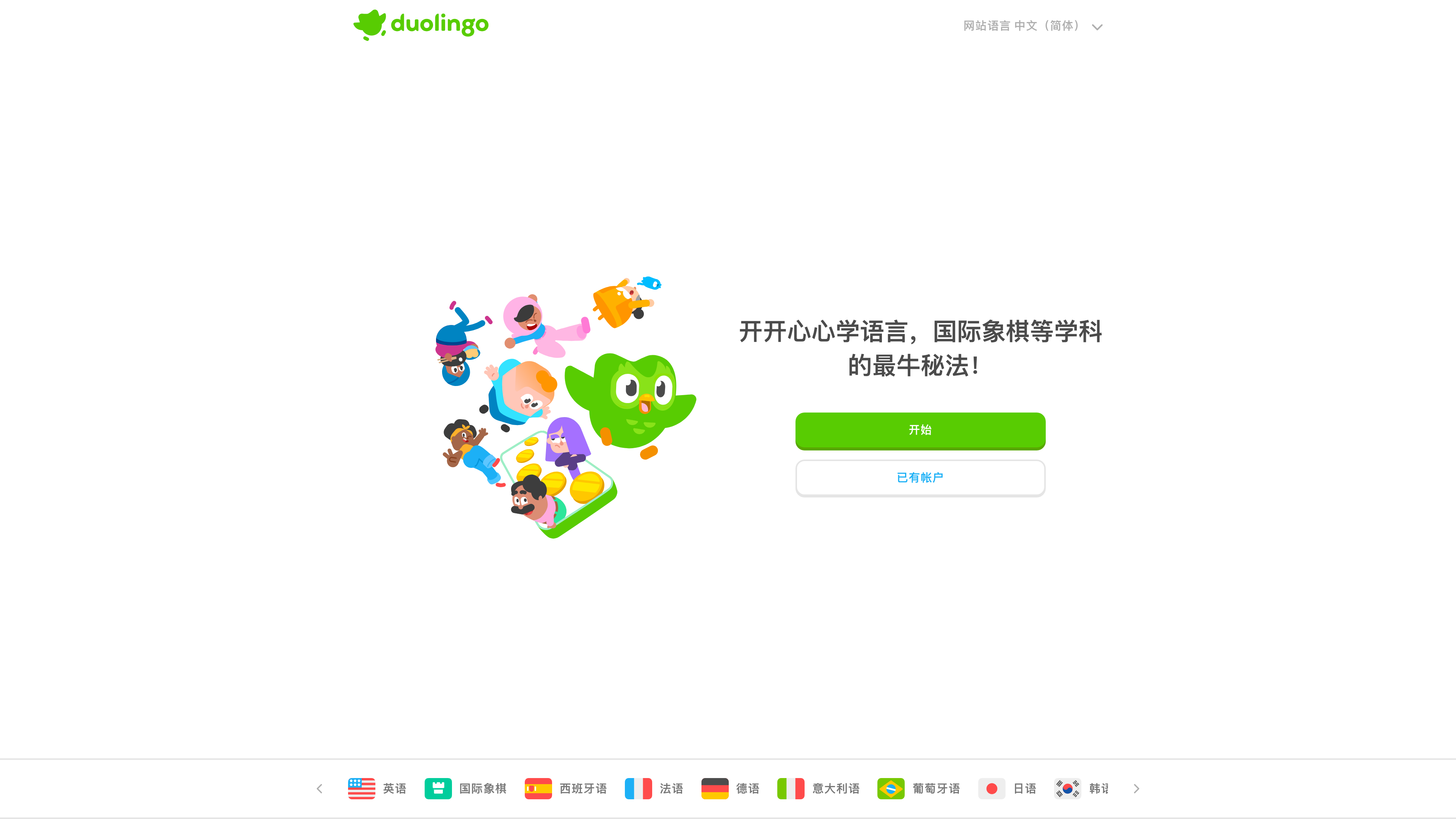
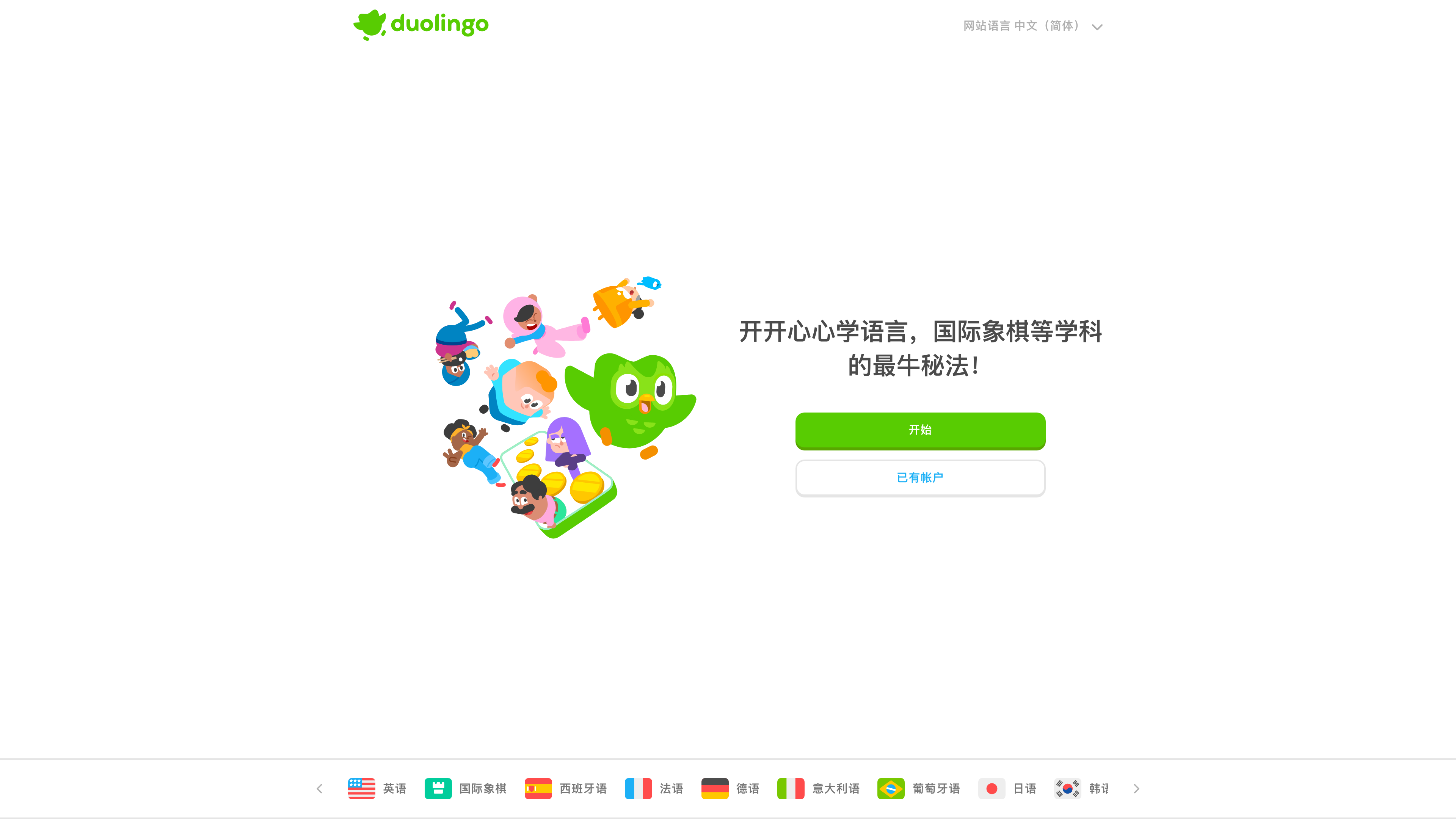 On the web you can start a first lesson without an account; a free sign-up saves progress and streaks, and the iOS/Android apps are the primary way most people use it. As of 2026-09-02, the official count is 40+ languages across 280+ courses, all free (Duolingo Language Report, December 2025).
At a glance
- URL: https://www.duolingo.com/
- Type: Gamified online learning platform (Duolingo, Inc., listed on NASDAQ as DUOL)
- Cost: Learning content free (ad-supported); Super Duolingo and Duolingo Max subscriptions remove ads and add features — pricing varies by region, platform and billing period, with no single official price list
- Account: First lesson works without registration; a free account is needed to save progress
- Interface languages: Many, including Chinese; available courses depend on the interface (source) language
- Mobile: iOS and Android apps; the Duolingo English Test runs on its own site
Background
Duolingo was founded in Pittsburgh in 2011 by Carnegie Mellon professor Luis von Ahn (co-inventor of reCAPTCHA) and his PhD student Severin Hacker. A private beta opened in November 2011, followed by the public launch in June 2012 (Carnegie Mellon University coverage; founding and launch dates cross-checked against Wikipedia). The company went public on NASDAQ in July 2021 (SEC prospectus).
The catalog was originally languages only. Math and music arrived in 2023, and in June 2025 Duolingo launched a chess course that starts from how the pieces move, is about 75% puzzle-based, and aims to take a beginner to roughly a 1500 Elo intermediate level. Like everything else on the platform, these courses are free.
How learning works
Bite-sized lessons and game mechanics: courses are broken into minutes-long lessons that award XP; consecutive days build a streak, and leagues (leaderboards), hearts and gems round out the game layer. On the free tier, mistakes cost hearts, and running out forces a pause or practice session — part motivation, part the free tier's main constraint.
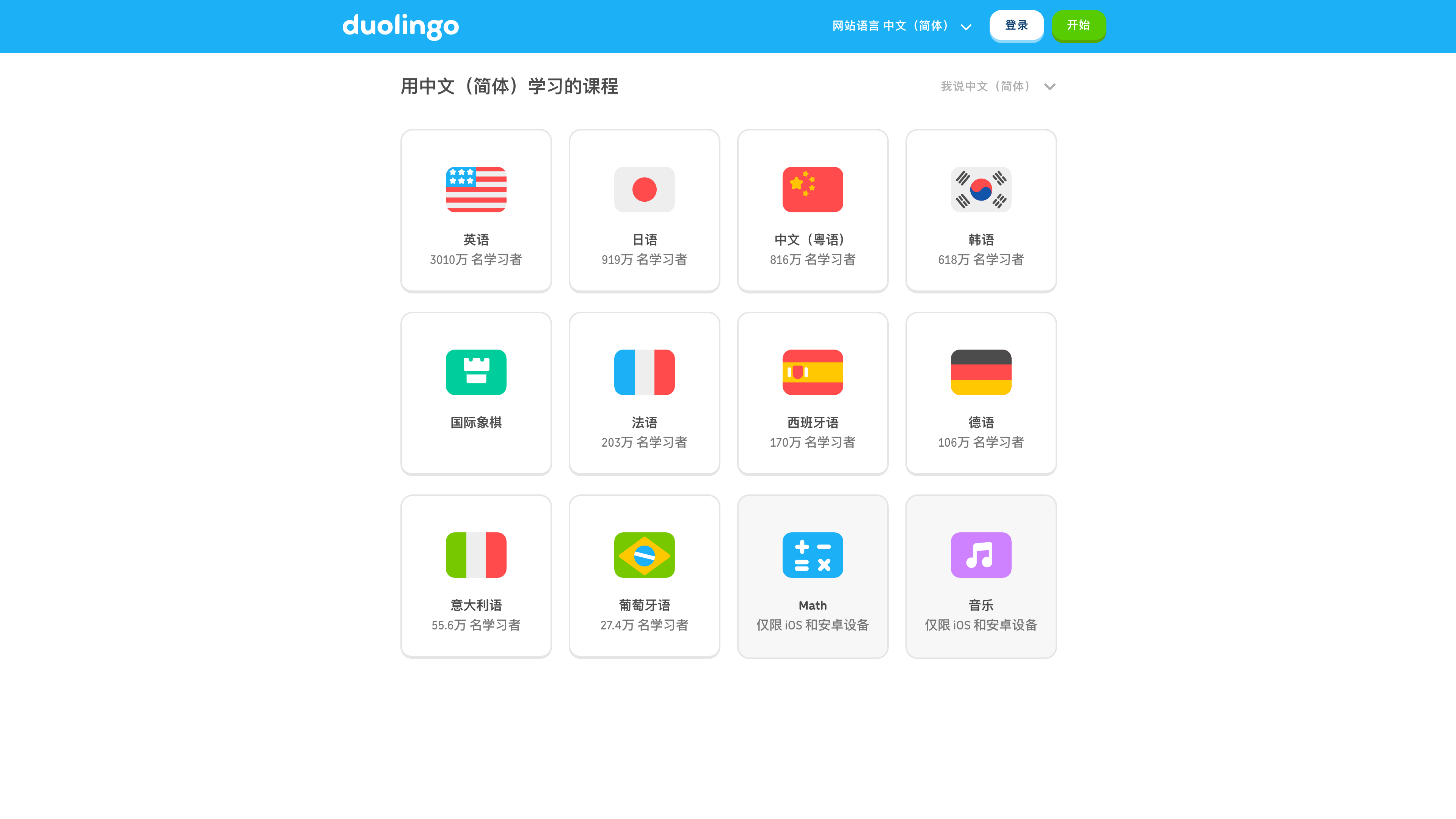
Courses organized by source language: what you can learn depends on your interface language. On the Simplified Chinese interface, for example, the choices as of 2026-09-02 are English (31.0 million learners shown), Japanese (9.19M), Cantonese (8.16M), Korean (6.18M), French, Spanish, German, Italian, Portuguese and chess; math and music are marked "iOS and Android only" there.
AI features: the Duolingo Max tier, introduced in 2023, adds AI features such as Roleplay conversations, Video Call with the character Lily, and Explain My Answer walk-throughs (GPT-4-powered at launch).
Pricing model
All learning content is free, with the free tier monetized through ads. Two paid tiers sit on top:
- Super Duolingo: no ads, unlimited hearts, mistake review and personalized practice, with a family plan for up to six accounts and a one-week free trial (official subscription page).
- Duolingo Max: everything in Super plus the AI conversation features above.
Prices vary by country, purchase channel (web vs. app store) and billing period; Duolingo publishes no universal price list, so check the checkout page in your region.
Duolingo English Test (DET)
Separately from the courses, Duolingo operates an online English proficiency test (englishtest.duolingo.com): taken entirely from home with no test-center appointment, with results officially promised within two days at a price "far lower" than comparable exams; third-party trackers put the fee at US118 for a two-test bundle as of 2026-09-02. Scores are reported on a 10–160 scale with speaking/writing/reading/listening subscores and CEFR and IELTS comparisons (official scoring guide). The site states the test is accepted by more than 6,500 institutions worldwide (page figure as of 2026-09-02) and provides a searchable list of accepting institutions, which applicants should cross-check against their target schools.
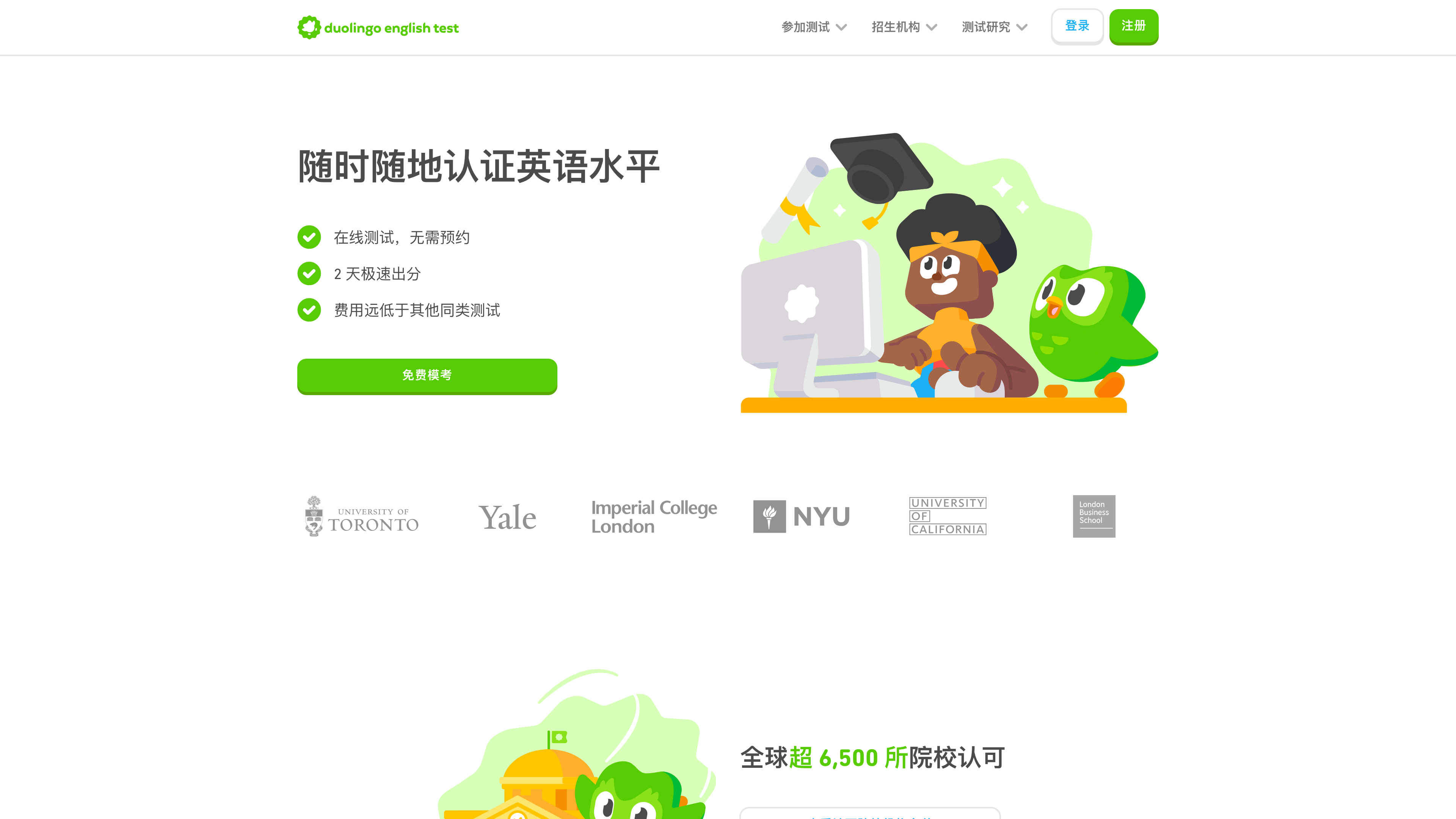 A free practice test is available on the page, so you can estimate your score before paying for a certified attempt.
Good for
- Absolute beginners who want a zero-cost way to try a new language
- Keeping a language warm in spare minutes through habit mechanics
- Sampling several languages before committing to a deeper course
- Estimating English proficiency with the free DET practice test, or sitting the DET itself
Limitations
- The free tier shows ads, and the hearts system interrupts long sessions; removing ads requires a subscription.
- Course depth is mostly beginner-to-intermediate: Duolingo makes no advanced-level promise, so professional or academic goals usually need supplementary materials (reasonable inference).
- Course availability is tied to the interface language — a Chinese interface offers roughly nine language courses, far fewer than the English interface (observed, as of 2026-09-02).
- Web and mobile are not feature-identical: on the Chinese interface, math and music are mobile-only (observed).
- DET acceptance keeps growing but is not universal; always verify requirements on the target institution's own site.
Alternatives
Babbel is a subscription-based language course focused on adult conversation and grammar structure; Memrise leans on vocabulary drilling with native-speaker video. The three differ in free tier generosity and course depth, so compare against your actual goal.
Sources
- Duolingo official site and mission page (checked 2026-09-02)
- Super Duolingo subscription page (features; "100+ language courses, 500M+ learners" figures, checked 2026-09-02)
- 2025 Duolingo Language Report (official blog) ("280+ courses, 40+ languages", published December 2025)
- Chess course announcement (official blog, 2025-06-10)
- Duolingo English Test site, scoring guide and accepting institutions (checked 2026-09-02)
- SEC: Duolingo prospectus (424B4) (NASDAQ listing, July 2021)
- Carnegie Mellon University on alumnus Luis von Ahn; Wikipedia: Duolingo (founding and launch cross-references)