Devin Desktop (devin.ai/desktop) is Cognition's AI coding desktop application, better known by its former name: the Windsurf editor. It is built on a VS Code core, so you get a full code editor plus a command-center interface for managing multiple local and cloud AI coding agents. On June 2, 2026, Windsurf was officially renamed Devin Desktop, and windsurf.com now permanently redirects to devin.ai/desktop (announcement, migration FAQ, checked 2026-10-04).
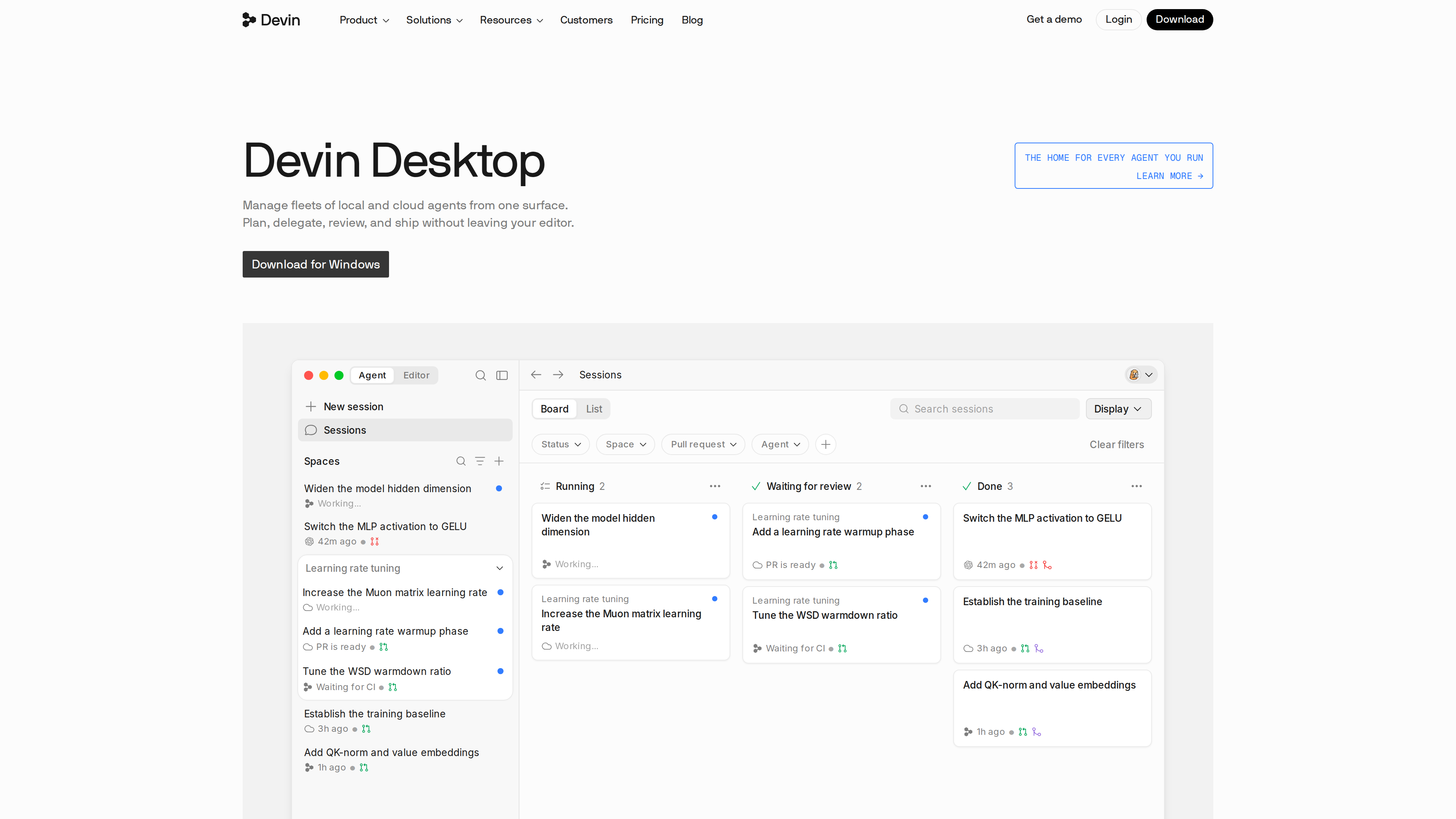
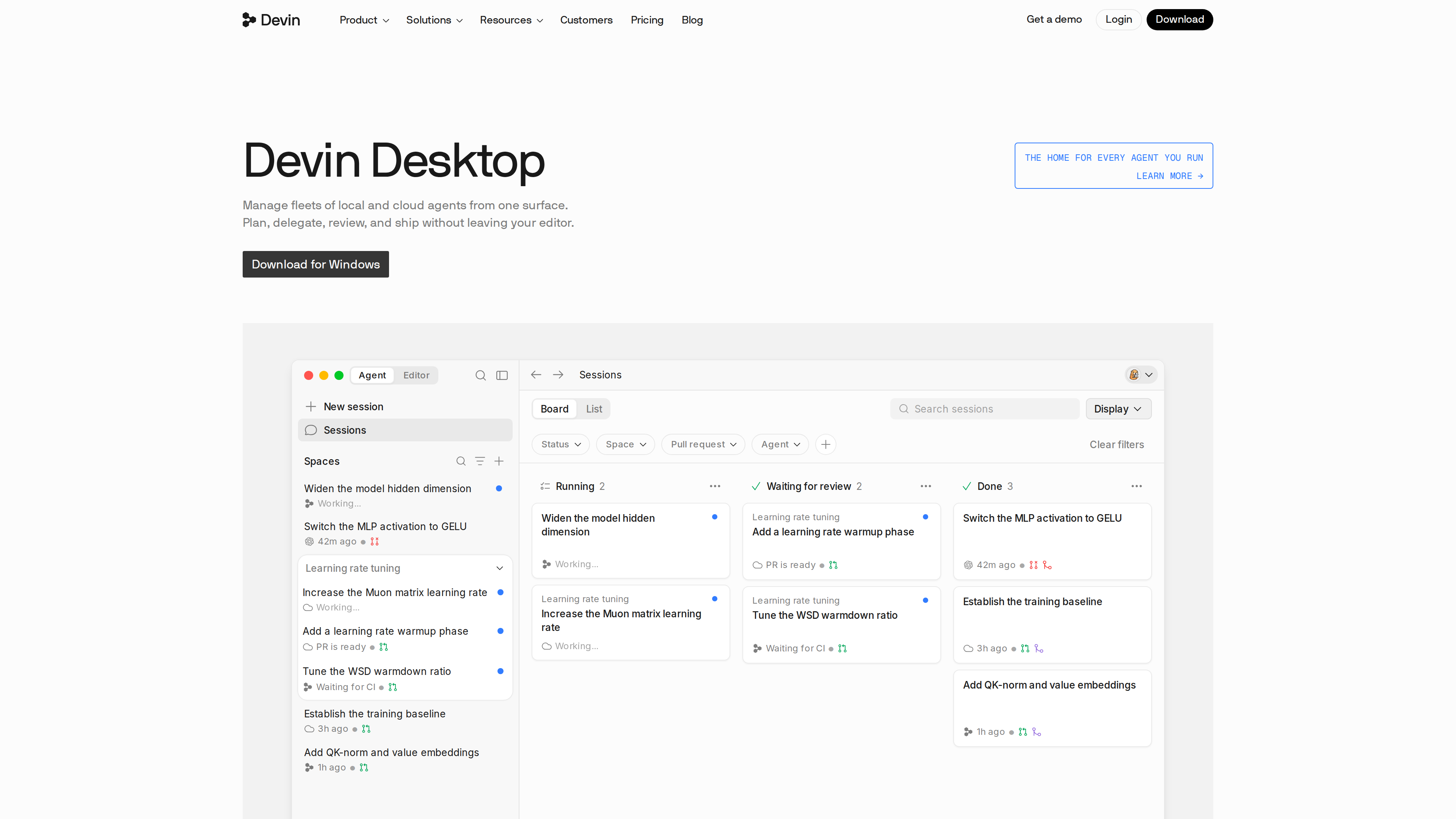
The Desktop product page (screenshot from 2026-10-04).
Quick facts
| Item | Details |
|---|---|
| URL | https://devin.ai/desktop (windsurf.com redirects here permanently) |
| Type | AI coding IDE / multi-agent management (desktop app, VS Code fork) |
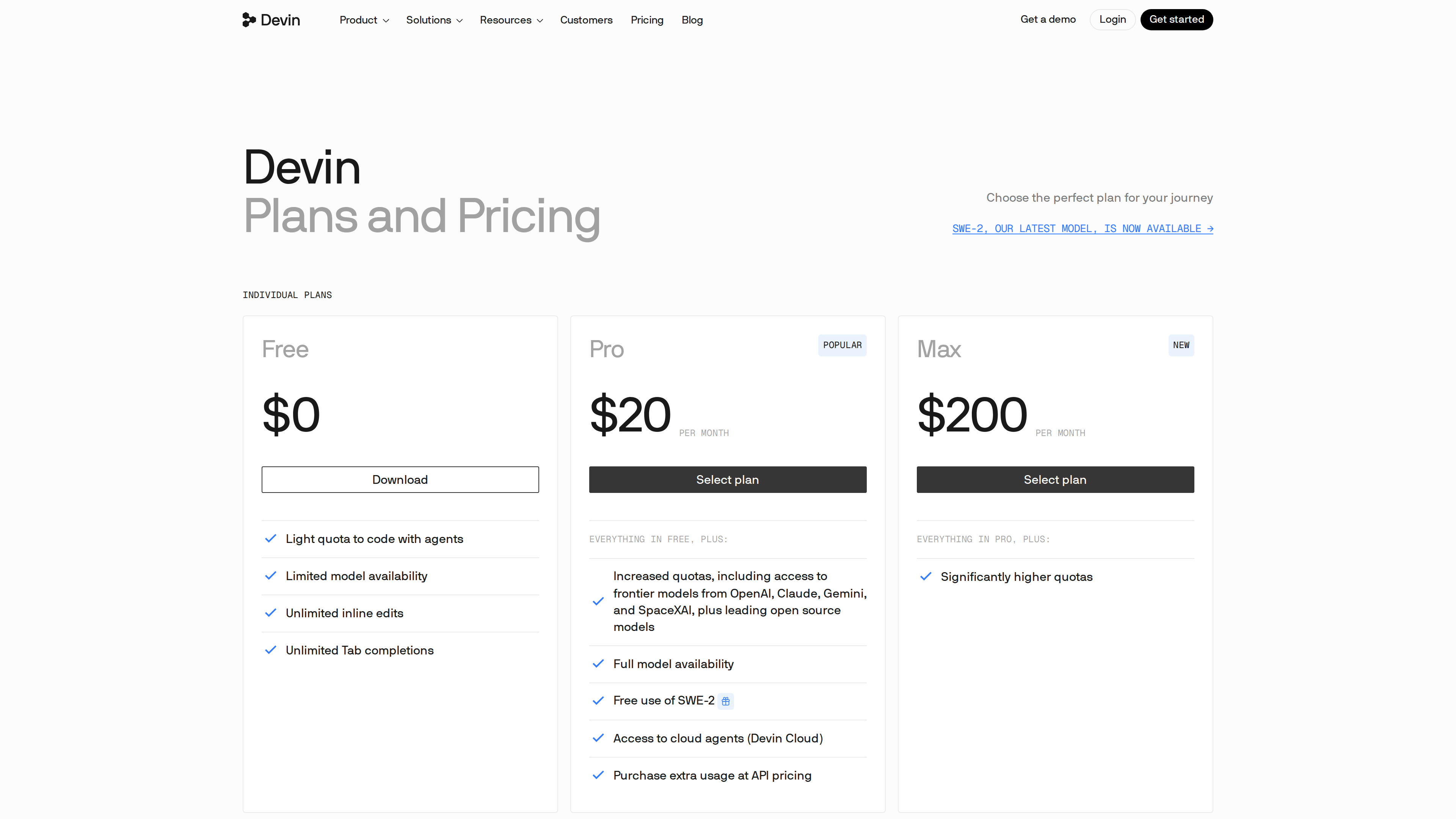
| Pricing | Free 20/mo; Max 80/mo + $40/seat/mo; Enterprise custom (as of 2026-10-04, pricing) |
| Account | Requires a Cognition account after download; free tier available |
| Interface | English |
Background
- Codeium era: the team's predecessor Exafunction was founded in 2021 by Varun Mohan and Douglas Chen, first working on GPU optimization before pivoting to the Codeium AI coding plugin.
- Windsurf editor: launched November 13, 2024, billed as "the first agentic IDE." Its core feature Cascade was an agent that could read a repo, plan multi-file edits, run terminal commands and produce reviewable diffs — an approach the team called "AI flows" (launch release).
- The 2025 acquisition saga: OpenAI's roughly 2.4 billion and hired CEO Varun Mohan, co-founder Douglas Chen and key engineers; days later Cognition (maker of the Devin agent) acquired what remained (DeepLearning.AI The Batch, checked 2026-10-04).
- Renamed Devin Desktop: on June 2, 2026, Cognition renamed Windsurf to Devin Desktop, delivered as an over-the-air update — plans, extensions, keybindings and MCP connections all carried over (Cognition blog).
Core capabilities
- Agent Command Center: the post-rebrand default surface — a Kanban view managing local and cloud agents, with "Spaces" for shared context; the full editor remains one click away.
- Devin Local: the local agent replacing Cascade (rewritten in Rust; Cognition claims ~30% better token efficiency and subagent support). Cascade was retired on July 1, 2026.
- Cloud agents: paid tiers can call Devin Cloud to run tasks in parallel cloud sandboxes.
- Models and ACP: Pro unlocks frontier models from OpenAI, Anthropic (Claude) and Google (Gemini) plus open-source options; the open Agent Client Protocol (ACP) lets you plug in third-party agents like Codex, Claude Agent or OpenCode (announcement).
- The editor itself: VS Code-compatible — extensions, keybindings and themes migrate; the free tier includes unlimited Tab completions and inline edits.
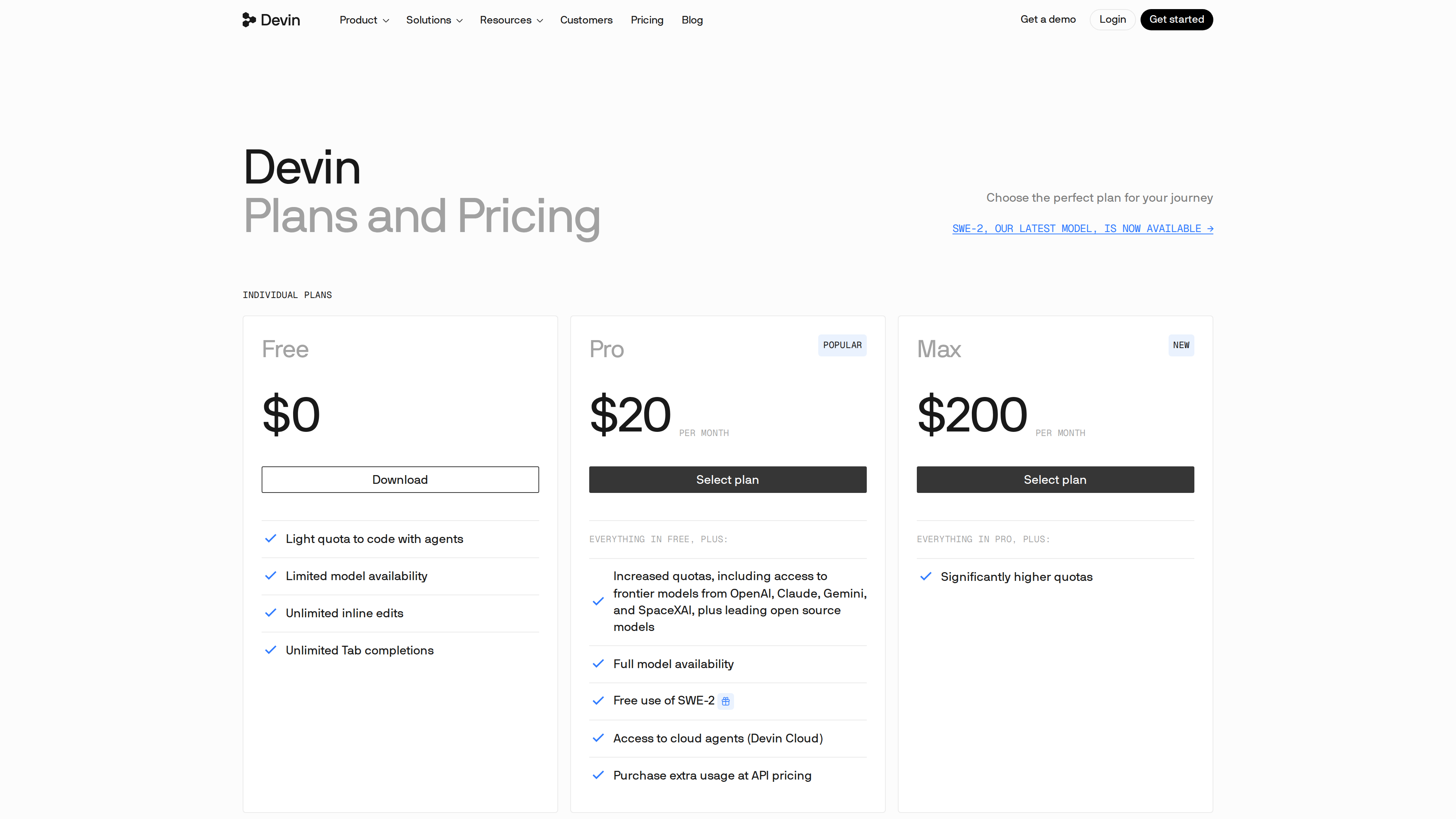
The pricing page (2026-10-04): Free/Pro/Max for individuals, per-seat billing for teams.
Good for
- Developers already at home in VS Code who want to run several coding agents (local + cloud) inside one app.
- Teams whose primary workflow is "assign tasks to AI, review diffs" rather than AI-as-autocomplete.
- Users who want to mix agents from different vendors over ACP instead of betting on a single model provider.
Limitations
- The product just made a hard turn: the default surface moved from editor to agent management, which users who simply wanted an "AI editor" must adjust to; Cascade users were migrated forcibly.
- Corporate turbulence is part of the package (Google licensing, Cognition acquisition, rebrand); long-term product strategy carries uncertainty.
- The free tier's quota is light, so heavy use quickly becomes paid; cloud agents add usage-based API billing that's hard to estimate.
- English-only interface; accessibility from mainland China networks is unverified.
Alternatives
- Cursor: the direct competitor, prioritizing the editor experience.
- GitHub Copilot / VS Code: the plugin route — keep your editor unchanged.
- Zed: a high-performance open-source editor with a built-in AI panel and ACP support.