Claude (claude.ai) is the conversational AI assistant built by the US company Anthropic: you talk to it in natural language on the web, desktop, or mobile apps to handle Q&A, writing, translation, coding, and data analysis, and it can directly produce documents, code, and interactive content. The problem it targets is the same one ChatGPT and its peers address — turning a large language model into an everyday work tool. Its verifiable differences: models are tiered as Haiku/Sonnet/Opus/Fable with published API prices, training uses Anthropic's own Constitutional AI method (a written "constitution" that constrains model behavior), and beyond chat the company has built two agent product lines — the Claude Code coding agent and the Cowork desktop agent. The first Claude model launched on March 14, 2023 (official announcement), and the public web version opened on July 11, 2023 alongside Claude 2 (Wikipedia). Two caveats worth knowing up front: it is not available in some regions including mainland China, and the interface has no Chinese localization.
At a glance
- URL: https://claude.ai/ (marketing and pricing live on claude.com; developer docs on docs.claude.com)
- Type: Conversational AI assistant (web + desktop/mobile apps) plus coding/desktop agent product lines
- Cost: Free plan at 20/month (200 up front); Max from $100/month; Team and Enterprise tiers covered below — see the official pricing page (as of 2026-09-17)
- Account required: Browsing the site and docs needs no account; chatting requires sign-up (Google, Apple, or email — the logged-out homepage is itself a sign-up wall). Users must be 18 or older per the Consumer Terms of Service. Service is limited to officially supported countries/regions, which include Taiwan but not mainland China
- Interface language: 11 interface languages including English, French, German, Japanese, and Korean — no Chinese UI; you can chat in Chinese or any other language regardless (official help article, updated August 2026)
- Launched: Model first released 2023-03-14 (initially limited access); the public claude.ai web app launched 2023-07-11 with Claude 2
Background
Anthropic was founded in San Francisco in January 2021 by seven former OpenAI employees, including siblings Dario Amodei (CEO, previously OpenAI's VP of Research) and Daniela Amodei (President). It is incorporated as a public benefit corporation and describes itself as an "AI safety and research company" (company page, Wikipedia). Claude is reportedly named after Claude Shannon, the founder of information theory.
Key milestones from recent years (all from first-hand reporting or official announcements, cross-checked against Wikipedia):
- Funding and scale: Amazon has invested 3 billion. A 380 billion; a further 965 billion, overtaking OpenAI (Reuters). Anthropic had roughly 2,500 employees in 2026 and $4.5 billion of 2025 revenue, and filed confidential IPO paperwork with the SEC on June 1, 2026 (Axios).
- Pentagon dispute: In February 2026 Anthropic refused to drop contractual bans on mass domestic surveillance and fully autonomous weapons; the US Department of Defense designated it a "supply chain risk" and ordered federal agencies to phase it out. A federal judge issued a preliminary injunction in March, and in August set the designation aside as unconstitutional retaliation.
- Copyright settlement: After training on pirated books, Anthropic agreed in September 2025 to a $1.5 billion settlement with authors — finally approved by a judge in July 2026, among the largest copyright settlements in US history.
- Marketing stance: Its February 2026 Super Bowl ads promised Claude will stay ad-free, a pointed contrast with a competitor that added ads to its free tier.
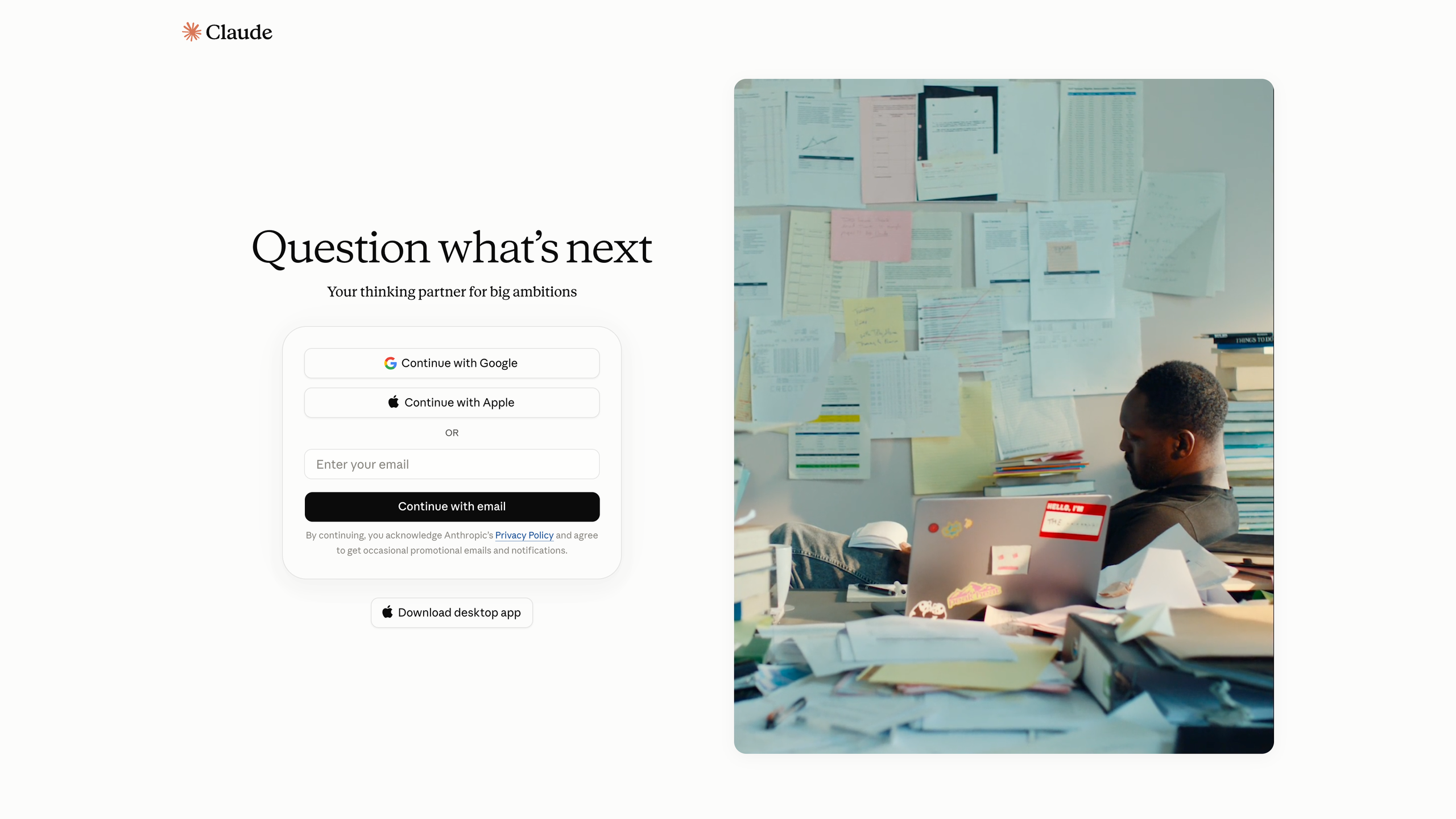
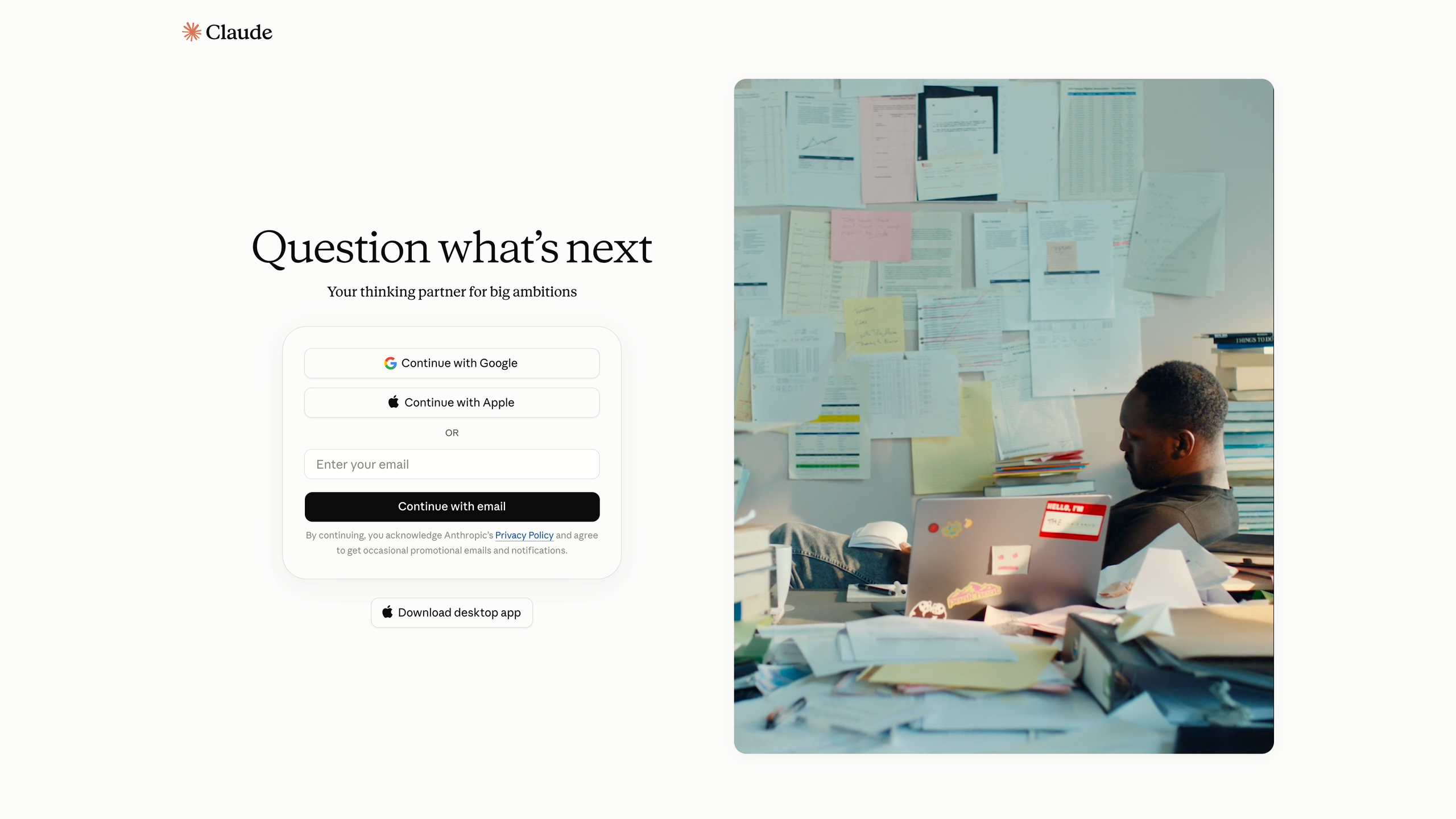
Visiting claude.ai logged out lands on a sign-up wall: Google, Apple, or email registration, plus a desktop-app download link. There is no anonymous tier — you need an account before you can try the product.
Model lineup
As of 2026-09-17, the official documentation lists four current model tiers (models overview, pricing page):
| Model | Released | Official positioning | API price (per million tokens, input/output) | Context window |
|---|---|---|---|---|
| Claude Haiku 4.5 | 2025-10-15 | Fastest and cheapest | 5 | 200K |
| Claude Sonnet 5 | 2026-06-30 | Best balance of speed and intelligence | 10 | 1M |
| Claude Opus 5 | 2026-07-24 | Complex agentic coding and enterprise work | 25 | 1M |
| Claude Fable 5.1 | 2026-09-01 | Demanding reasoning and long-horizon agentic work | 50 | 1M |
A few notes. Fable is the public version of Anthropic's "Mythos-class" model, with extra safeguards in high-risk domains such as cybersecurity and biology (requests classified as high-risk are downgraded to Opus 4.8); the stronger Mythos 5.1 is restricted to a trusted-access program and not publicly sold. On the web and desktop apps, model access depends on your plan: Free gets Sonnet and Haiku, Pro adds Opus, and Fable is metered through usage credits on Pro or counts as 50% of weekly limits on Max. Consumer chat is officially rated at a 200k context window; the 1M window applies to the API. Anthropic's own guidance is to start with Opus 5 for most work and step up to Fable 5.1 when it falls short.
Core capabilities
Per the pricing page's feature table (as of 2026-09-17), the free plan already includes capabilities some rivals charge for:
- Chat and content generation: Q&A, writing, translation, summarization, and code generation, with extended thinking for complex work.
- Artifacts: interactive code, documents, SVGs, and web pages generated alongside the chat with live preview, publishable and shareable; introduced in June 2024 with Claude 3.5 Sonnet and available on every plan (Wikipedia).
- Web search: launched in 2025 and extended to the free tier in May of that year.
- File creation and code execution: create and edit documents, spreadsheets, and slides, and run code — included even on Free.
- Memory: remembers preferences and context across conversations; voice mode and incognito chats are also available on all plans.
- Connectors and Skills: connect Slack, Google Workspace, and more, with remote MCP support for arbitrary tools — available on the free plan.
- Paid-plan capabilities: Projects (organize chats and files into project spaces), Research (multi-step web research with a written report), the Claude in Chrome browser extension, and Claude for Microsoft 365/Outlook all start at Pro.
The agent ecosystem: Claude Code and Cowork
Where Claude most visibly diverges from its peers is its agent product lines:
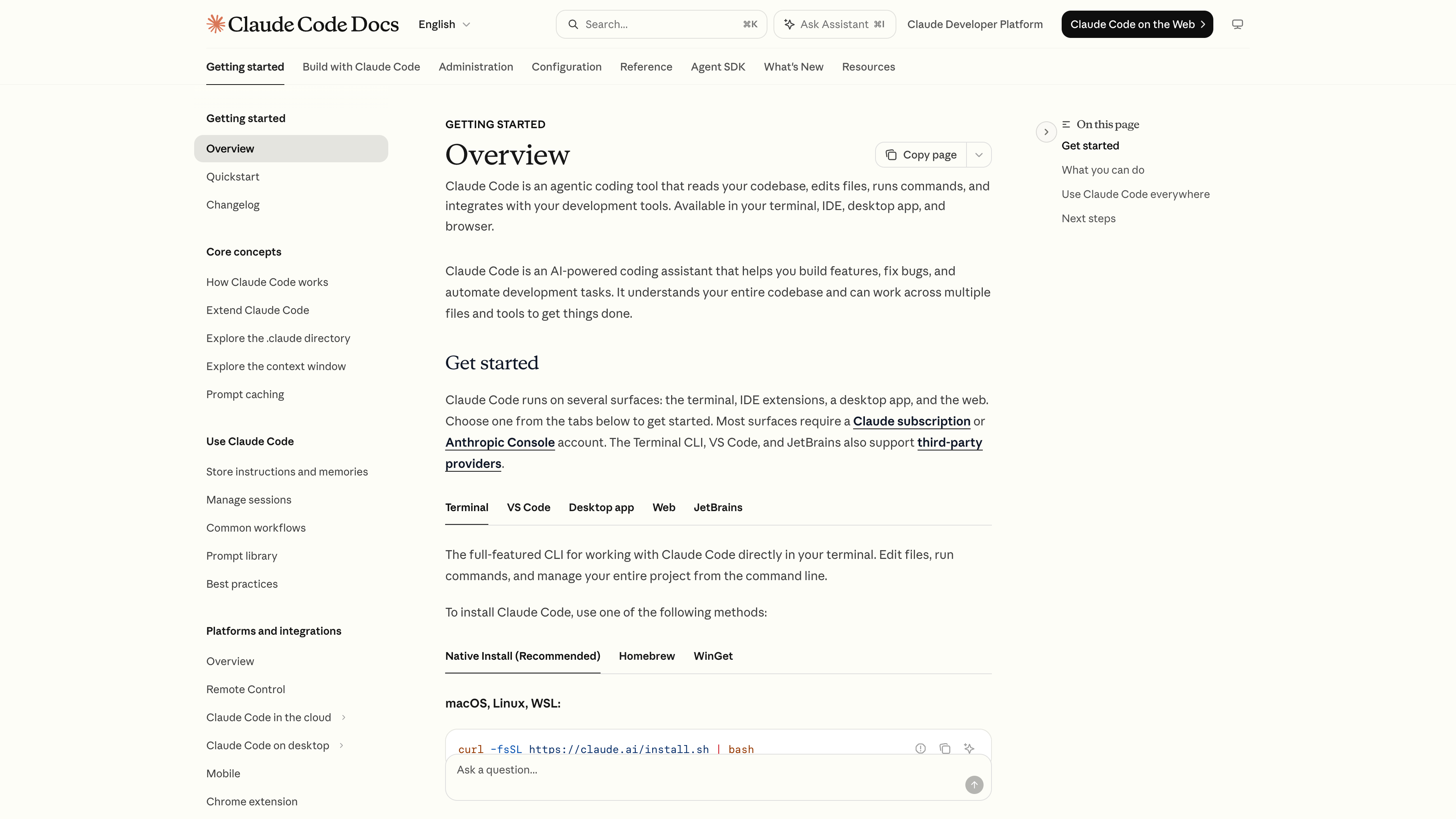
- Claude Code: a coding agent introduced as a research preview in February 2025 and generally available since May 2025 alongside Claude 4. It now runs in the terminal, VS Code, JetBrains IDEs, the desktop app, and a web version (claude.ai/code) — editing across files, running commands, creating git commits and PRs, running scheduled tasks, spawning agent teams, and connecting to external tools via MCP (official docs). Every paid plan includes Claude Code and shares one usage pool with web chat; alternatively, a Console account bills it per token at API rates.
- Claude Cowork: a desktop agent launched as a research preview in January 2026 — essentially a GUI counterpart to Claude Code for non-technical users that, with permission, reads and writes local folders and chains multi-step tasks (organizing files, batch-generating documents, and the like). As of 2026-09-17, Anthropic is folding it into the main Claude app (a pricing-page announcement reads "Claude Cowork is now just Claude," rolling out to Pro and Max first).
- Claude Design and Claude Science: the former entered preview for paying customers in April 2026, generating designs, prototypes, and slides from natural language; the latter opened in public beta to paid subscribers on June 30, 2026, focused on biology research and drug development (Wikipedia).
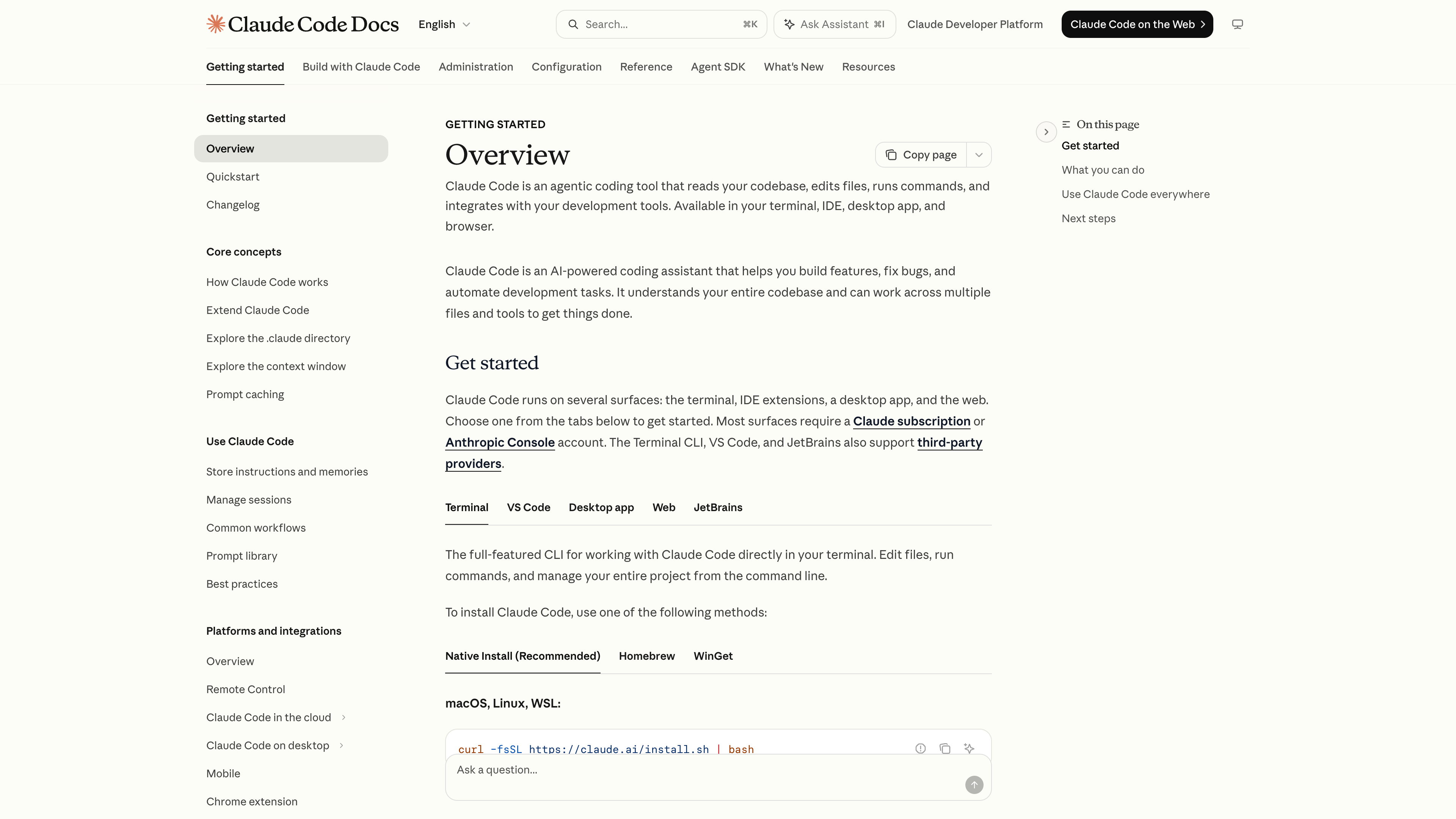
The Claude Code docs site is public without an account, covering installation, CLAUDE.md project instructions, and CI integration.
Plans and pricing
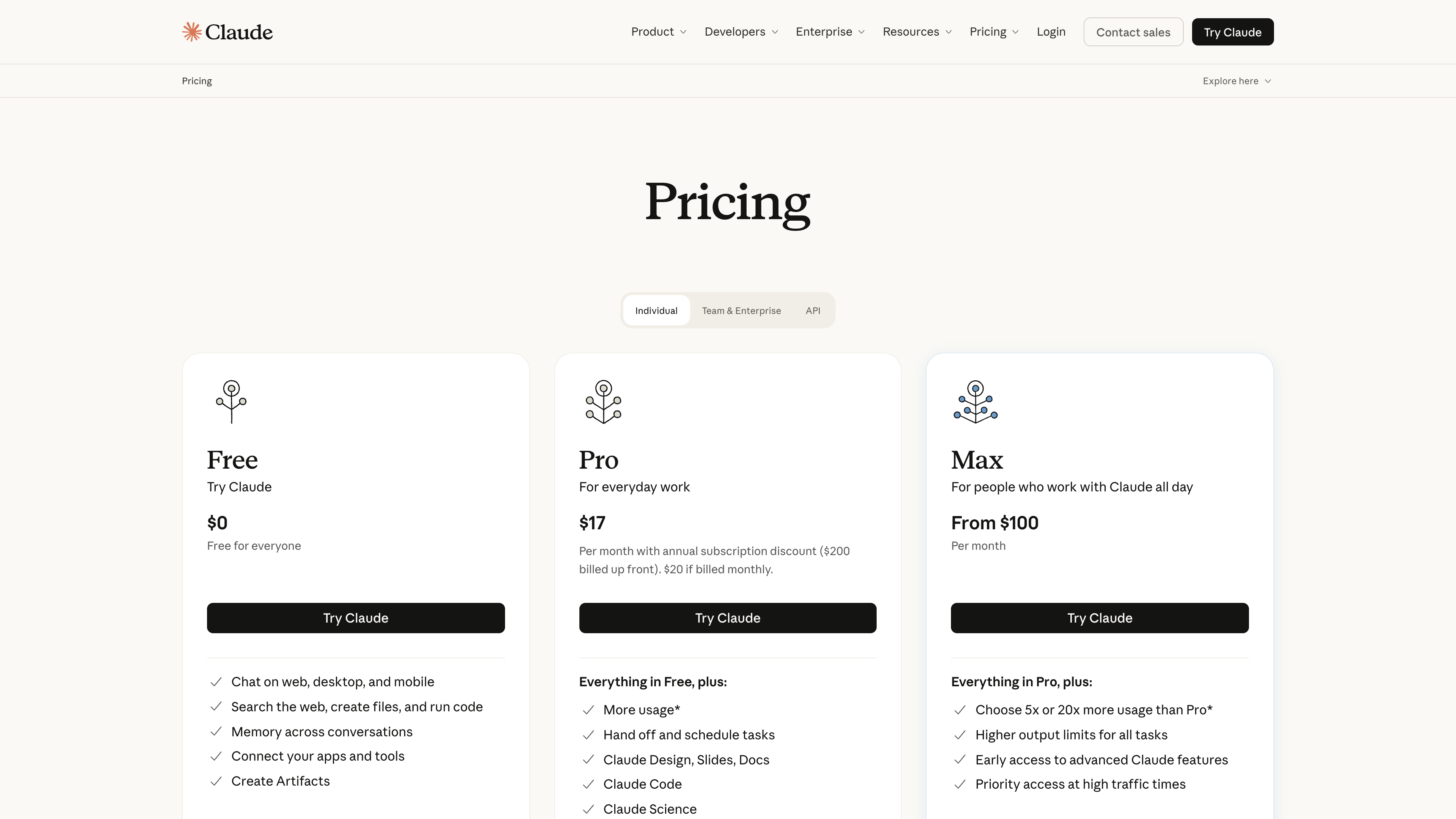
As of 2026-09-17, the official pricing page lists:
| Plan | Price | Highlights |
|---|---|---|
| Free | $0 | Sonnet/Haiku models, web search, Artifacts, file creation and code execution, memory, connectors, voice; metered over a rolling five-hour window |
| Pro | 17/month annual, $200 up front) | At least 5x the free plan's usage per window; Claude Code, Cowork, Design/Slides/Docs, Science, Projects, Research, Opus models, Fable via usage credits, Chrome and Microsoft 365 integrations |
| Max | From $100/month | 5x or 20x Pro usage, higher output limits, priority at peak times, early access to new features; the 20x tier was priced at $200/month at its April 2025 launch (TechCrunch) |
| Team | Standard seat 25 monthly); Premium seat 125 monthly) | For 2–150 people; SSO, centralized billing and admin, enterprise search, no training on your content by default; seat types can be mixed |
| Enterprise | $20/seat/month (annual only) plus usage billed at API rates | For large organizations; SCIM, audit logs, custom data retention, IP allowlisting, HIPAA-ready; self-serve or sales-assisted |
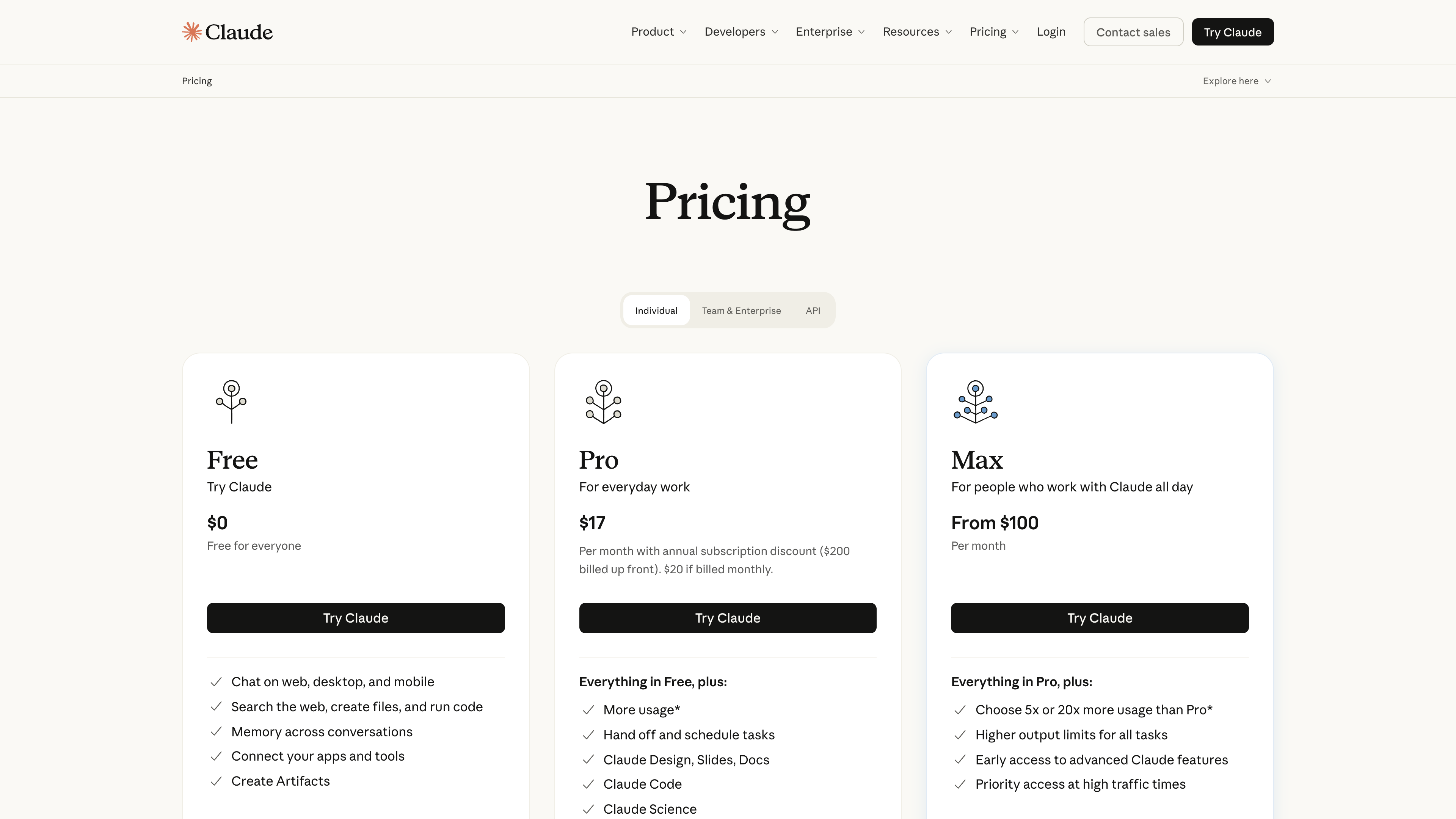
There is also an education plan for universities. The usage model deserves attention: every plan is metered over a rolling five-hour session window, with weekly caps stacked on top for paid plans; web, desktop, mobile, and Claude Code all draw from the same pool. Anthropic explicitly publishes no fixed message counts — real-world limits vary with conversation length, model, and features. On paid plans, hitting a limit means waiting for the reset, upgrading, or turning on usage credits billed at standard API rates. The API (Claude Console) is billed separately from subscriptions: per-token pricing (Sonnet 5 input at $2 per million tokens, for example), 50% off with batch processing, and no subscription tier includes API usage.
Data use and terms highlights
The following reflects the Consumer Terms of Service and pricing page as checked on 2026-09-17:
- Training data: conversations on personal plans (Free/Pro/Max) may be used to train models by default; you can opt out in account settings. Even after opting out, feedback you submit and content flagged for safety review are still used for training. Team and Enterprise content is not used for training by default.
- Content ownership: you retain rights in your inputs, and Anthropic assigns you its rights in the outputs (subject to compliance with the terms).
- Outputs are your responsibility: the terms state outputs may contain "material inaccuracies" that appear credible and must not be relied on without independent verification; using outputs to train competing models is prohibited.
- Refunds and cancellation: payments are generally non-refundable except where required by law; residents of Brazil, Mexico, South Korea, and Taiwan get a 7-day cancellation right. Cancelling does not refund the paid period, but access continues until it ends.
- Liability and jurisdiction: liability is capped at the greater of fees paid in the preceding six months or $100; California law governs, with exclusive jurisdiction in San Francisco courts.
- Accounts: you must be at least 18; free accounts inactive for over a year may be terminated (with prior notice).
- Sharing has a track record: publicly shared chats and Artifacts have been indexed by Google twice — Forbes reported hundreds in September 2025, and the BBC counted over 200 in July 2026, including health records and corporate documents. Technical analysis suggested a robots.txt rule prevented crawlers from reading the pages' noindex directives; Anthropic says the listings were removed (Wikipedia summary). Treat any share link as a public page.
Where it fits
- A one-stop tool for everyday Q&A, writing, translation, and coding assistance; long-document and codebase handling are traditional strengths.
- Developers delegating programming tasks to Claude Code (terminal/IDE/web), sharing subscription usage, switching to per-token API billing for heavy workloads.
- Desktop automation for non-technical users (Cowork) and office document generation (Design, Slides, Docs).
- Teams and organizations needing SSO, audit logs, and no-training-by-default (Team/Enterprise).
- Research workflows: the Claude Science beta targets biology and drug development.
Limitations
- Factual reliability: the terms themselves warn that outputs can be wrong and must be verified; web search does not remove that burden. Always go back to primary sources for anything important.
- Tight free-tier limits: metered over five-hour windows with no published message counts, so heavy or long conversations hit the ceiling quickly; the top Fable model is not available on Free.
- Regional restrictions: unavailable in mainland China and elsewhere; circumventing regional policy violates the terms and risks account suspension. US export controls apply.
- No Chinese interface: none of the 11 interface languages is Chinese (though chatting in Chinese works fine); pricing, docs, and support are primarily in English.
- Privacy trade-offs: personal-plan content may be used for training unless you opt out manually, and the past indexing of public share links shows that sharing means publishing.
- Platform-favorable terms: generally no refunds, liability capped at $100 or six months of fees, and disputes belong in San Francisco courts.
- Top-tier capability is metered: Fable costs usage credits on Pro and is capped at 50% of weekly limits even on Max; the strongest model, Mythos, is not publicly available.
Alternatives
- ChatGPT: OpenAI's conversational AI assistant and Claude's closest counterpart; basic chat works without an account, and paid tiers start at $8/month.
- Google Gemini: Google's AI assistant, deeply integrated with Search and Workspace.
Sources
- Claude homepage (checked 2026-09-17)
- Claude Pricing (checked 2026-09-17)
- Consumer Terms of Service - Anthropic (checked 2026-09-17)
- Models overview - Claude Docs (checked 2026-09-17)
- Claude Code overview - Claude Docs (checked 2026-09-17)
- Where can I access Claude? - Claude Help Center (checked 2026-09-17)
- How to use Claude in your preferred language - Claude Help Center (checked 2026-09-17)
- Introducing Claude - Anthropic (2023-03-14) (checked 2026-09-17)
- Introducing Claude Opus 5 - Anthropic (2026-07-24) (checked 2026-09-17)
- Anthropic company page (checked 2026-09-17)
- Claude (AI) - Wikipedia (checked 2026-09-17)
- Anthropic - Wikipedia (checked 2026-09-17)
- Anthropic rolls out a $200-per-month Claude subscription - TechCrunch (2025-04-09) (checked 2026-09-17)
- Anthropic Launches Claude Fable 5.1 - MacRumors (2026-09-01) (checked 2026-09-17)