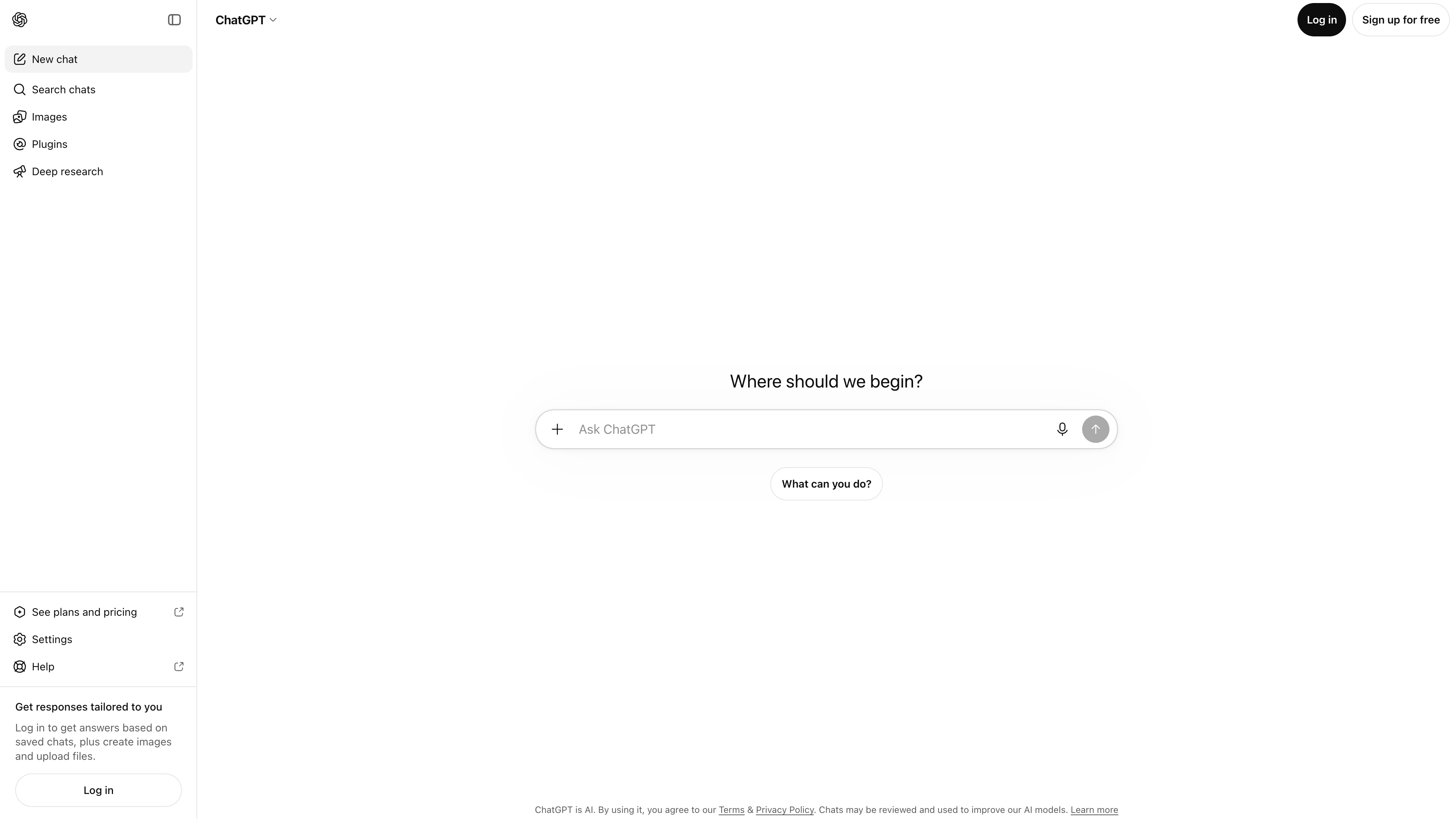
ChatGPT (chatgpt.com) is OpenAI's conversational AI assistant: you chat with it in natural language on the web or in its apps to handle questions, writing, translation, coding, data analysis and more. It launched as a free research preview on November 30, 2022 (announcement) and is the most widely used AI assistant — OpenAI's most recent official figure is 900 million weekly active users as of February 2026 (TechCrunch). Its verifiable distinguishing traits: you can start chatting without an account, it covers a full feature set spanning search, files, images, voice and memory, and it is backed by a separate API platform for developers. Note that its features and pricing change frequently; everything in this profile reflects the official pages as checked on 2026-09-03.
At a glance
- URL: https://chatgpt.com/
- Type: Conversational AI assistant (web + desktop/mobile apps)
- Cost: A free tier is available indefinitely; paid plans are Go 20/month, Pro from $100/month, plus Business/Enterprise (official pricing, as of 2026-09-03)
- Sign-up: Chatting works without an account; saving history, uploading files, creating images and voice conversations require a free account (official note)
- Interface language: Follows the browser language (verified with Simplified Chinese); you can chat in Chinese and many other languages
Background
In its launch announcement, OpenAI described ChatGPT as a model fine-tuned from the GPT-3.5 series with Reinforcement Learning from Human Feedback (RLHF), able to answer follow-up questions, admit mistakes and challenge incorrect premises. The same post openly listed weaknesses that still frame how the product should be used: it "sometimes writes plausible-sounding but incorrect or nonsensical answers," is sensitive to phrasing, and is often excessively verbose.
Since then ChatGPT has iterated and scaled rapidly: account-free access began rolling out in April 2024; weekly active users grew from 100 million in April 2024 (185 countries, per OpenAI) to 800 million announced at DevDay in October 2025, then 900 million reported in February 2026. On the model side, as of 2026-09-03 the web app runs the GPT-5.6 family (Sol / Terra / Luna); older models including GPT-4o and GPT-5 were retired from ChatGPT on February 13, 2026 (the API is unaffected) (official note). The June 2026 release notes show the model picker simplified to Instant / Medium / High / Extra High and Pro options.
Core capabilities
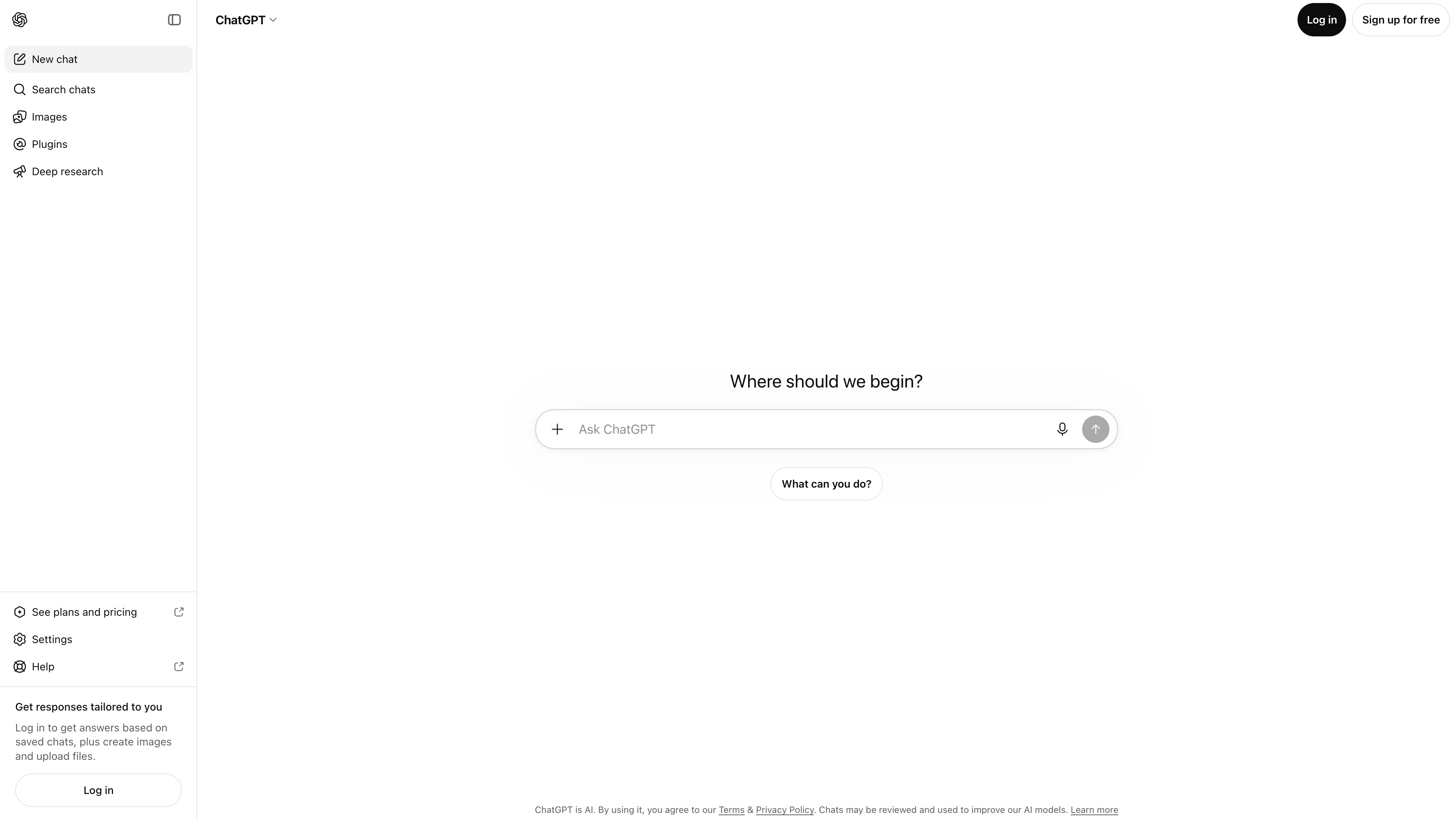
Per the official capabilities overview (as of 2026-09-03), the web app currently offers:
- Web search: Available on every plan, including signed-out users; answers come with citations you can open and verify. OpenAI notes that rewritten queries and your approximate location (derived from IP address) may be shared with third-party search partners, and that "search results and citations can be incomplete, outdated, or incorrect" (search help).
- Deep research: For multi-step research tasks, ChatGPT reads and synthesizes material across many online sources and produces a structured, cited report; the free tier includes limited usage.
- File uploads and data analysis: Upload PDFs, documents, spreadsheets and presentations for summarization, extraction and comparison, or let ChatGPT run code in a sandbox to analyze data. Key limits: 512MB per file, 2M tokens per text document, 20MB per image, roughly 50MB for spreadsheets, and 3 files per day for free users (File Uploads FAQ).
- Images: Analyze uploaded screenshots and charts, or generate images from text prompts and edit them with natural language.
- Voice: Live mode supports natural, interruptible two-way conversation — GPT-Live-1 on paid plans, GPT-Live-1 mini with limited usage on Free; a single voice session can last up to 2 hours (Voice help).
- Memory: When enabled, ChatGPT remembers preferences and context to personalize replies; you can review, edit and delete memories in settings (Memory FAQ).
- Projects and scheduled tasks: Group related chats, files and project-level instructions in one workspace; project sharing opened to all plans including Free in October 2025 (Projects help). Scheduled tasks let ChatGPT run reminders or web checks on a timetable.
- Canvas: A side-by-side workspace for co-editing writing and code. Note that OpenAI is sunsetting this interface — it is no longer available on newer models and remains accessible via legacy models for a limited time (The Verge, 2026-05-30); the capabilities overview still lists it.
Custom GPTs and the GPT Store
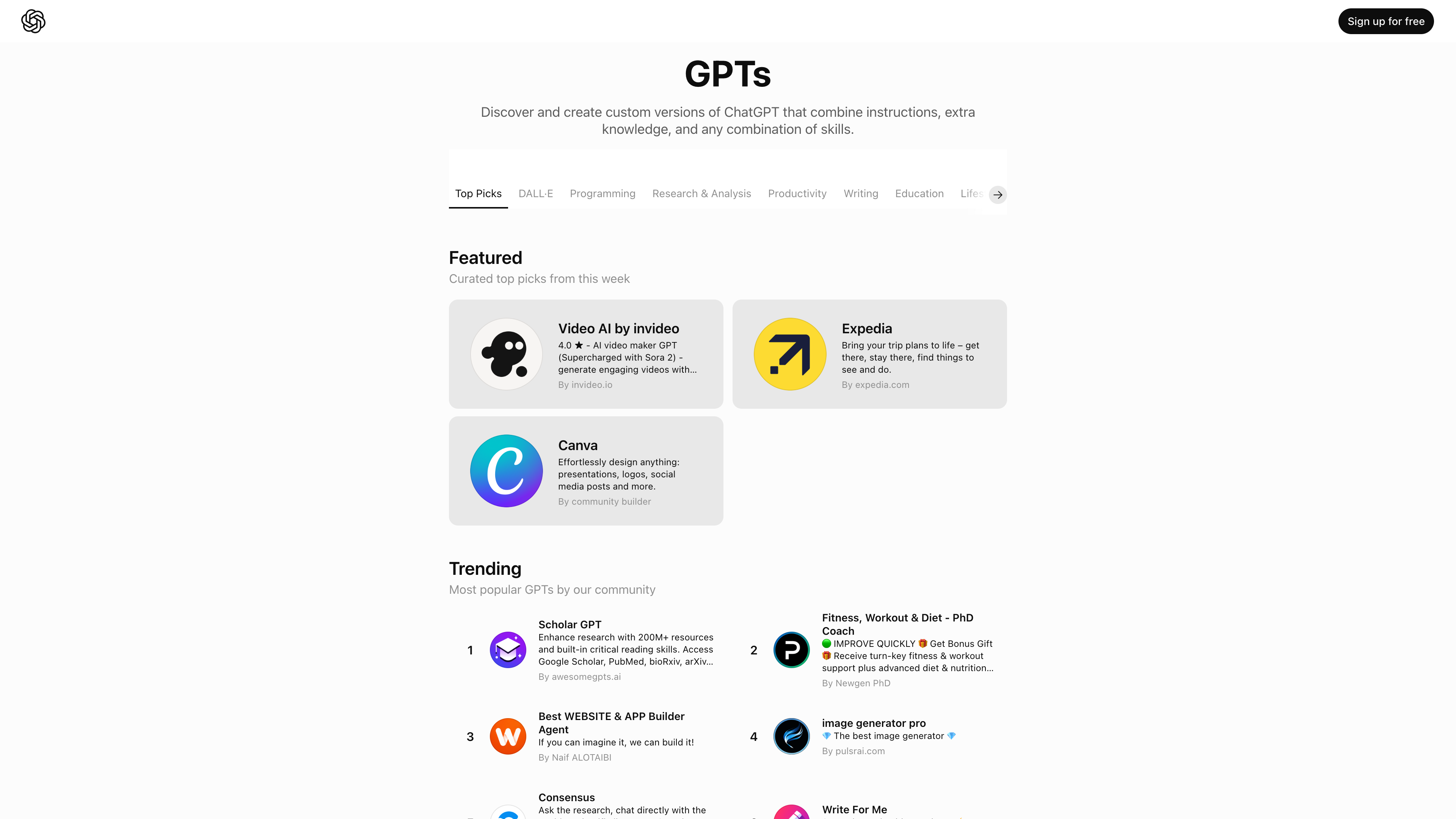
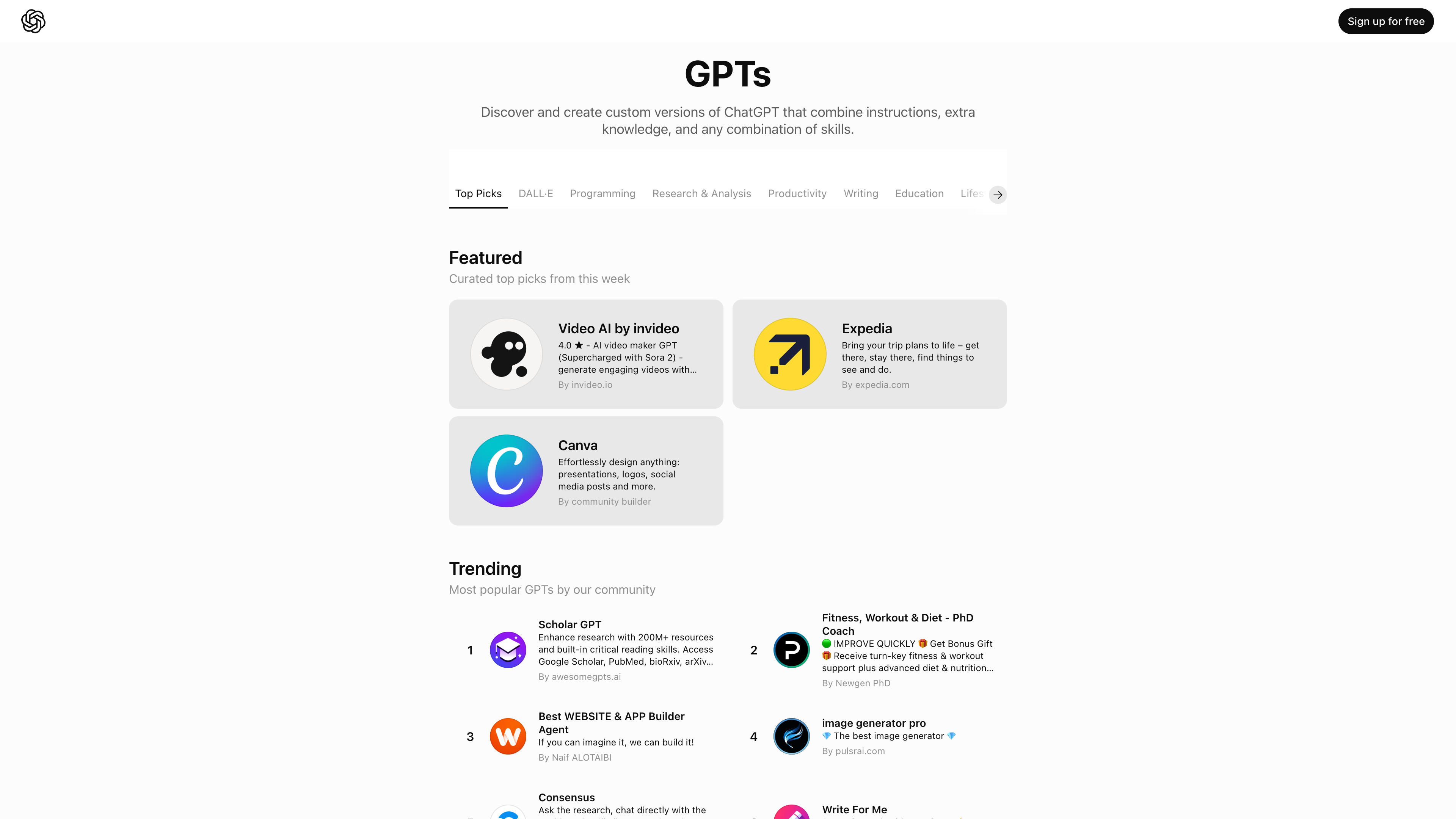
GPTs are tailored versions of ChatGPT with custom instructions, knowledge files and tool combinations; anyone can browse and try the public GPT directory, even signed out. One policy change is worth flagging: as of 2026-09-03, personal accounts (Free/Go/Plus/Pro) can no longer create or publish new GPTs. Existing GPTs remain usable, and previously created ones can still be edited where plan and permissions allow; creation and publishing are limited to Business, Enterprise and Edu workspaces.
Plans and platform access
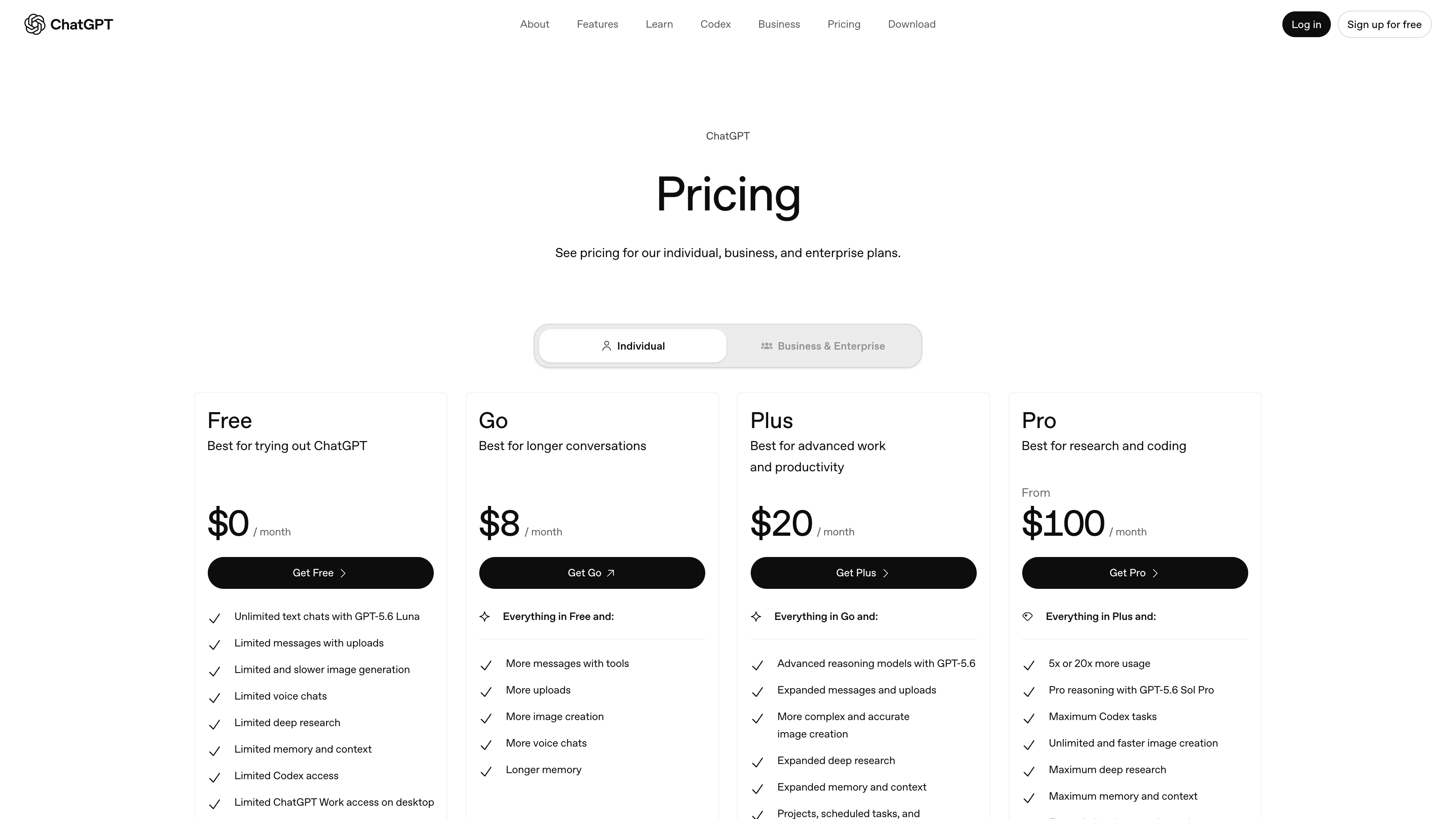
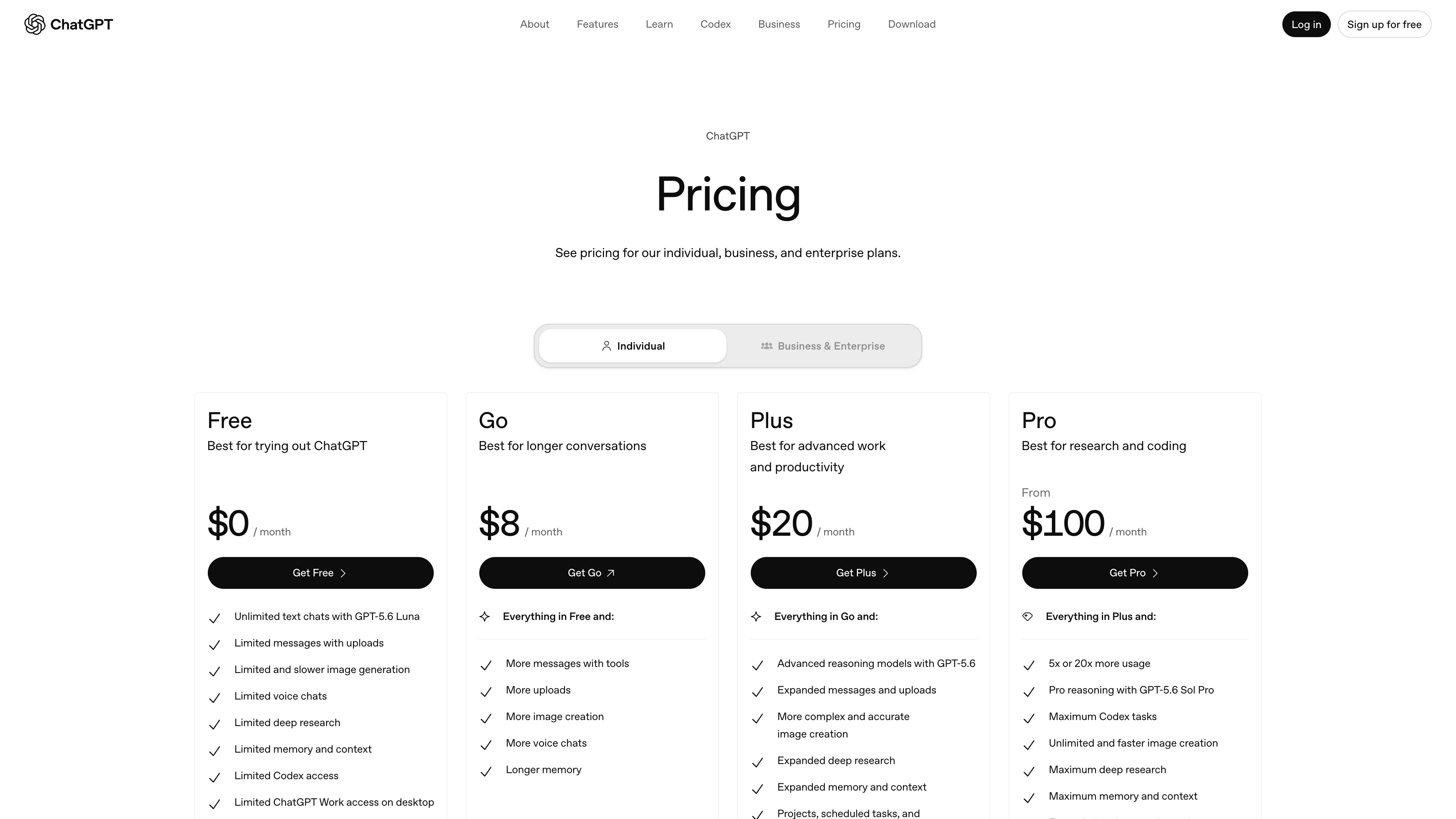
ChatGPT has four individual tiers (official pricing, USD per month, as of 2026-09-03):
| Plan | Price | What you get |
|---|---|---|
| Free | $0 | Unlimited text chats with GPT-5.6 Luna (subject to abuse guardrails); limited uploads, slower image generation, voice, deep research and memory |
| Go | $8 | More messages, uploads, image creation, voice and longer memory than Free; OpenAI notes this plan may include ads |
| Plus | $20 | Advanced reasoning with GPT-5.6, expanded limits, Projects, scheduled tasks and custom GPTs, expanded Codex and ChatGPT Work, early access to new features |
| Pro | From $100 | 5x or 20x more usage (the 200 tiers), GPT-5.6 Sol Pro reasoning, the highest deep research and memory limits, unlimited and faster image creation |
For teams there is Business (Standard seat 100/month billed annually, for 2–200 people, with no training on business data by default) and Enterprise (custom pricing). Education and nonprofit options exist too: verified U.S. K–12 teachers get ChatGPT for Teachers free through June 2027, and nonprofits can get up to 75% off Business or Enterprise.
Developers should note that the OpenAI API and ChatGPT subscriptions are separate products. The API lives at platform.openai.com with its own per-token pricing (for example, gpt-5.6-sol short-context at 20.00 per million output tokens, as of 2026-09-03); no ChatGPT subscription includes API usage. The same OpenAI account signs in to both.
Data use and privacy controls
- Training opt-out: Conversations on personal plans may be used to improve the models by default. You can turn off "Improve the model for everyone" in Settings → Data Controls — this also works while signed out via the "?" icon — and the setting syncs across your account (Data Controls FAQ). Content from the API and Business/Enterprise/Edu plans is not used for training.
- Temporary Chat: Stays out of your history, creates no memories, is not used for training, and is deleted from OpenAI's systems within 30 days (a copy may be kept for safety monitoring) (Temporary Chat FAQ).
- Memory management: Memories can be reviewed, edited and deleted in settings; use Temporary Chat for conversations you don't want remembered.
- Retention and deletion: After you delete a chat or your account, content is removed from OpenAI's systems within 30 days unless de-identified earlier or kept for security or legal reasons (Privacy Policy).
- Key terms: You must be at least 13 (or your country's minimum consent age), and under-18s need a parent or guardian's permission. You keep ownership of your input and own the output, including commercial use, but output may not be unique and may not be used to develop competing models. The service is not available worldwide — only in supported countries and territories.
When it fits
- A single entry point for everyday Q&A, drafting and rewriting, translation, and coding help.
- Lookups that need current information with citations you can click through; first-draft research reports via deep research.
- Summarizing, extracting from and analyzing PDFs, spreadsheets and other files.
- Teams that need centralized administration and no training on business data by default (Business/Enterprise).
- Integrating model capabilities into your own product through the API (billed independently of ChatGPT).
Limitations
- Factual reliability: OpenAI's own FAQ concedes the assistant "can occasionally produce incorrect answers" and "make up facts or 'hallucinate'." The Terms of Use require you to evaluate output yourself and not rely on it as a sole source of truth or a substitute for professional advice; web-search citations can also be incomplete or outdated. Always verify important claims against the original sources.
- Tight free-tier limits: 3 file uploads per day, slower and limited image generation, limited voice on the mini model, and smaller memory and context window (27K) than paid plans.
- Ads: The Go plan officially "may include ads" — monetization has reached the free and low-cost tiers.
- Privacy trade-offs: Personal-plan content may be used for training unless you opt out; memory steadily builds a profile of you, and OpenAI itself notes sensitive information can end up in memories. If that concerns you, disable training, manage memory, or use Temporary Chat.
- Regional restrictions: Not all countries are supported, and accessing from unsupported regions can get an account suspended.
- Frequent changes: 2026 alone has brought model retirements, a model-picker redesign, the Canvas sunset, and the end of new GPT creation on personal accounts. All prices and features here are as of 2026-09-03 — check the official pages for the current state.
- Chinese output: Chatting in Chinese works fluently, but longer Chinese writing can show inconsistent terminology and a translation-like tone, so formal texts deserve a human editing pass (editorial observation, not an official statement).
Alternatives
- Claude: Anthropic's conversational AI assistant, the closest counterpart to ChatGPT, likewise offering a free tier and paid subscriptions.
- Google Gemini: Google's AI assistant, tightly integrated with Search and the Workspace ecosystem.
References
- ChatGPT homepage (checked 2026-09-03)
- ChatGPT Pricing (checked 2026-09-03)
- Introducing ChatGPT - OpenAI (checked 2026-09-03)
- Start using ChatGPT instantly - OpenAI (checked 2026-09-03)
- ChatGPT Capabilities Overview - OpenAI Help Center (checked 2026-09-03)
- Searching the web with ChatGPT - OpenAI Help Center (checked 2026-09-03)
- File Uploads FAQ - OpenAI Help Center (checked 2026-09-03)
- ChatGPT Voice - OpenAI Help Center (checked 2026-09-03)
- Memory FAQ - OpenAI Help Center (checked 2026-09-03)
- Temporary Chat FAQ - OpenAI Help Center (checked 2026-09-03)
- Data Controls FAQ - OpenAI Help Center (checked 2026-09-03)
- Projects in ChatGPT - OpenAI Help Center (checked 2026-09-03)
- Creating and editing GPTs - OpenAI Help Center (checked 2026-09-03)
- ChatGPT Release Notes - OpenAI Help Center (checked 2026-09-03)
- Terms of Use - OpenAI (checked 2026-09-03)
- Privacy Policy - OpenAI (checked 2026-09-03)
- API Pricing - OpenAI Platform (checked 2026-09-03)
- OpenAI is sunsetting ChatGPT's Canvas interface - The Verge (checked 2026-09-03)
- ChatGPT's market share slips below 50% for first time - TechCrunch (checked 2026-09-03)