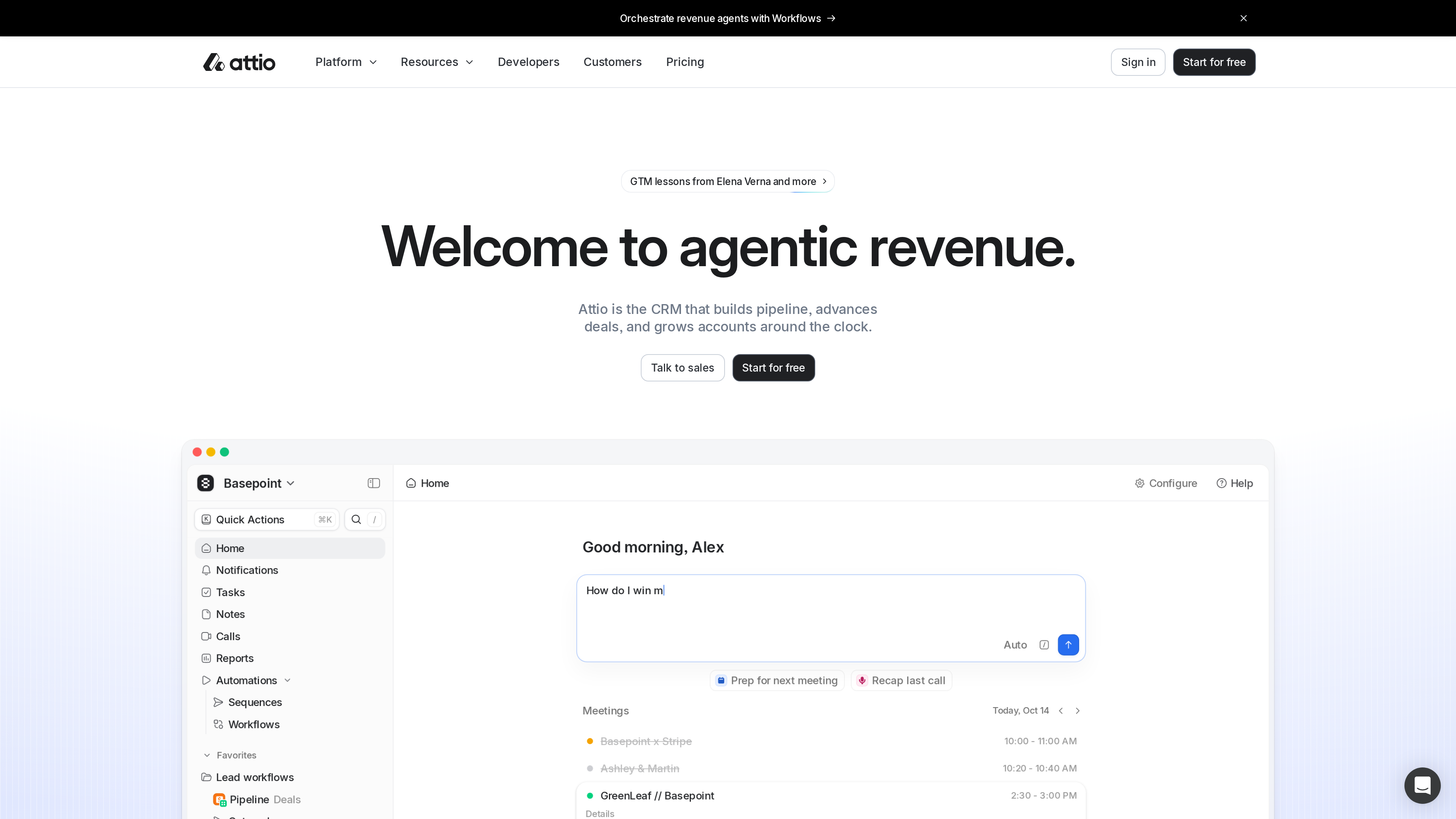
Attio (attio.com) is an AI-native CRM (customer relationship management) platform. Where traditional CRMs ask teams to adapt to fixed pipelines, Attio provides a fast, freely modelable data layer: connect your email and calendar, and it automatically builds a real-time database of contacts, companies and interactions, which your team then shapes with custom fields, views and automations (homepage, pricing FAQ, checked 2026-10-04).
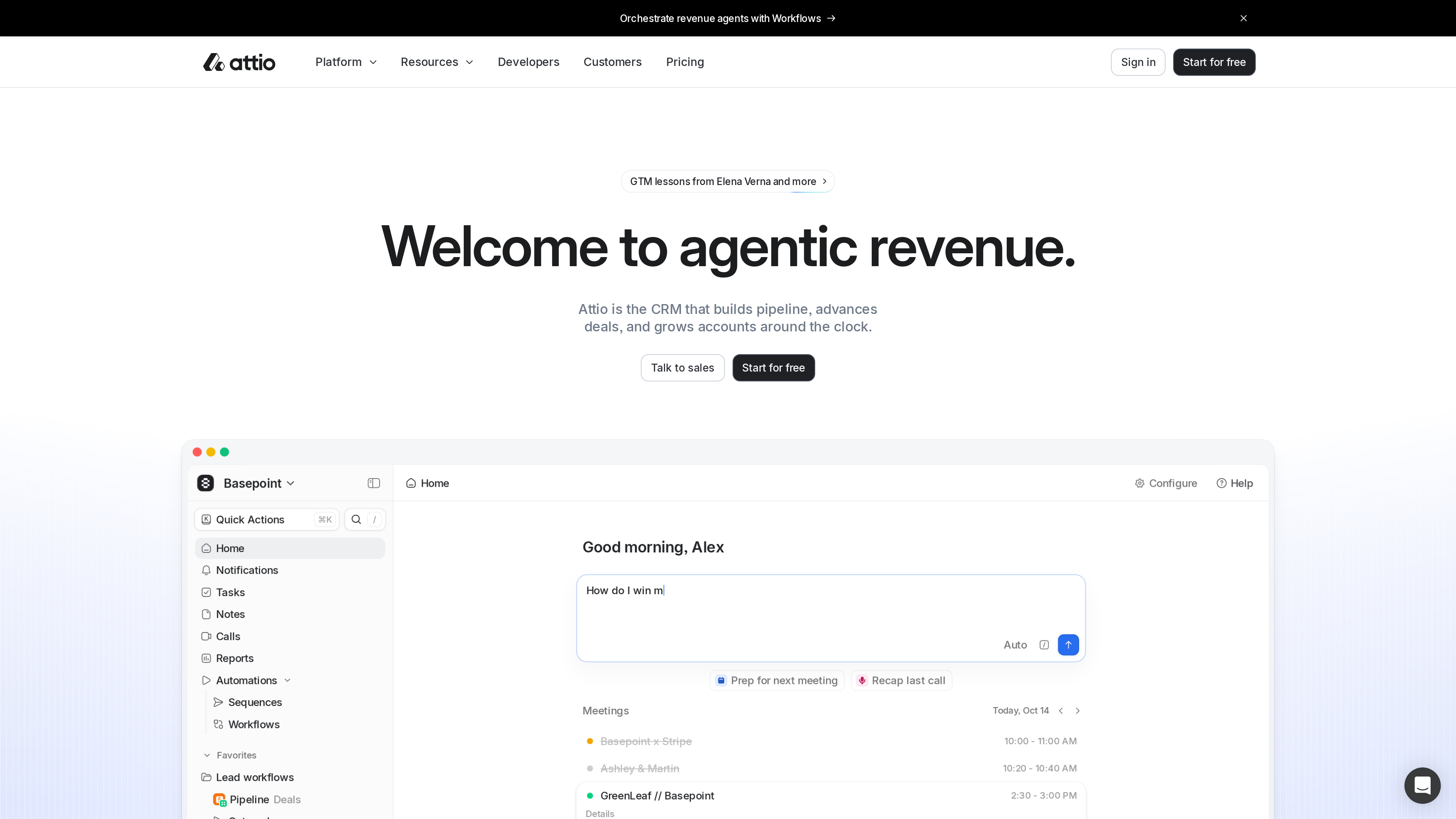
The homepage (screenshot from 2026-10-04).
Quick facts
| Item | Details |
|---|---|
| URL | https://attio.com/ |
| Type | CRM / go-to-market platform (SaaS) |
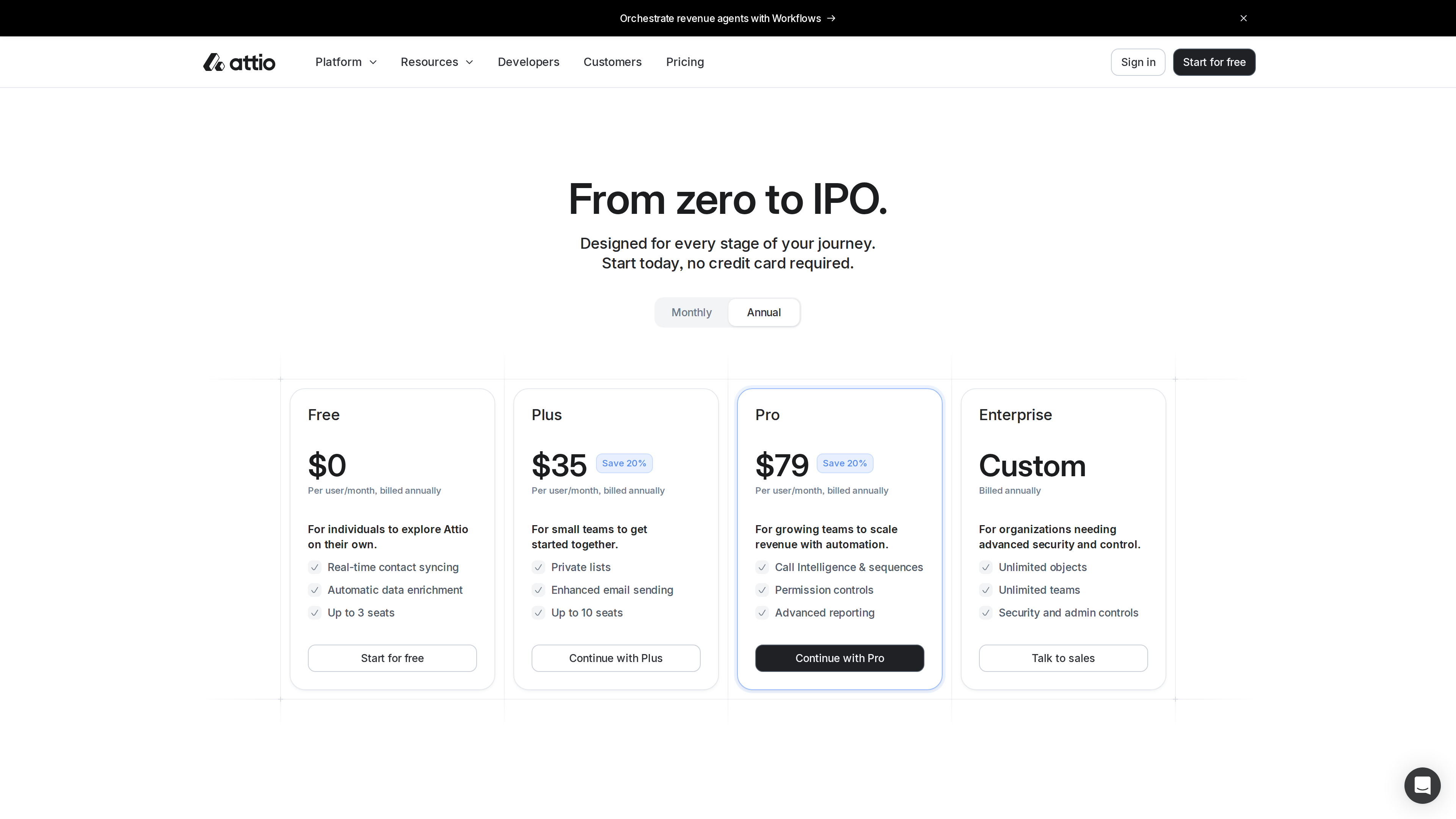
| Pricing | Free 35/seat/mo (annual) or 79/seat/mo (annual) or $99 (monthly), unlimited seats; Enterprise custom; new workspaces get a 14-day Pro trial (as of 2026-10-04, pricing, help center) |
| Account | Create a workspace to start free; syncing Google/Microsoft email and calendar recommended |
| Interface | English |
Background
Attio was founded in London in 2019 (with a San Francisco office), led by CEO Nicolas Sharp and co-founder Alexander Christie. The company crossed 23.5M Series A led by Redpoint in March 2023 (TechCrunch 2023-03-02). On August 26, 2025 it announced a 116M, with the stated mission of "building the AI-native CRM for the next era of companies" (Attio blog, PRNewswire 2025-08-26, checked 2026-10-04).
Core capabilities
- Flexible data model: objects, fields and relationships are all customizable — records feel like Airtable rows rather than fixed CRM modules. Sales, customer success, recruiting or even investment pipelines can all be modeled.
- Email/calendar sync: connecting email and calendar automatically generates and updates contact and company profiles with interaction timelines, eliminating manual entry.
- Enrichment and AI: automatic company/contact enrichment; AI features (Ask Attio, call intelligence, record summaries) and workflows consume workspace and seat credits — every plan includes a starting allotment, with more purchasable.
- Automation and outreach: visual workflows, email sequences, permissions and reporting; Pro adds full email sharing/sending, advanced permissions and report building.
- Open platform: a custom API for integrating with the rest of your stack.
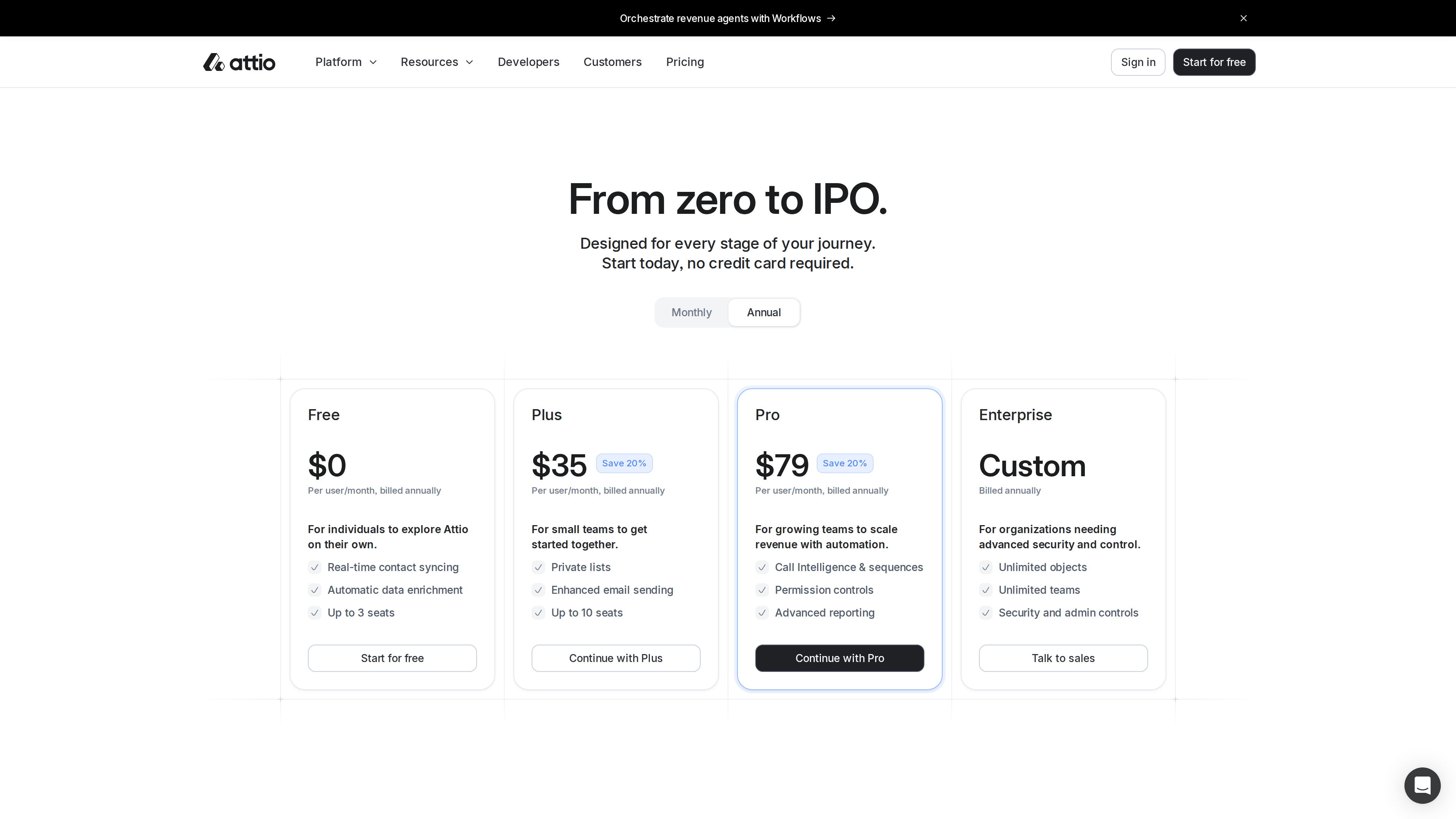
The pricing page (2026-10-04): per-seat billing with a 20% annual discount.
Good for
- Startups and growth teams who want a CRM that changes shape with the business instead of forcing process upfront.
- "Non-standard sales" relationship management — investing, BD, recruiting — where custom objects and views fit naturally.
- Data-driven GTM teams who want automation, sequences and reporting in one place and are willing to model their own system.
Limitations
- Flexibility costs setup time: teams wanting an out-of-the-box sales process may be better served by a traditional CRM.
- English-only interface, docs and support; access speed from mainland China unverified.
- Per-seat pricing that rose in July 2026 (Plus 35, Pro 79 annually) scales steeply with headcount, and AI/workflows add credit consumption on top.
- The integration ecosystem is smaller than Salesforce or HubSpot's.
Alternatives
- Twenty: an open-source, self-hostable CRM — the open counterpart to Attio's commercial SaaS.
- HubSpot: the incumbent with a generous free tier; mature ecosystem but costly customization.
- Salesforce: the enterprise standard — most capable, most expensive to implement and run.